
Living Smarter Every Day: What a Connected Home Actually Does for You
Summary
A connected home revolutionizes daily living in India, offering unparalleled convenience through automated routines, enhanced security features for peace of mind, and significant energy savings. It's an accessible, practical investment that transforms your daily life, making it smarter and more efficient.

Your Home Was Never Just Four Walls
Think about the last time you left the house and wondered whether you switched off the geyser. Or came home exhausted at 9 PM and still had to manually turn on every light, set the AC, check the door lock. These are tiny inconveniences, but they add up. And that is precisely where smart home technology quietly earns its place in your daily life.
A connected home India is not a futuristic concept anymore. It is a working reality that thousands of Indian homeowners, from Bengaluru tech professionals to Mumbai families in mid-rise apartments, are already living. The shift is happening faster than most people realise.
What Exactly Is a Smart Home?
A home automation system is simply a network of devices inside your house that talk to each other, take instructions from you remotely, and in smarter setups, learn your patterns over time. Lights, fans, ACs, door locks, security cameras, even kitchen appliances can all be woven into this network. You control most of it through your phone or through voice commands.
The Internet of Things makes all of this possible. Each device connects through Wi-Fi or a dedicated home network, sending and receiving signals that carry your instructions. It sounds technical. In practice, it feels natural within a week.
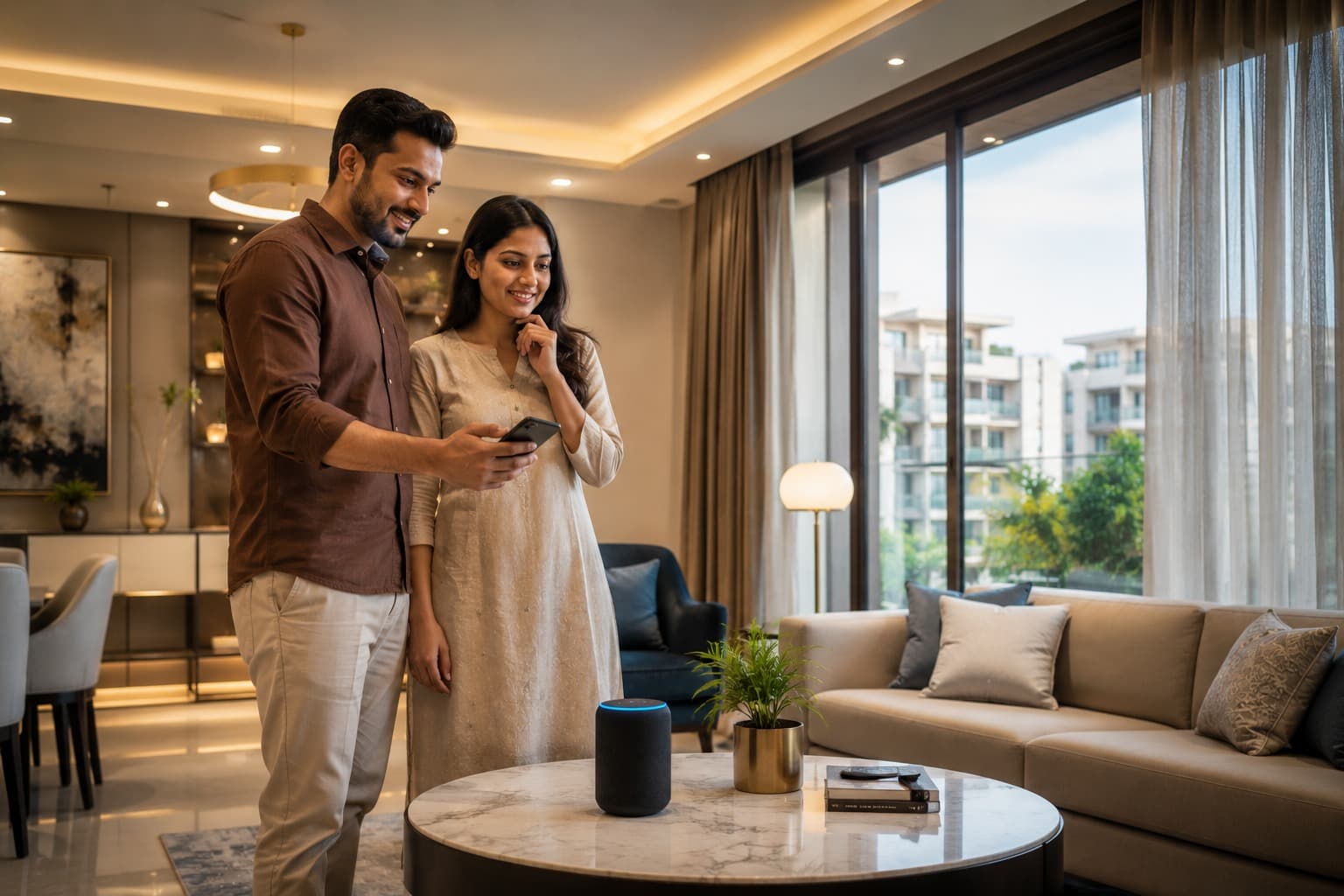
The Morning Routine Nobody Misses
Smart home convenience India shows up most vividly in morning routines. Imagine your alarm triggering a cascade of events the moment it rings. Your bedroom curtains slide back to let natural light in. The geyser has already been running for fifteen minutes. The kitchen light comes on automatically, and your coffee machine starts its cycle. All of this without you touching a single switch.
For families with school-going children and two working adults, this kind of time recovery is not a luxury. It is genuinely useful.
Security That Actually Works
Home automation benefits extend well beyond comfort. Smart door locks let you grant access to family members without distributing physical keys. You can remotely check who rang the doorbell at 3 PM when you were in a meeting. Motion sensors trigger alerts the moment something unusual happens near your front door. Security cameras feed live footage to your phone from anywhere in the world.
For apartment owners who travel frequently, this kind of visibility reduces anxiety considerably. You are never truly away when your home can tell you what is happening inside it.
Energy Savings That Show Up on Your Bill
Smart home technology pays for itself partly through energy savings. Automated schedules prevent lights and ACs from running in empty rooms. Smart plugs cut off standby power consumption from appliances that drain electricity even when switched off. Some home automation system setups now include energy dashboards that show you exactly where your monthly units are being consumed.
India's home automation market was valued at approximately 3.71 billion US dollars in 2025, and analysts project it will reach nearly 13.58 billion dollars by 2034. That growth is being driven by real demand, not just aspirational buying.

Does It Work in a Regular Indian Home?
Absolutely. The best part about smart home devices India today is modularity. You begin with one smart plug or a couple of connected bulbs. You expand when you are ready. No major renovation is needed. Most devices connect to standard Wi-Fi and work with common voice platforms like Alexa or Google Assistant.
Summary
How smart homes improve daily convenience in India comes down to time saved, energy managed, and peace of mind gained. From automated mornings to real-time security and lower electricity bills, home automation benefits are practical and cumulative. With smart home technology now available at accessible price points, Indian homebuyers are discovering that a connected home is less a lifestyle upgrade and more a sensible long-term investment in how you live every single day.