
Leasing vs. Buying Office Space: A Business Perspective
Summary
Leasing offers flexibility and lower upfront costs, while buying provides stability and long-term equity. Businesses should carefully assess their financial situation, growth plans, and risk tolerance to make the best real estate decision. The optimal choice aligns with business goals, ensuring resilience and sustainable growth.

Introduction
Choosing the right office space is a strategic decision that shapes financial stability, daily operations, and long term growth. Businesses today operate in fast changing markets where flexibility, cost control, and efficiency matter deeply. Leasing and buying office spaces represent two very different approaches to securing a workplace. Each option influences cash flow, risk exposure, brand presence, and future scalability. Understanding these differences allows decision makers to align property choices with business objectives, market conditions, and organizational maturity, ensuring that real estate supports growth rather than becoming a constraint for sustainable and competitive enterprise development across diverse industries and regions.
Understanding Leasing of Office Spaces
Leasing office space involves occupying a property under a contractual agreement for a defined period. The business pays regular rent while ownership remains with the landlord. Initial costs are relatively low, usually limited to a security deposit and advance rent. Leasing allows organizations to preserve working capital for hiring, marketing, and technology. It also provides easier relocation when workforce size or market focus changes. Many lease structures place maintenance responsibilities on the owner, reducing operational burden. Rental payments are commonly treated as deductible business expenses, improving cash flow predictability and simplifying financial planning. Access to premium locations further strengthens brand visibility without long term ownership risk exposure for growing companies operating in competitive urban markets today worldwide with evolving needs.

Understanding Buying of Office Spaces
Buying office space means acquiring property outright or through long term financing. Ownership provides complete authority over the premises and transforms real estate into a business asset. Mortgage payments gradually build equity, offering potential wealth creation and protection against rental inflation. Owners benefit from long term stability, particularly when operating from a fixed location. Customization becomes unrestricted, allowing structural changes, branding elements, and layout design without external approvals. Over time, owned property may appreciate, strengthening the balance sheet and supporting future borrowing or expansion strategies. However purchasing requires significant upfront capital, long term commitment, and responsibility for taxes, insurance, maintenance, and compliance obligations, which demand stable cash reserves and disciplined financial management capabilities over extended business cycles and markets fluctuations.
Financial Considerations and Capital Planning
Financial planning sits at the center of the leasing versus buying decision. Leasing minimizes initial expenditure, preserving liquidity and lowering balance sheet exposure. This is valuable for startups and growing firms facing uncertain revenue cycles. Buying demands substantial down payments, transaction costs, and ongoing ownership expenses, reducing available working capital. However, ownership converts occupancy costs into long term investment. Fixed rate loans can stabilize monthly outflows, while property appreciation may offset inflation. Businesses must evaluate opportunity cost, tax treatment, funding availability, and risk tolerance. A detailed cash flow analysis comparing rent escalation with ownership expenses is essential before committing. Decision makers should also consider interest rate volatility, depreciation benefits, resale timelines, and the impact of real estate ownership on credit capacity and long term financial resilience across economic cycles and industry shifts over time carefully planned scenarios and assumptions used.
Operational Flexibility and Business Growth
Operational agility is increasingly critical in modern business environments. Leasing supports flexibility by enabling companies to adjust space requirements as teams expand, contract, or adopt hybrid work models. Relocation is simpler, allowing entry into new markets or exit from underperforming locations. Buying restricts mobility, as selling commercial property can be time consuming and market dependent. While ownership favors stability, it may limit responsiveness during rapid change. Organizations anticipating growth uncertainty or evolving operational models often prefer leasing to avoid being anchored by fixed assets that could constrain strategic pivots, workforce planning, and geographic expansion decisions during volatile economic conditions or competitive transitions affecting long term performance outcomes overall resilience levels.
Control, Stability, and Customization
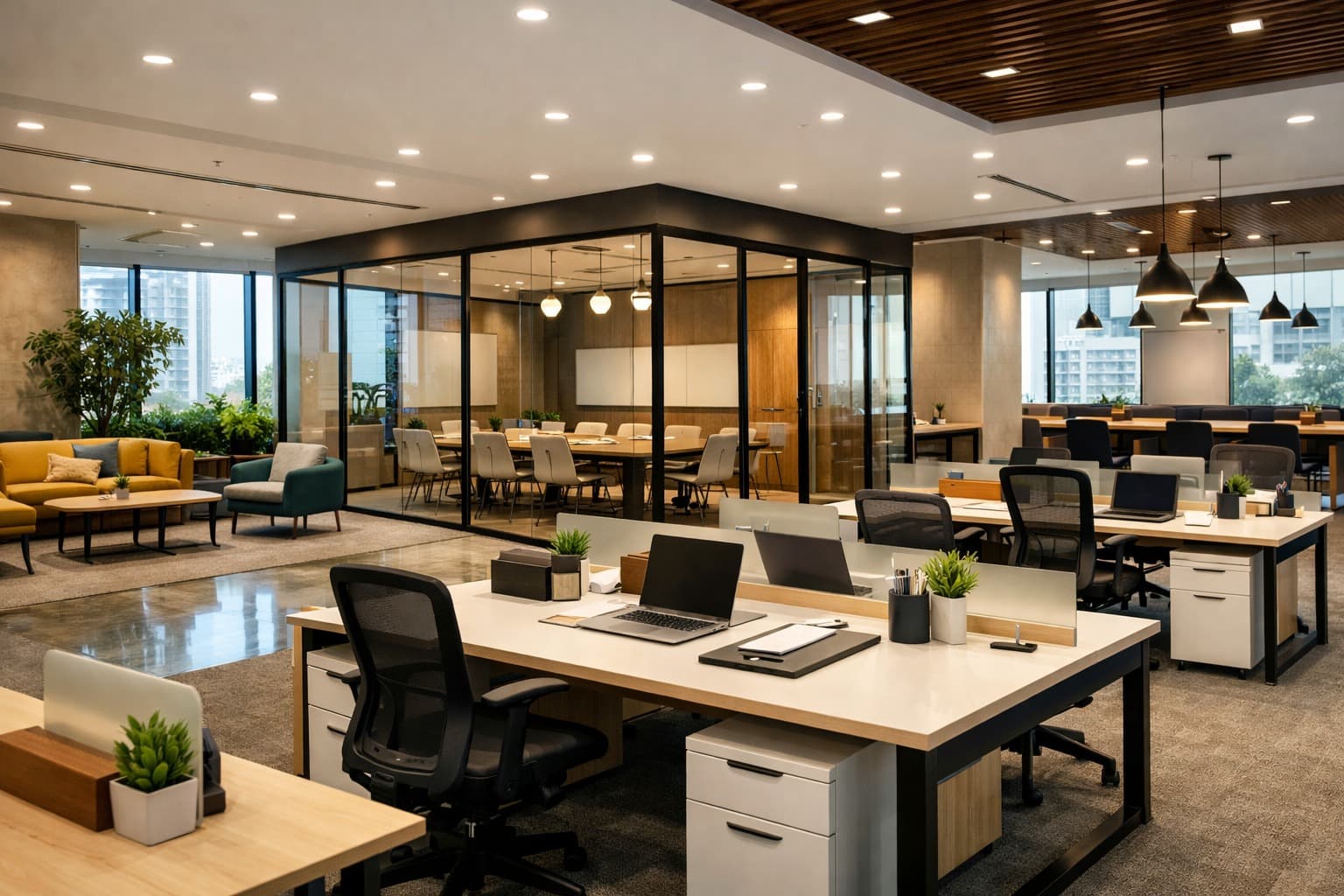
Control over the workplace differs sharply between the two options. Ownership grants complete authority to redesign, renovate, and brand the office without restrictions. This supports consistent customer experience and employee satisfaction. Leasing usually imposes limits on structural changes and signage, requiring landlord approval. However, many modern leases allow interior customization. Businesses valuing autonomy and permanence may favor ownership, while those prioritizing simplicity and shared responsibility often accept controlled flexibility under leasing arrangements for diverse organizational goals, scales, timelines, and strategies.
Risks and Limitations of Each Option
Both approaches carry risks that require careful consideration. Leasing does not create equity, meaning rental payments produce no lasting asset. Rent escalation clauses can increase occupancy costs over time, affecting profitability. Buying exposes businesses to high upfront investment, market fluctuations, and illiquidity. Maintenance, repairs, taxes, and compliance become ongoing responsibilities. Economic downturns may reduce property values or delay resale. Selecting the wrong option can strain finances, limit growth, or distract leadership. Balanced evaluation of risk appetite, stability, and long term vision is therefore essential for sustainable decision making aligned with operational capacity, governance priorities, stakeholder expectations, and evolving market realities over extended planning horizons.
Summary
Leasing and buying office spaces serve different business needs and strategic priorities. Leasing offers lower upfront costs, flexibility, tax efficiency, and easier access to prime locations. Buying provides stability, equity creation, customization freedom, and long term investment value. Each option involves trade offs related to capital, risk, and control. Businesses should assess financial strength, growth plans, and operational certainty before deciding. A well informed choice ensures that real estate decisions support resilience, efficiency, and sustainable organizational growth over time for future competitiveness, stability, planning, success.