
Know the Difference: Carpet Area and Super Built-Up Area Explained
Summary
Confused by carpet vs. super built-up area? This guide clarifies the difference, highlighting how each impacts pricing and usability in home buying. Learn to evaluate properties accurately and avoid common misconceptions.

Why Area Definitions Matter in Home Buying
Understanding area definitions is critical for every property buyer. The price of a home is directly linked to its area calculation, yet many buyers do not fully understand what they are paying for. Confusion between carpet area and super built-up area often leads to mismatched expectations at possession. Developers may highlight a larger number, while the actual usable space inside the home feels smaller. Clear knowledge of area terms helps buyers evaluate value correctly, compare properties fairly, and make informed real estate decisions without confusion or disappointment.
Understanding Carpet Area Clearly
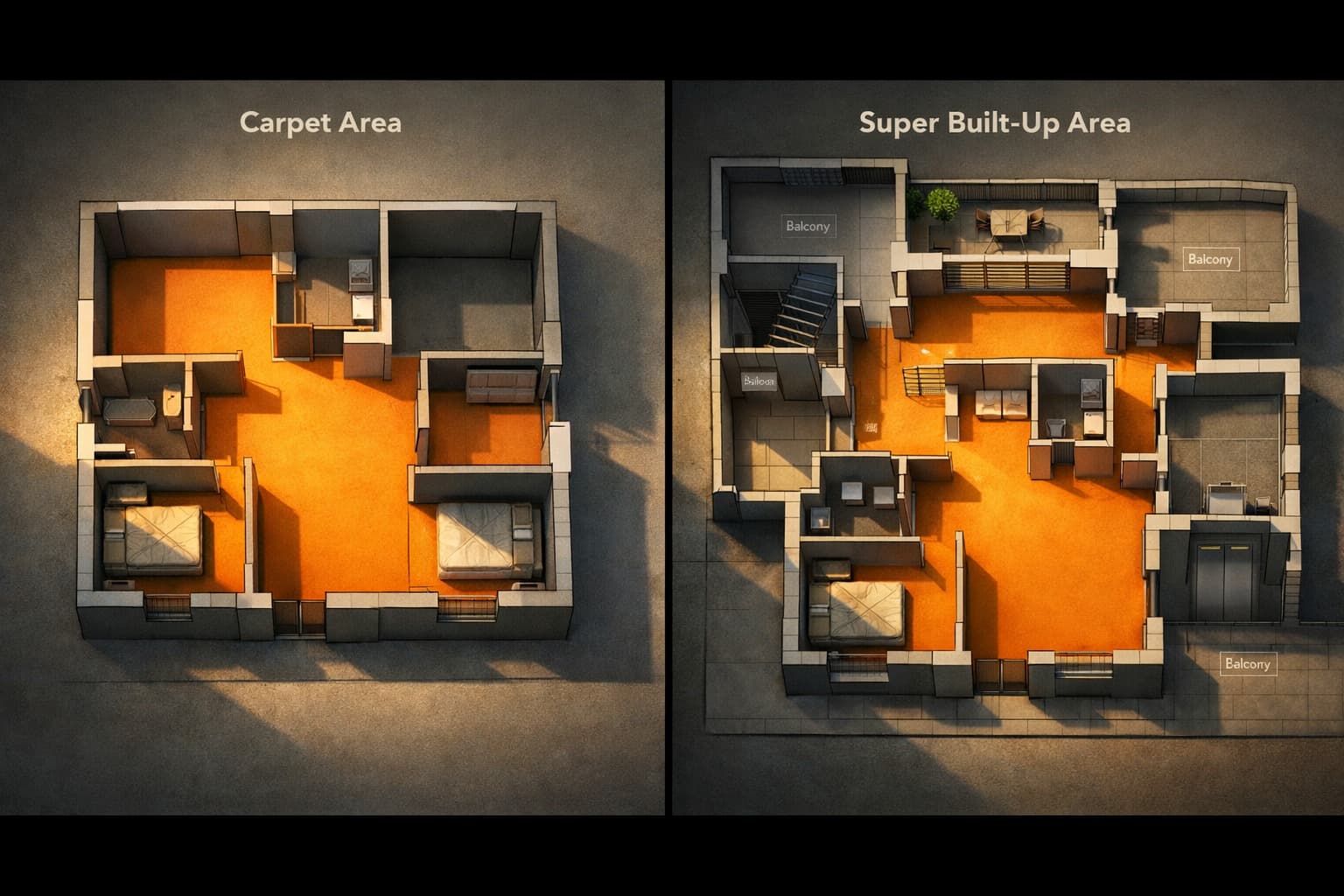
The carpet area represents the net internal area within the apartment walls that can be physically used. It includes bedrooms, living rooms, kitchens, bathrooms, and internal passages. This is the space where furniture can be placed and daily activities occur. It excludes external walls, balconies, terraces, verandahs, and common areas. From a buyer’s perspective, carpet area is the most accurate measure of actual livable space. Regulatory frameworks also prioritize carpet area for transparency and fair comparison across residential projects.
What Is Super Built-Up Area
The super built-up area goes beyond the apartment’s internal space. It includes the built-up area of the flat plus a proportionate share of common amenities such as staircases, lifts, lobbies, corridors, clubhouses, and sometimes even security cabins. This method distributes shared infrastructure costs across all apartments. While it reflects the total constructed footprint of a project, it does not represent individual usable space. Buyers often feel misled when comparing homes only on the basis of super built-up area.

Key Differences Between Carpet and Super Built-Up Area
The primary difference lies in usability and transparency. Carpet area reflects actual living space, while super built-up area includes shared and non-usable components. Pricing based on super built-up area often inflates the apparent size of the apartment. Two flats with identical carpet area may show different super built-up figures depending on common facilities. Understanding this distinction helps buyers identify the real value of a home rather than relying on large but misleading numbers.
Impact on Pricing and Cost Comparison
Area definitions significantly affect pricing. When homes are priced per square foot of super built-up area, buyers unknowingly pay for spaces they do not exclusively use. Cost per square foot appears lower, but the effective price of carpet area becomes much higher. Comparing properties using carpet area pricing provides a fairer and more accurate assessment. Buyers should always calculate the effective rate based on usable space to understand the true cost of ownership.
Regulatory Perspective and Buyer Protection
Regulatory standards have brought clarity to area definitions. Under RERA guidelines, developers are required to sell residential units based on carpet area only. This ensures transparency and consistency across projects. It also protects buyers from inflated area claims and ambiguous measurements. Clear disclosure of carpet area, along with approved floor plans, allows buyers to compare projects confidently. Regulatory alignment strengthens trust between developers and homebuyers while promoting ethical practices in the real estate sector.
Common Buyer Misconceptions to Avoid
Many buyers assume that a larger super built-up area automatically means a bigger home, which is not always true. Others believe balconies and terraces are included in carpet area, leading to confusion at possession. Another misconception is that common amenities directly increase personal living space. Understanding the limitations of super built-up area and focusing on carpet area helps buyers avoid unrealistic expectations and post-purchase dissatisfaction.
How Buyers Should Evaluate Area Information
Buyers should always ask for the declared carpet area and review approved floor plans carefully. Measuring room dimensions during site visits helps confirm accuracy. Comparing multiple projects on a carpet area basis ensures fair evaluation. Buyers should also review cost sheets to identify how pricing is calculated. Awareness of area definitions, regulatory norms, and layout efficiency enables buyers to select homes that truly meet their space requirements and lifestyle needs.
Summary
Understanding the difference between carpet area and super built-up area is essential for every homebuyer. While super built-up area includes shared spaces and amenities, carpet area reflects the true usable space within a home. Pricing based on carpet area offers greater transparency and fairness. Regulatory standards have strengthened buyer protection by mandating carpet area disclosures. By focusing on accurate measurements, approved layouts, and effective price comparisons, buyers can make confident and informed real estate decisions that align with their space expectations and financial planning.