
Kitchen Placement According to Vastu and Its Significance
Summary
Vastu Shastra emphasizes the kitchen's vital role in a home's well-being. Proper placement, direction, and design, especially aligning with the fire element (Agni), promotes positive energy, health, and prosperity.

Introduction
In Vastu Shastra, the kitchen holds a central place in maintaining the health, prosperity, and harmony of a household. It is the space where food is prepared, which directly influences the energy levels and well‑being of family members. Incorrect kitchen placement or design can disturb the balance of energies, while a Vastu‑compliant kitchen supports positivity and stability in daily life.
Why Kitchen Vastu Is Important
The kitchen represents the fire element, which is essential for nourishment and vitality. Since food prepared in the kitchen becomes the source of energy for the family, any imbalance in this space can affect health, finances, and relationships. Following kitchen Vastu guidelines helps regulate energy flow and prevents negative influences within the home.
Ideal Direction for Kitchen Placement
According to Vastu principles, the southeast direction is the most suitable location for a kitchen. This zone is governed by Agni, the fire element, making it ideal for cooking activities. If the southeast is not available, the northwest direction can be considered as a secondary option. Directions such as north, northeast, and west should generally be avoided for kitchen placement.
Kitchen Direction Based on House Orientation
For east‑facing houses, the southeast corner is the most favourable kitchen location. In west‑facing homes, both the southeast and northwest directions are acceptable. A northwest kitchen can be beneficial in certain cases, as the air element supports the fire element when balanced correctly. The southwest direction should only be used if no other option exists, and Vastu remedies should be applied to reduce imbalance.
Kitchen Entrance and Layout Guidelines
The kitchen entrance should ideally be positioned in the east, north, or west direction. It is important that the kitchen is not placed directly above or below bedrooms, toilets, or pooja rooms, as this can disturb energy flow. The kitchen door should open in a clockwise direction to encourage positive movement of energy.
Kitchen Size and Floor Placement
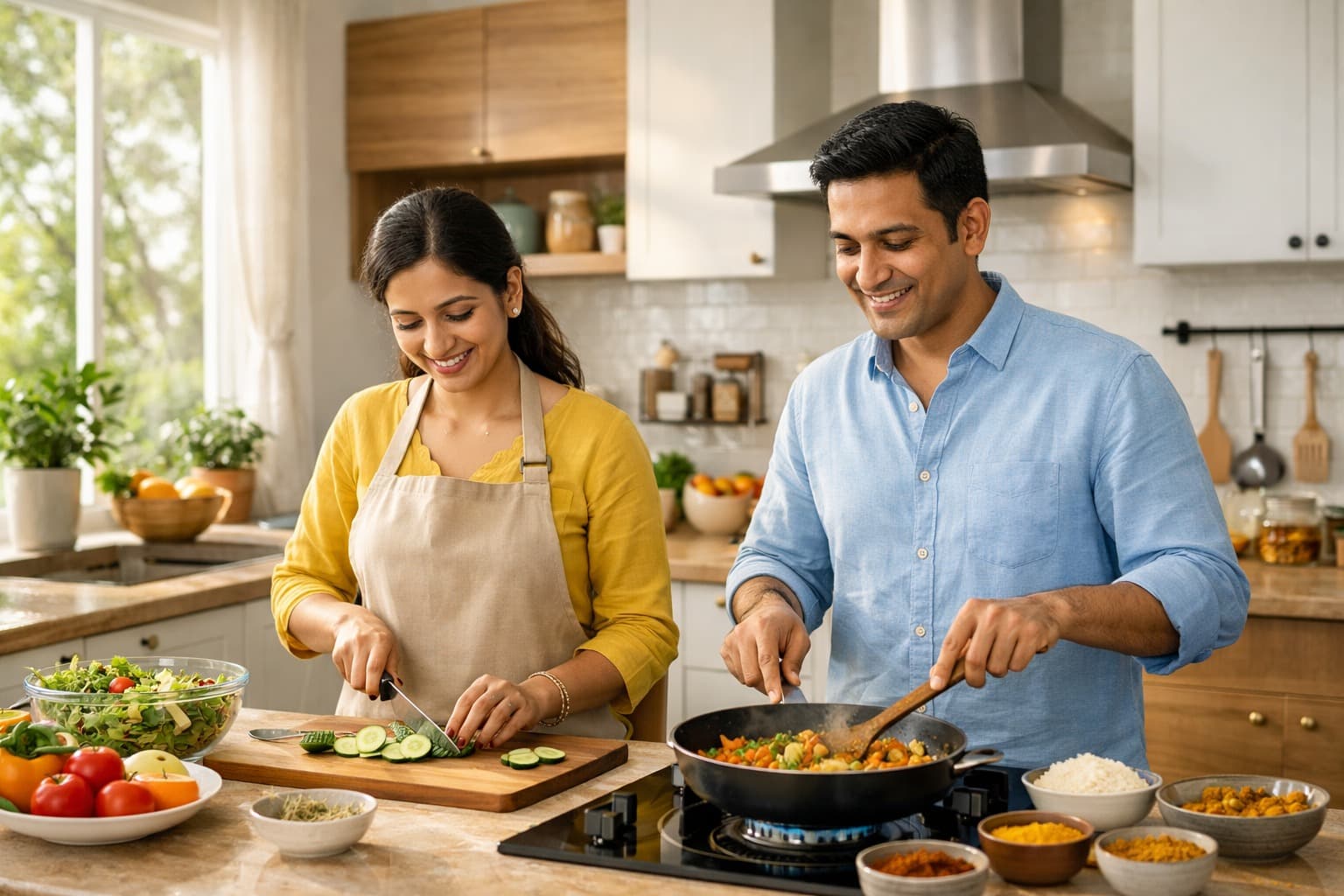
Vastu recommends a kitchen size of at least 80 square feet to ensure comfort and proper energy circulation. Smaller kitchens may negatively affect the well‑being of women in the household. Ideally, the kitchen and dining area should be on the same floor, preferably the ground floor, which symbolises stability and aligns with the kitchen’s nurturing role.
Ventilation and Natural Light in the Kitchen
Proper ventilation is essential for maintaining a healthy kitchen environment. Windows placed in the east direction allow natural light and fresh air to enter, improving energy quality. Exhaust fans and chimneys should support airflow, helping remove heat and negative energy generated during cooking.
Stove Placement and Cooking Direction
The stove should be placed in the southeast corner of the kitchen. While cooking, one should ideally face east, which is associated with good health and prosperity. Facing west can be considered an alternative if east is not possible. The stove should never face the main kitchen door directly.
Placement of Sink and Water Elements
The kitchen sink represents the water element and should be placed in the northeast corner of the kitchen. The stove and sink should not be placed next to or parallel to each other, as fire and water are opposing elements. Maintaining distance between them helps prevent conflicts and imbalance.
Placement of Appliances and Storage
Electrical appliances such as microwaves, ovens, and mixers should be placed in the southeast zone. Refrigerators are best placed in the southwest direction, away from corners. Storage cabinets should mainly be on the south and west walls, while keeping the north and east sides relatively lighter and open.
Ideal Colours for a Vastu‑Compliant Kitchen
White is considered the most auspicious kitchen colour, symbolising purity, but it should not be overused. Suitable colours include green, lemon yellow, orange, and light brown. Dark colours such as black, grey, and deep blue should be avoided as they may create emotional heaviness and negativity.
Kitchen Slab and Flooring as per Vastu
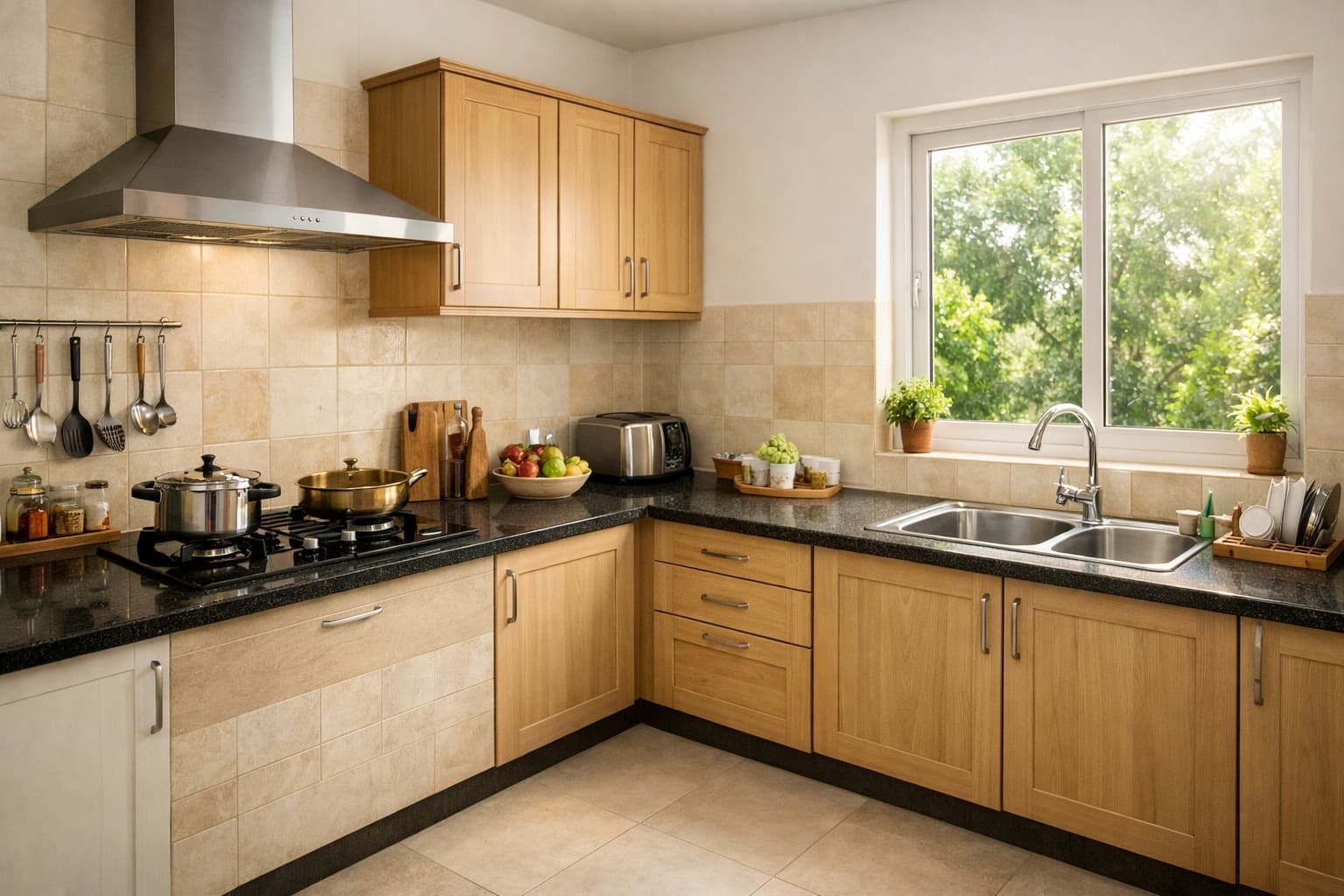
Stone or marble slabs are preferred over dark granite, especially black. The slab should ideally be placed in the southeast part of the kitchen. Flooring colours such as yellow, orange, rose, or light brown promote warmth and positivity. Cleanliness of the slab is essential for maintaining financial and health‑related energy.
Lighting Arrangement in the Kitchen
Natural light is the most beneficial for kitchens, especially from the east. Artificial lighting should be bright but warm. Flickering or dim lights near the stove should be avoided. Balanced lighting creates a welcoming atmosphere and supports smooth energy flow.
Temple Placement in the Kitchen
If a separate pooja room is not available, a temple can be placed in the north or east corner of the kitchen, provided only vegetarian food is prepared. The mandir should not face the stove directly, and the sink should not be placed beneath it.
Dos and Don’ts for Kitchen Vastu
A kitchen should never face the main entrance of the house. Medicines, waste material, and broken utensils should not be kept in the kitchen. Shoes should be avoided in this space. On the positive side, the kitchen should always remain clean, organised, and well‑ventilated, with covered dustbins and fresh air circulation.
Simple Vastu Remedies for Kitchen Dosha
If the kitchen direction or layout cannot be corrected structurally, remedies such as using yellow shades, placing crystal pyramids, or improving lighting can help reduce negative effects. Keeping sea salt in small bowls and replacing it regularly is also believed to absorb negative energy.
Summary
A Vastu‑compliant kitchen supports health, harmony, and prosperity by maintaining balance among the five elements. While not every home can follow all rules perfectly, practical adjustments and mindful design choices can significantly improve energy flow. A clean, well‑lit, and thoughtfully planned kitchen ultimately becomes a nurturing space that strengthens both physical and emotional well‑being.