
Kitchen Inspection Checklist for Homebuyers: A Comprehensive Guide
Summary
Ensure a safe, functional, and hygienic kitchen in your new home with this comprehensive inspection checklist. Learn how to identify potential problems early, from plumbing and electrical issues to ventilation and storage concerns, before finalizing your purchase.

Introduction
Buying a home involves more than checking the carpet area and view. One space that directly affects daily life is the kitchen. A proper kitchen inspection helps buyers understand safety, functionality, and future expenses. Many buyers focus on design and miss technical details that later become costly problems. A structured approach, such as a kitchen inspection checklist, allows buyers to evaluate the kitchen objectively. This guide explains how Indian homebuyers can assess a kitchen during a site visit, ensuring safety, hygiene, and long term usability without relying only on surface appearance.
Why Kitchen Inspection Matters for Homebuyers
The kitchen is used multiple times every day, making it one of the most active areas in a home. Poor planning or hidden faults can lead to inconvenience, health issues, and frequent repairs. A detailed home inspection kitchen review helps identify risks early. From water leakage to unsafe wiring, small defects can grow into major expenses. For Indian families, where cooking habits involve heat, oil, and water, home kitchen safety becomes even more important. A careful inspection also strengthens negotiation power before finalizing the purchase.
Understanding a Kitchen Inspection Checklist
A kitchen inspection checklist is a structured list of points that guides buyers on what to examine. It ensures no critical area is overlooked during a flat kitchen inspection. Instead of relying on memory, the checklist covers layout, plumbing, electrical safety, ventilation, storage, and hygiene standards. For first time buyers, this property checklist brings clarity and confidence. It converts a casual visit into a focused evaluation, helping buyers judge whether the kitchen meets daily needs and future expectations.
Layout and Space Planning Checks
The first step is understanding whether the kitchen layout supports comfortable movement. Check the distance between the stove, sink, and refrigerator. This work triangle should feel natural and not cramped. Adequate counter space is essential for food preparation, especially in Indian cooking. Ensure cabinet doors open fully without blocking walkways. Poor layout may look fine initially but becomes frustrating over time. This step is a key part of any kitchen inspection checklist for homebuyers.

Plumbing and Water Systems Review
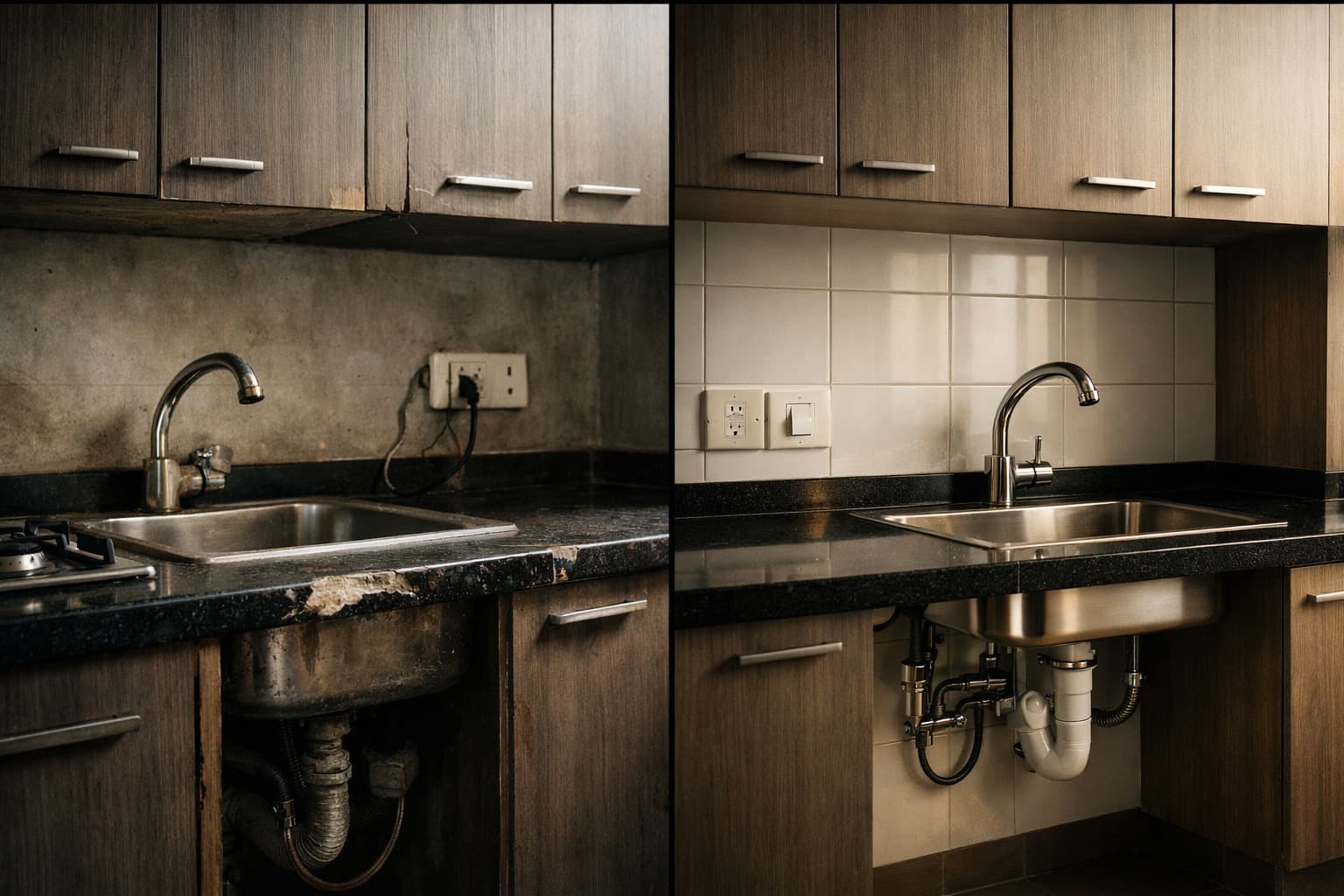
Plumbing issues are among the most common kitchen defects. Inspect the sink area for water pressure, drainage speed, and leakage under the counter. Turn on taps to check for consistent flow. Poor fittings may indicate low quality installation. Look for signs of dampness on walls and cabinets. Proper plumbing supports residential kitchen hygiene by preventing stagnant water and odor. Fixing concealed plumbing later can be disruptive and expensive, making early inspection essential.
Electrical and Appliance Safety
Electrical safety directly impacts daily comfort and fire risk. Check the placement of sockets and switches. They should be away from water sources and at convenient heights. Loose wiring or exposed connections are serious red flags. If appliances are provided, confirm they are securely installed and functional. This step aligns with a kitchen safety checklist and protects buyers from future hazards. Safe electrical planning also supports efficient use of modern kitchen appliances.
Ventilation, Lighting, and Fire Safety
Good ventilation keeps the kitchen comfortable and clean. Check for an exhaust fan or chimney and ensure it vents outside. Poor airflow leads to grease buildup and heat retention. Lighting should be bright enough for safe cooking, especially near the stove and sink. Fire safety is often ignored but critical. Confirm there is space for a fire extinguisher and that gas pipelines are properly fitted. These checks support kitchen safety and hygiene standards for homes.
Storage, Finishes, and Material Quality
Storage determines how organized and functional a kitchen feels. Inspect cabinet strength, hinges, and shelves. Materials should resist moisture and heat. Countertops must be level and free from cracks. Low quality finishes may peel or stain quickly. During a flat kitchen inspection, these details reveal construction quality. Durable materials reduce maintenance and improve long term value. This step also helps buyers assess whether the kitchen design suits Indian cooking needs.
Hygiene Standards and Health Considerations
Cleanliness is not only about appearance. Residential kitchen hygiene depends on surfaces that are easy to clean and resistant to bacteria. Check wall tiles for gaps where dirt can accumulate. Flooring should be non slippery and washable. Proper waste disposal space is important to maintain hygiene standards. A kitchen that supports cleanliness protects family health and reduces daily effort. This is a vital part of what to check in kitchen during home inspection.
Common Kitchen Defects in New Homes
Many buyers assume new flats are defect free, but this is not always true. Common kitchen defects in new flats include uneven countertops, poor drainage slope, loose cabinets, and misaligned tiles. Gas pipeline leaks and weak electrical points are also reported. Identifying these issues early allows buyers to request rectification. A kitchen inspection checklist before buying a flat helps uncover such problems before possession, avoiding disputes later.
When to Inspect and Who Should Do It
Ideally, the kitchen should be inspected during the site visit and again before possession. Buyers can conduct a basic inspection themselves using a checklist. For higher value properties, a professional inspector adds technical insight. Timing matters, as some defects appear only after fittings are installed. A systematic kitchen inspection ensures the space is safe, functional, and ready for daily use from day one.
Summary
Kitchen inspection is often ignored during property visits, yet it affects daily comfort, health, and future repair costs. This article explains a practical kitchen inspection checklist for homebuyers, covering layout, plumbing, electrical safety, ventilation, storage, and hygiene standards. It highlights common kitchen defects in new flats and shows what to check in kitchen during home inspection. By following these clear steps, buyers can identify risks early, negotiate better, and ensure the kitchen supports safe, efficient, and long term living in their new home comfortably confidently