
Key Features of Eco-Friendly Housing Projects in India
Summary
Discover key features of eco-friendly housing projects in India. Learn about energy efficiency, water conservation, green materials, and certifications like IGBC & GRIHA. Save money, live healthier, and boost property value!

Introduction
Buying a home today involves more decisions than it did a decade ago. Price, location, developer reputation, amenities — all of that still matters. But a growing number of Indian homebuyers are now adding one more filter to that list: sustainability. Eco friendly housing is no longer a niche preference of environmentally conscious buyers. It is becoming a practical priority for families who want lower electricity bills, cleaner air inside their homes, and the quiet assurance that their biggest financial investment is not working against the planet. The challenge is knowing what to actually look for when a developer claims their project is green. This guide covers the key features of eco friendly housing projects in India in plain, usable terms.
What Eco Friendly Housing Really Means
Before diving into features, the term itself needs clarity. Sustainable housing does not simply mean a few potted plants on the terrace or a building painted in earthy tones. A genuinely eco friendly housing project is designed from the ground up to consume less energy, use water responsibly, reduce construction waste, maintain healthy indoor air quality, and have a smaller overall environmental footprint than a conventional building. In India, this is assessed and certified by bodies like IGBC — the Indian Green Building Council — and GRIHA, the Green Rating for Integrated Habitat Assessment. When a project carries one of these ratings, it means the sustainability claims have been independently verified and not just declared by the developer.
Energy Efficient Design — The Most Visible Feature
The first thing to look at in any energy efficient home design is how the building itself handles heat, light, and ventilation. Green homes India are typically oriented to maximise natural daylight and cross ventilation, reducing dependence on artificial lighting and air conditioning. Double glazed windows, solar reflective roof tiles, insulated walls, and shaded external facades all reduce the heat load on a building. When a flat does not heat up as aggressively during summer afternoons, the air conditioner runs less — and that directly translates into a meaningfully lower electricity bill every month of the year.
Solar Energy Integration
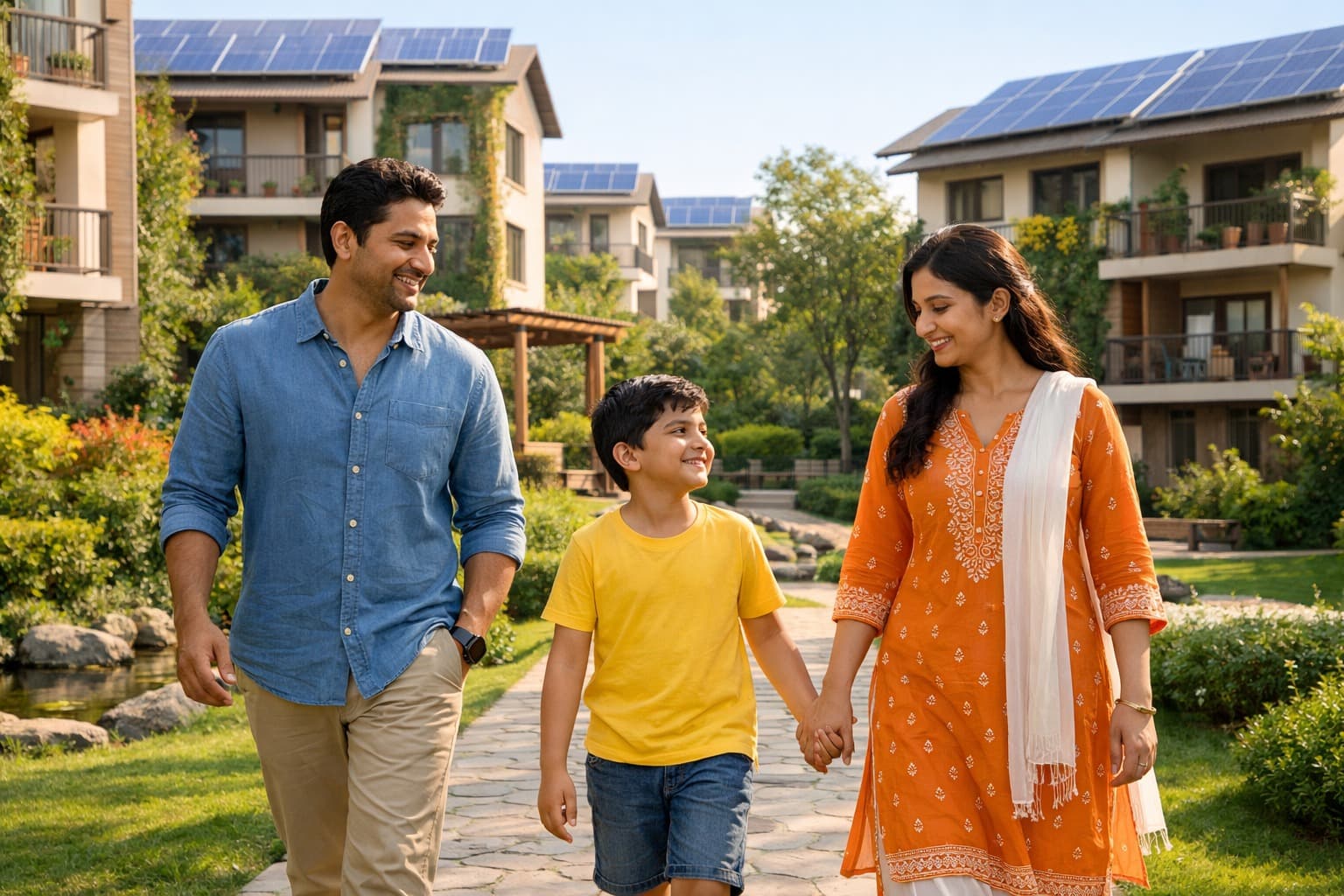
Any serious eco friendly housing project India today incorporates solar panels as a standard feature rather than an optional upgrade. Rooftop solar installations generate electricity for common area lighting, lifts, water pumps, and shared amenities. Some projects go further and offer net metering arrangements where surplus solar energy is fed back into the grid, generating credits for residents. The long term running cost advantage of a solar integrated building over a conventional one is significant. Over a ten year period, the savings in electricity charges for both the society and individual flat owners can comfortably exceed the slight premium paid for a green building features certified apartment.
Water Conservation Systems
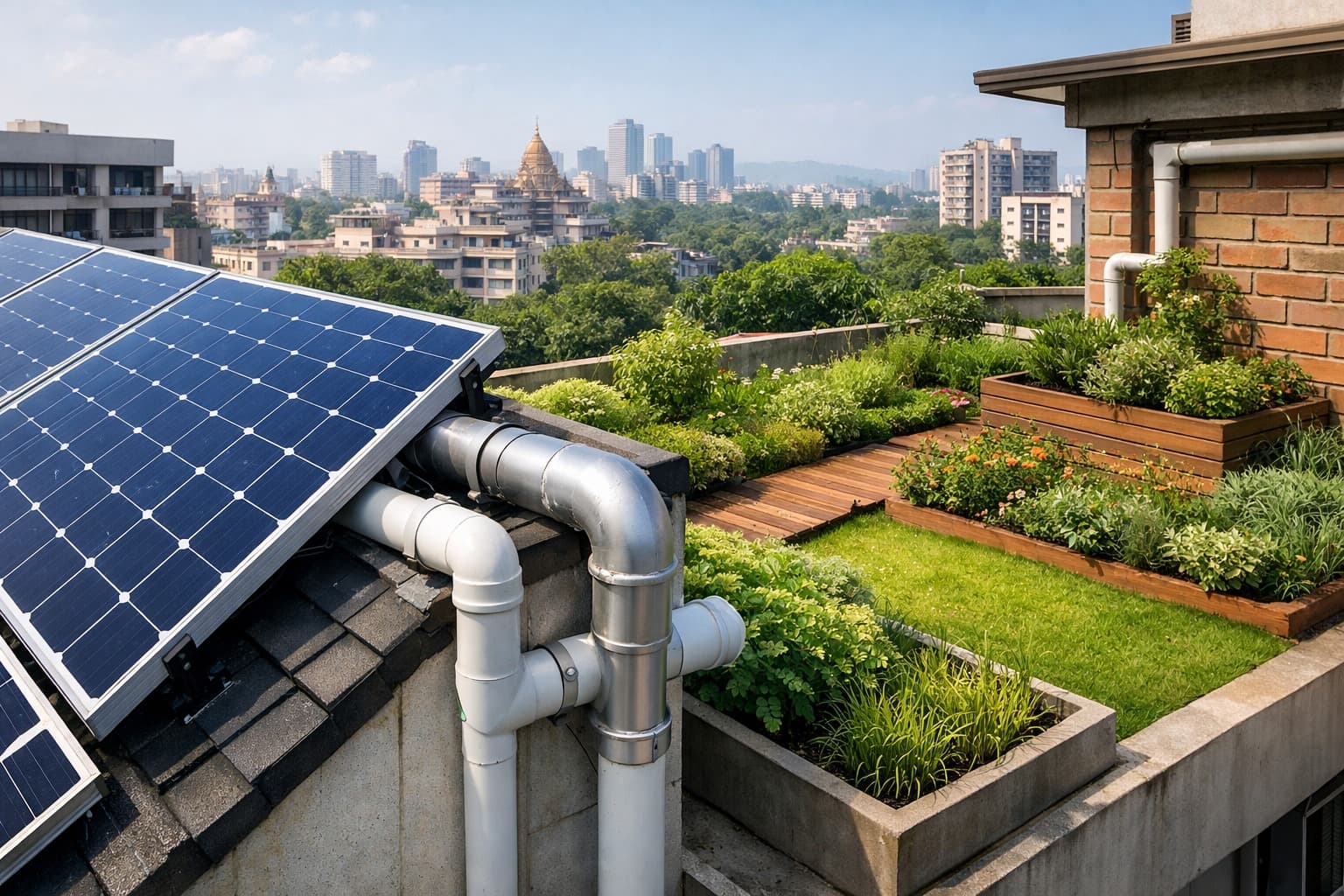
Water scarcity is a reality in most Indian cities, and sustainable home design India addresses this directly. Key features to look for include rainwater harvesting systems that collect and store monsoon runoff for non potable uses like gardening and flushing, sewage treatment plants that recycle greywater within the complex, low flow fixtures in bathrooms and kitchens that reduce consumption without affecting daily comfort, and drip irrigation systems for landscaping that eliminate water wastage entirely. A well designed water management system in a housing project can reduce potable water consumption by 30 to 40 percent compared to a building with no such infrastructure.
Green Building Materials India
The sustainability of a home begins before anyone moves in. Green building materials India refers to the use of construction inputs that have a lower environmental impact than conventional alternatives. Fly ash bricks made from industrial waste, recycled steel, autoclaved aerated concrete blocks, low VOC paints that release fewer harmful gases indoors, and certified sustainable wood are all materials that contribute to a lower construction footprint. Buyers should ask developers specifically about the materials used in walls, flooring, and finishes. A developer who cannot answer that question clearly is probably not running a genuinely green project.
Indoor Air Quality and Healthy Living Spaces
How to identify a genuinely green residential project in India often comes down to a question most buyers never think to ask — what is the indoor air quality like? Eco friendly homes use paints, adhesives, and sealants with low volatile organic compound content, meaning fewer toxic gases are released inside the flat after construction. Adequate ventilation design ensures fresh air circulation without relying entirely on mechanical systems. Some premium eco friendly housing projects also incorporate air purification systems, moss walls, or living green partitions within common areas. The long term health impact of breathing cleaner indoor air is real and increasingly well documented.
Waste Management Infrastructure
A genuinely sustainable housing project treats waste as a resource rather than a disposal problem. Organic waste composting units within the complex convert kitchen and garden waste into usable compost for landscaping. Segregated collection systems for dry recyclables ensure paper, plastic, glass, and metal are diverted from landfills. Some advanced projects incorporate biogas plants that convert organic waste into cooking gas for common kitchens or backup energy. This kind of on site waste processing reduces the society's municipal waste output significantly and lowers overall maintenance costs over time.
Why Green Building Certification Improves Property Value
How green building certification improves property value in India is now backed by market data rather than just theory. IGBC and GRIHA rated buildings consistently command a 5 to 15 percent price premium over comparable non certified projects in the same locality. More importantly, why eco friendly homes have lower electricity and water bills is a message that is resonating strongly with buyers who are calculating long term costs and not just the purchase price. As energy costs rise and water charges increase across Indian cities, the financial case for energy efficient homes only strengthens with every passing year.
Summary
Understanding the key features of eco friendly housing projects in India helps buyers make decisions that serve both their finances and their environment. From energy efficient home design and solar integration to green building materials India and water conservation, genuine sustainable housing delivers measurably lower running costs and healthier living spaces. How green building certification improves property value in India is increasingly reflected in market prices. For buyers evaluating eco friendly housing projects India, looking beyond the brochure and verifying these features on the ground is the most important step.