
Illegal Construction Demolished: A Homebuyer's Guide to Verification in India
Summary
Protect your investment! This guide outlines crucial document verification steps for homebuyers in India to avoid illegal construction demolitions. Learn about approved plans, completion certificates, occupancy certificates, and RERA registration.

Introduction
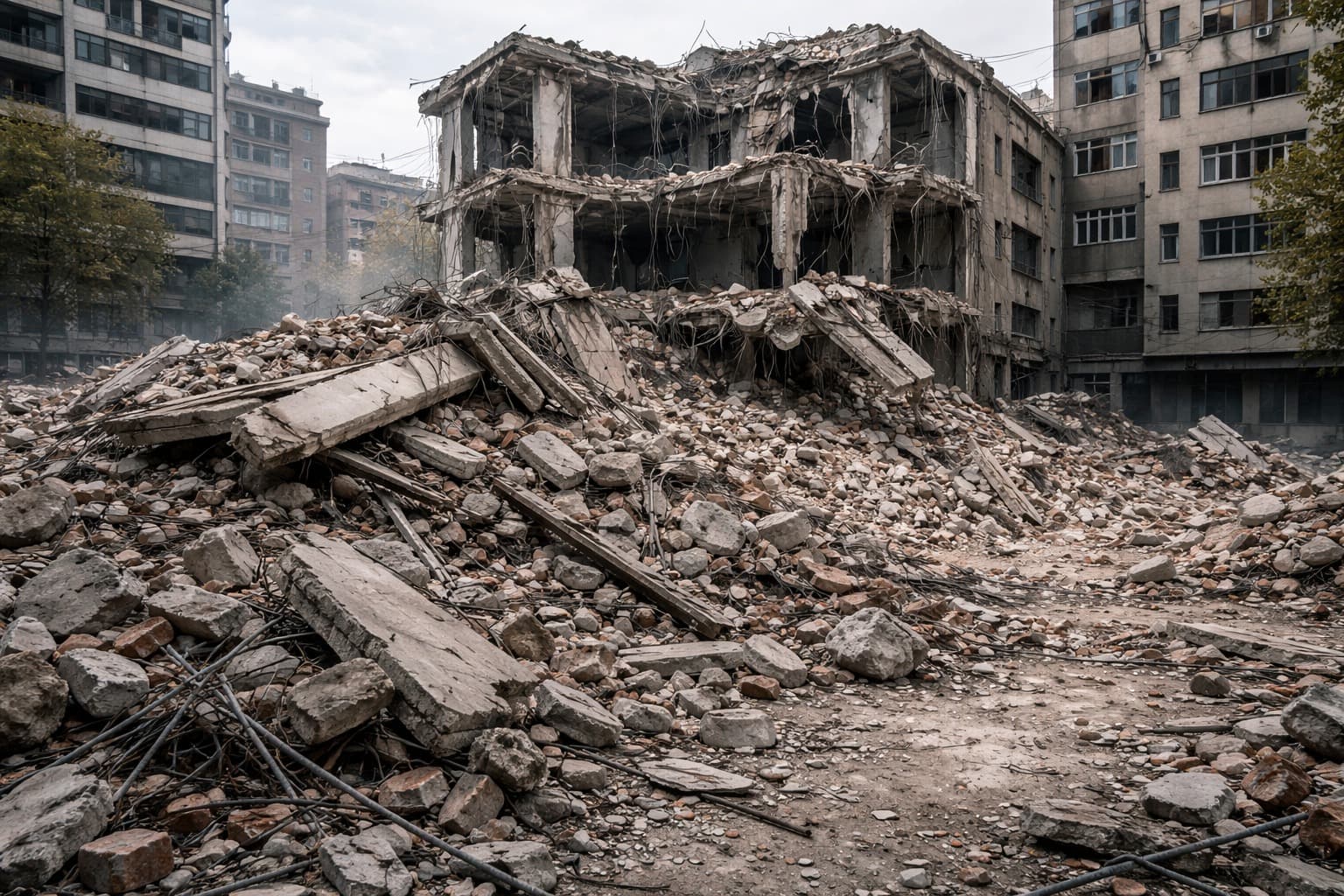
Imagine spending years saving for a home, paying every instalment on time, planning your move-in date with your family, and then receiving a notice from the municipal authority saying the building is unauthorised and faces demolition. This is not a hypothetical scenario. It has happened to real families across Mumbai, Bengaluru, Hyderabad, and dozens of smaller cities. The painful truth is that illegal construction demolitions in India spare no one, not even innocent buyers who had no idea the building they purchased was built without proper approvals. The Supreme Court has been unequivocal: unauthorised construction must be demolished and courts will not readily entertain regularisation. If you are buying property anywhere in India, protecting yourself begins with knowing exactly what to verify and why.
What Makes a Building Illegal
A building becomes legally unauthorised at any point where construction deviates from what the competent authority has approved. This can happen in several ways. A developer may construct additional floors beyond what the sanctioned plan permits. Floor Area Ratio limits may be violated, squeezing more built-up space onto a plot than the regulations allow. Setback requirements from the road or neighbouring plots may be ignored to gain extra square footage. Construction may begin without obtaining the mandatory Commencement Certificate. And in some cases, the entire building is put up without any approved plan at all.
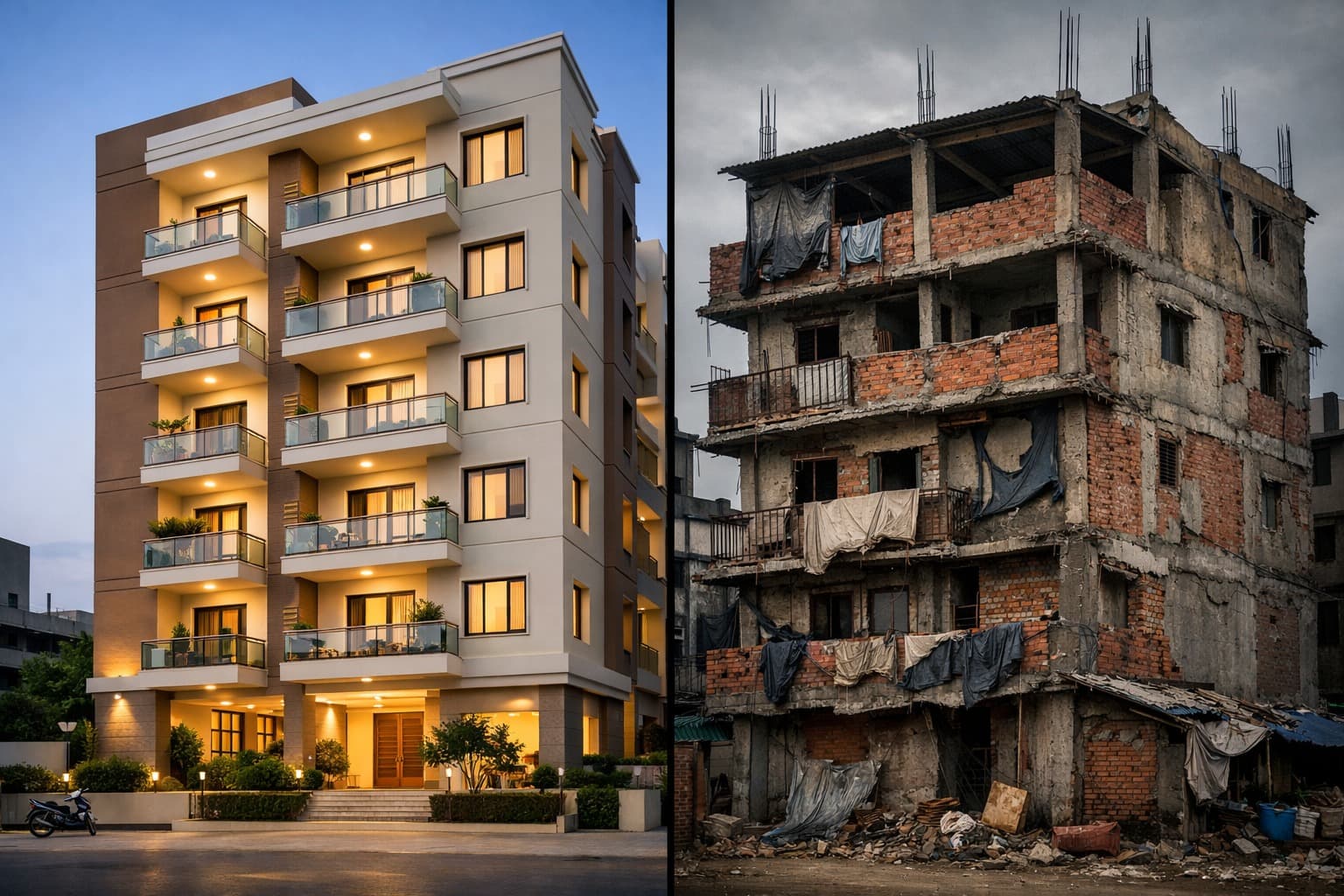
What makes this particularly dangerous for buyers is that an illegal construction can look entirely finished and habitable. It may have a lift, lobby, parking, and branded fittings. The brochure may show a beautiful clubhouse. None of these visible elements tell you anything about whether the required approvals are in place.
The Supreme Court's Position
India's Supreme Court has taken a firm and repeated position on this issue. In a 2025 ruling, the bench confirmed that unauthorised construction has to be demolished and that no leniency should be shown. More critically, the court invoked the principle of caveat emptor, meaning let the buyer beware, making clear that purchasers of properties are obligated to exercise due diligence to verify legality before buying. The court noted that delayed enforcement by authorities does not confer any legitimacy on an illegal structure, and that financial investment or long occupation does not protect an unauthorised building from demolition.
The implications for buyers are stark. If you purchase a flat in a building that gets demolished, you lose your home. Recovery of money from a developer who has already collected and spent crores becomes a long and painful legal battle with no guaranteed outcome.
The Four Documents That Cannot Be Skipped
The first document to demand is the approved building plan. This is issued by the local municipal authority, whether that is BBMP in Bengaluru, MCGM in Mumbai, GHMC in Hyderabad, or the relevant Development Authority in your city. Match what was approved with what was actually built. Any deviation of more than five percent from the approved plan puts the property in legally risky territory.
The second is the Completion Certificate (CC). This is issued by the municipal authority after it inspects the completed structure and confirms it matches the approved plan and meets all building standards. Without a CC, the building is legally incomplete. Many developers delay obtaining it to avoid final tax assessments, which is itself a red flag.
The third, and arguably most important for a buyer taking possession, is the Occupancy Certificate (OC). This certifies that the building is safe to occupy and that civic infrastructure connections including water, sanitation, and electricity have been approved. Occupying a flat without an OC means you are living in a building the authorities legally classify as unauthorised. Utility connections can be refused or withdrawn, and future legal complications can make the flat extremely difficult to sell.
The fourth is RERA registration. Every residential project above a threshold size must be registered under the Real Estate Regulation and Development Act. The RERA portal for your state lists approved projects, their sanctioned plans, and the developer's legally committed specifications. If a project is not on the RERA portal, treat that as a serious warning sign.
What Else to Check
Beyond these four core documents, verify the land title and that the seller has a clean, unencumbered right to sell. Ask for the Encumbrance Certificate, which confirms no loans, disputes, or legal claims are attached to the property. Request No Objection Certificates from the fire, water supply, and electricity departments. If the land was previously agricultural, confirm a land conversion certificate has been obtained, because construction on unconverted agricultural land is automatically unauthorised.
Bank pre-approval of a project is also a useful secondary indicator. Lenders conduct their own legal due diligence before approving home loans against a project. If multiple reputable banks have sanctioned loans for buyers in a project, it suggests the basic documentation is in order, though this should not replace your own independent verification.
Summary
Illegal construction demolitions in India are not rare events confined to slums or informal settlements. They affect apartment buyers in finished-looking projects built by developers who cut corners on approvals. The Supreme Court offers no protection to buyers who skip due diligence, and regularisation of unauthorised structures is increasingly unavailable. Before signing any agreement for a flat in India, verify the approved building plan, Completion Certificate, Occupancy Certificate, and RERA registration without exception. These documents are the only reliable shield between your life savings and a demolition notice.