
How to Verify Legal NOCs for Property Before You Sign Anything
Summary
Protect your property investment by verifying all legal No Objection Certificates (NOCs) before signing. This guide details types of NOCs, step-by-step verification, and consequences of skipping this crucial process.

Introduction
Most Indian homebuyers spend weeks comparing floor plans, negotiating prices and calculating EMIs. Very few spend equivalent time on one document that can protect everything they have worked for: the No Objection Certificate. Popularly called a property NOC India, this is the official confirmation that a property is legally clear, carrying no pending dues, disputes, liens or restrictions that could come back to haunt you after registration.
Skipping this step, or accepting one without checking it carefully, is where otherwise well-planned property purchases quietly unravel. This guide tells you exactly how to approach NOC verification before any money changes hands.
What a NOC for Property Actually Means
A legal NOC property document is issued by a competent authority confirming that they have no objection to a particular property transaction moving forward. In plain terms, it is a green signal from the relevant party declaring that everything on their end is settled and the deal can proceed legally.
The key word here is competent authority. Depending on the type of transaction, the NOC must come from the right source. A document signed by the wrong party, even if it looks official, carries no legal weight. Understanding who should be issuing what is the first and most important layer of NOC verification.
The Different Types of NOC You Will Encounter
Types of NOC in property transactions vary based on the nature of the deal and the parties involved.
A builder NOC comes from the developer and confirms that all dues to them are fully cleared and there are no pending legal or financial claims on the unit. This is critical in first-sale transactions.
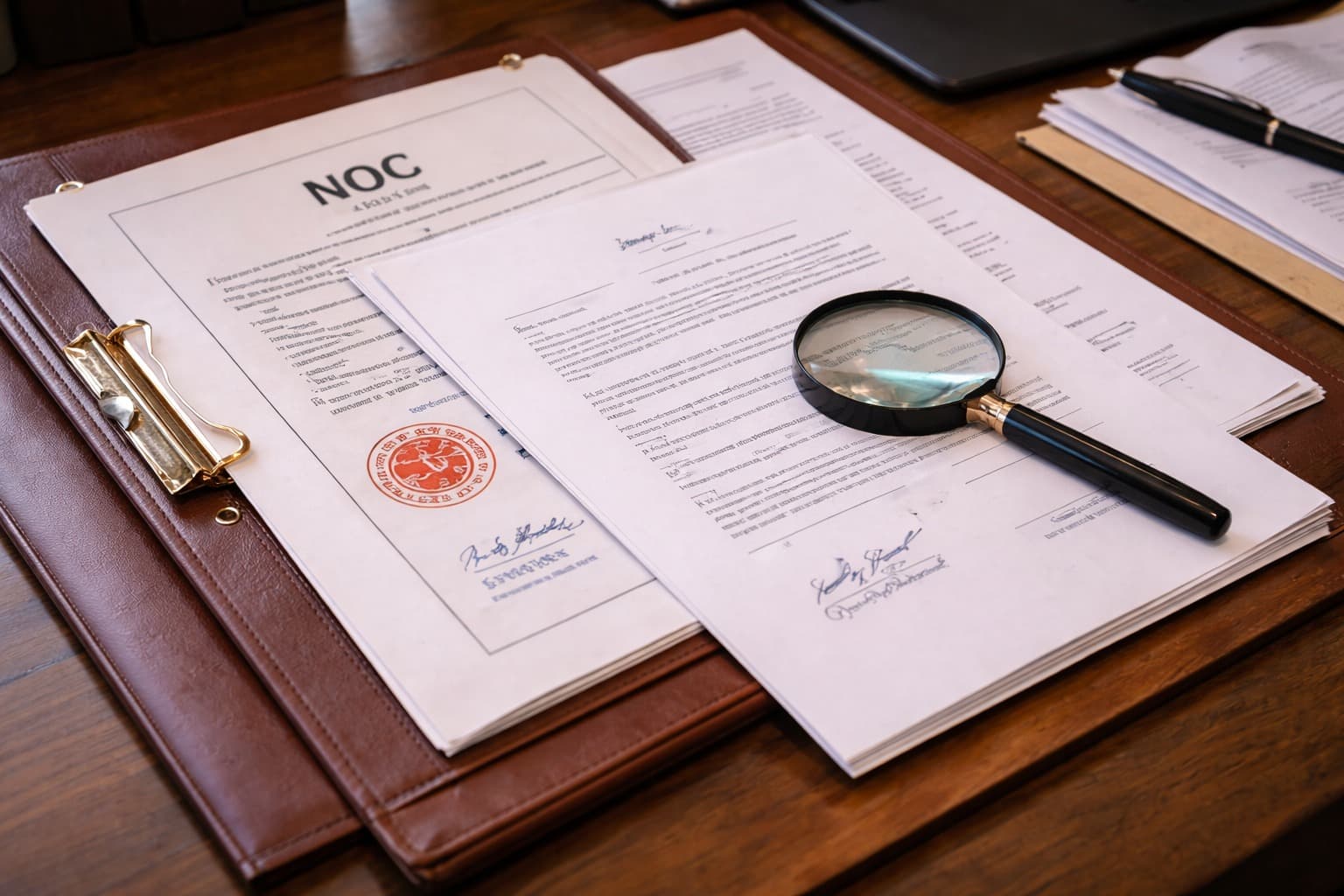
A bank NOC is issued when a home loan on the property has been fully repaid. Without this, the lender's lien technically remains active on the property even after you purchase it. Always insist on the original bank NOC if the seller has an existing loan against the property.
A society NOC is issued by the housing society and confirms that maintenance charges, electricity dues and any other community charges are fully paid by the outgoing owner. Most sub-registrar offices will not process a resale registration without this.
A government or municipal NOC is required when the property sits on leasehold land or land allotted by a development authority. This confirms that the transfer is permitted under applicable land use rules.
A legal NOC becomes necessary in inheritance situations, family settlements or cases where there is any history of disputes. It establishes that all legal heirs have agreed and no one retains an outstanding claim.
How to Verify NOC for Property Step by Step
The NOC verification process India is not complicated if you approach it methodically.
Start by identifying which NOCs apply to your specific transaction. A resale flat in a cooperative housing society needs a different set of documents compared to a first-sale unit from a builder in a plotted development.
For each NOC, verify the issuing authority directly. Do not rely solely on what the seller hands you. Call the bank branch and confirm the loan closure. Visit the housing society office and check their records. If a builder NOC is presented, cross-check it against the builder's office register or RERA portal filing.
Check the date on every NOC carefully. An NOC that is several months old may have lapsed in relevance if dues have accumulated again in the interim. Fresh clearances are always safer.
Look for stamps, signatures and authority seal. A legal NOC check before buying property is only valid if the document carries the original wet signature of the authorised officer, the official stamp of the issuing body and a reference number that can be traced back.
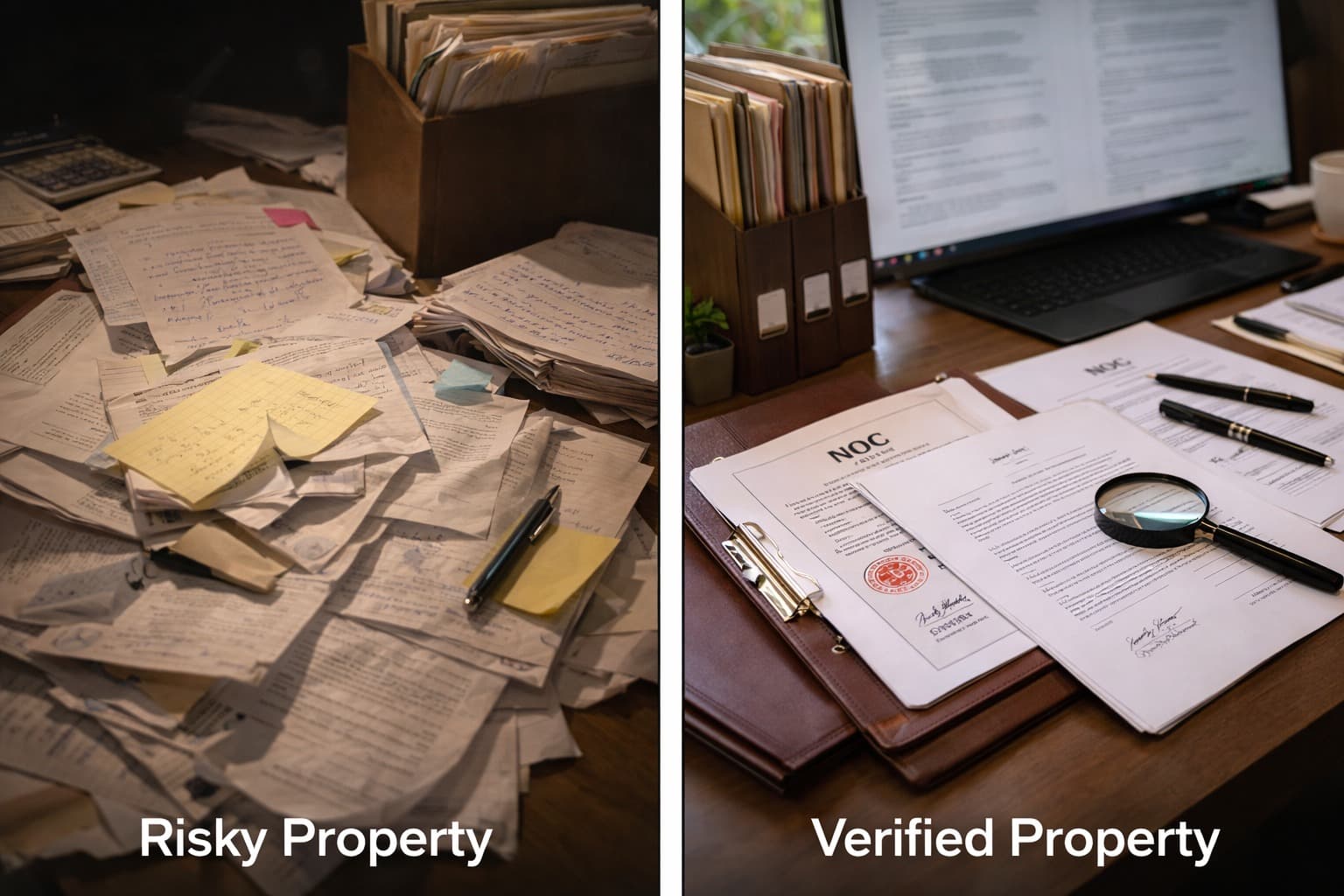
Keep physical copies and insist on digital versions wherever available. Several states now allow online NOC verification through their official portals, which adds an additional layer of authentication.
What Happens When a Property NOC Is Missing
The consequences of proceeding without a verified property NOC India range from inconvenient to catastrophic. Registration can be delayed or outright rejected by the sub-registrar. Banks may refuse to process your home loan application. If a lien from a previous home loan was never formally released, the lender can technically exercise a claim over the property even though you are the new owner. In the worst cases, municipal authorities in states like Maharashtra and Karnataka have powers to take legal action or impose penalties on properties where mandatory clearances were bypassed.
Practical Checks Before You Accept Any NOC
Confirm all outstanding dues are cleared before the NOC is even requested. An NOC issued while dues are still running is meaningless. Ask for receipts, not just assurances.
Verify the person signing the NOC actually holds authority to do so. In housing societies, this is typically the secretary or chairman with the committee resolution behind it. In banks, it should be an authorised signatory on official letterhead.
Summary
How to verify legal NOCs for property is not a bureaucratic formality. It is the single most important legal protection available to an Indian homebuyer. The types of NOC in property transactions, from builder and bank to society and municipal, each address a specific risk. The property NOC verification process India requires direct confirmation with issuing authorities, checking validity dates, authenticating signatures and retaining copies. Miss any of these and even a registered property can carry hidden legal liabilities that surface years later.