
How to Spot Dead Space in Any Floor Plan
Summary
Learn to identify hidden inefficiencies in apartment floor plans, commonly known as dead space, before purchase. This guide helps Indian homebuyers spot costly issues like long hallways, irregular rooms, and poor kitchen layouts to ensure a truly functional and comfortable home.

Introduction
Most Indian homebuyers spend significant time checking carpet area, floor level, and which direction the flat faces. Very few spend equal time studying whether the space inside the flat actually works. And that is where the real problem hides.
A flat can look well-proportioned on paper and feel completely dysfunctional to live in. Wasted space in a floor plan does not always announce itself loudly. Sometimes it hides inside a generous-looking passage, an oddly shaped bedroom corner, or a kitchen that forces you to walk three extra steps every time you cook a meal. Learning to spot these problems before purchase is one of the most underrated skills any homebuyer in India can develop.
The Hallway Problem
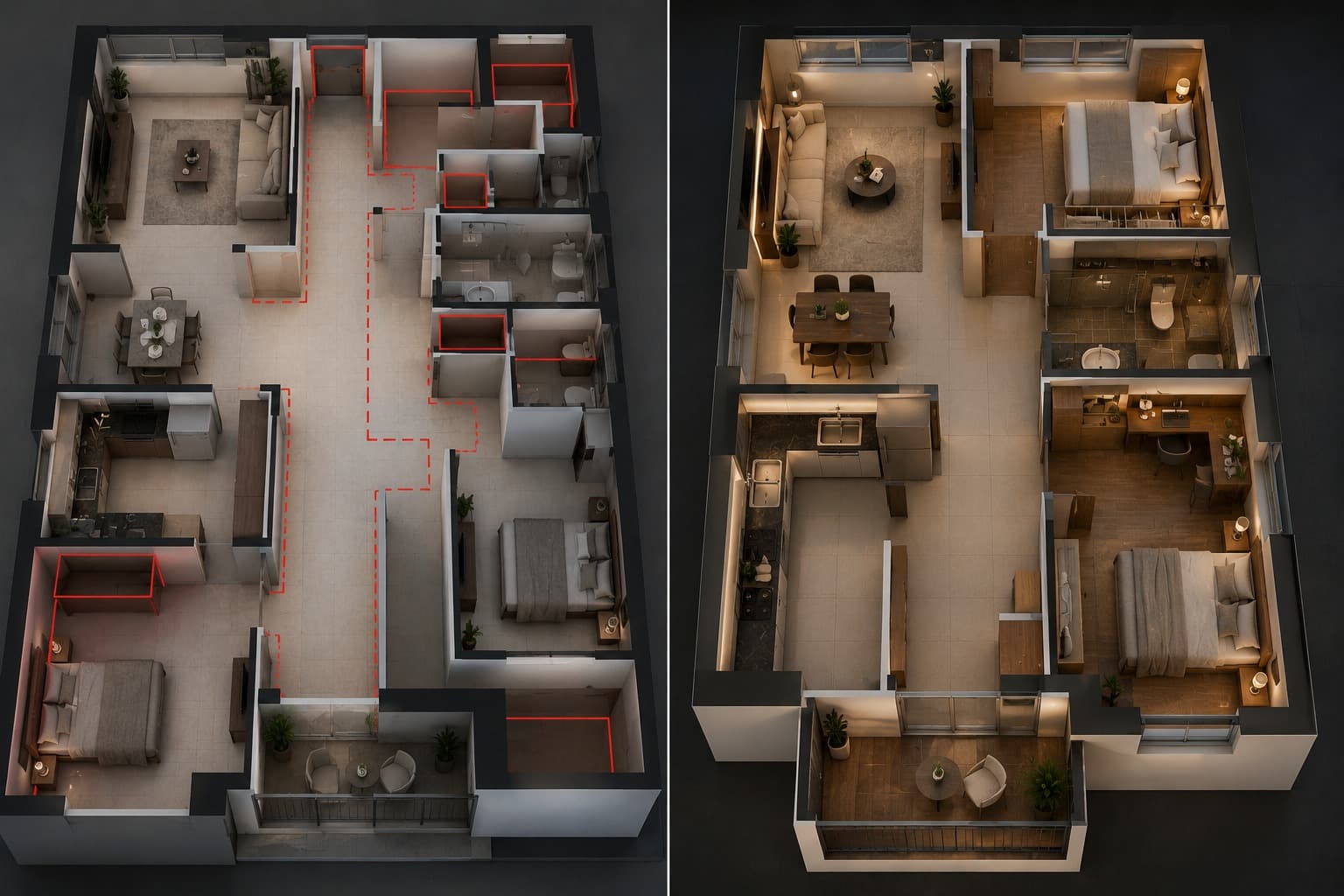
Corridors are the first place to examine on any apartment layout. A passageway that connects bedrooms to the main living area is functionally necessary. A passageway that stretches four to five feet wide and runs eight to ten feet long is essentially a room you are paying for but cannot use for anything.
When you study a floor plan, trace the circulation path mentally. Walk from the main door to the kitchen in your head. Then from the bedroom to the bathroom. If those routes feel long, indirect, or require passing through a wide blank stretch of flooring, that square footage is costing you money without giving you utility. In India's residential market, where carpet area is priced by the square foot, paying for a long corridor at the same rate as a usable bedroom is a quietly expensive mistake.
Irregular Room Shapes
A rectangle fits furniture cleanly. A near-rectangle with one angled wall, a cut corner, or an unexpected pillar in the middle does not. These shapes appear frequently in Indian apartment layouts, particularly in corner units or buildings constructed on non-rectangular plots.
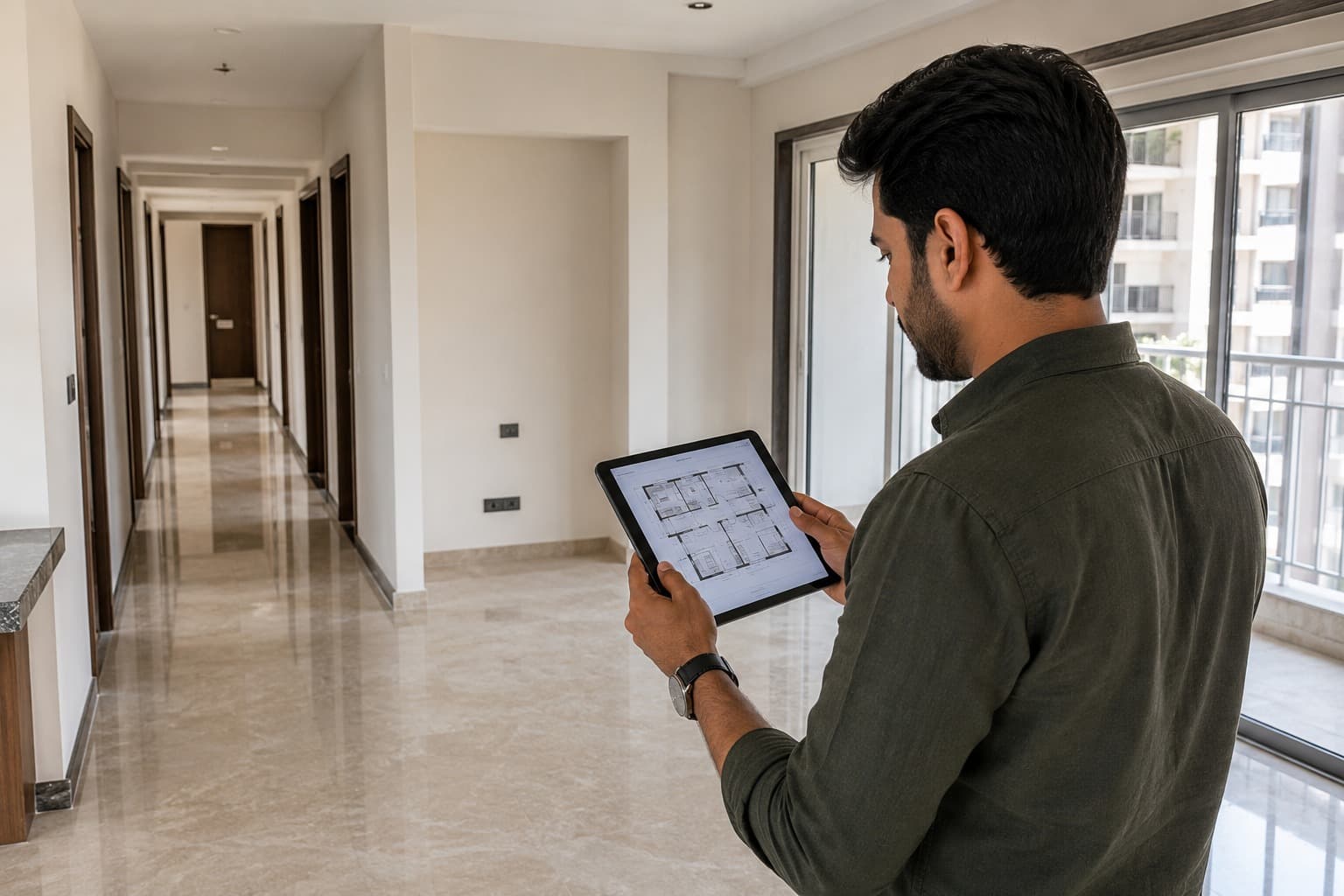
The result is what designers call dead zones: corners that cannot hold a bed, a sofa, or any standard piece of furniture without looking visually awkward and physically wasteful. Before signing any agreement, mentally place your actual furniture inside each room. If the dining table needs to sit at an angle to avoid a column, or the bed leaves a two-foot gap on one side that serves no purpose, you have found a dead zone that will irritate you for as long as you live there.
The Entry Point Test
How does the flat receive you? In a well-designed home layout India, the entrance creates a brief transition before opening into the living space. It gives you somewhere to leave footwear, catch your breath, and orient yourself without immediately colliding with the sofa.
A flat whose main door opens directly into the centre of the living room has no buffer. A flat whose main door reveals the kitchen before anything else has a privacy and flow problem. These are floor plan red flags for Indian homebuyers that often get overlooked because buyers are focused on room count rather than movement logic.
Windows, Light, and the Walls Nobody Questions
Check which walls carry windows and which are completely blank. A bedroom with one small window positioned awkwardly toward another building's wall will feel dim and enclosed regardless of how generous its dimensions look on paper. Cross-ventilation, meaning windows on at least two walls of the flat, matters for air circulation and significantly affects comfort through eight months of warm Indian weather.
Blank interior walls that face no window and serve no structural purpose are another sign that the builder's planning did not prioritise how the space would actually feel to occupy.
The Kitchen Layout Check
Kitchen dead zones in apartment layout India are particularly common. A kitchen shaped like a narrow rectangle with a window at the far end forces movement in only one direction. There is no room to stand at the counter while someone else accesses the refrigerator. Two people cooking simultaneously becomes physically uncomfortable.
Look for kitchens where the counter, stove, and sink form a workable triangle rather than a straight line that stretches too far in one direction.
Summary
How to identify wasted space in a floor plan comes down to tracing actual movement rather than measuring dimensions. Long hallways, irregular room shapes, direct-entry living rooms, single-wall windows, and poorly configured kitchens are the most common signs of a bad floor plan in Indian apartments. Walk through the plan mentally before you walk through the property physically. The five minutes spent reading a floor plan carefully before buying can save years of daily frustration inside a flat that looked fine on paper but never felt right to live in.