
How to Inspect Balcony and Terrace Areas Before Buying a Home
Summary
Inspect balconies/terraces before buying to avoid costly repairs and safety risks. Check flooring, waterproofing, railings, and drainage. Understand maintenance responsibilities for long-term value and comfort.

Introduction
Balconies and terraces add comfort, light, and open space to a home. However, they are also areas where construction defects and maintenance issues often appear first. Many homebuyers focus only on interiors and ignore outdoor spaces during inspection. This can lead to leakage, safety risks, and high repair costs later. Knowing how to inspect balcony and terrace areas properly helps buyers avoid future problems and protects long-term property value.
Why Balcony and Terrace Inspection Is Important
Balconies and terraces are exposed to sun, rain, and wind throughout the year. Poor construction or waterproofing can cause water seepage inside the flat. Cracks and loose fittings may also create safety risks. From a resale and rental perspective, well-maintained outdoor areas improve property appeal. A careful balcony and terrace inspection ensures structural safety, comfort, and peace of mind.
Check the Flooring Condition Carefully
Start by examining the flooring surface. Look for cracks, uneven tiles, or hollow sounds when tapped. These may indicate weak installation or water damage underneath. Flooring should slope slightly towards the drain to allow proper water flow. Stagnant water on balconies or terraces is a serious concern and often leads to leakage issues.
Inspect Waterproofing and Drainage
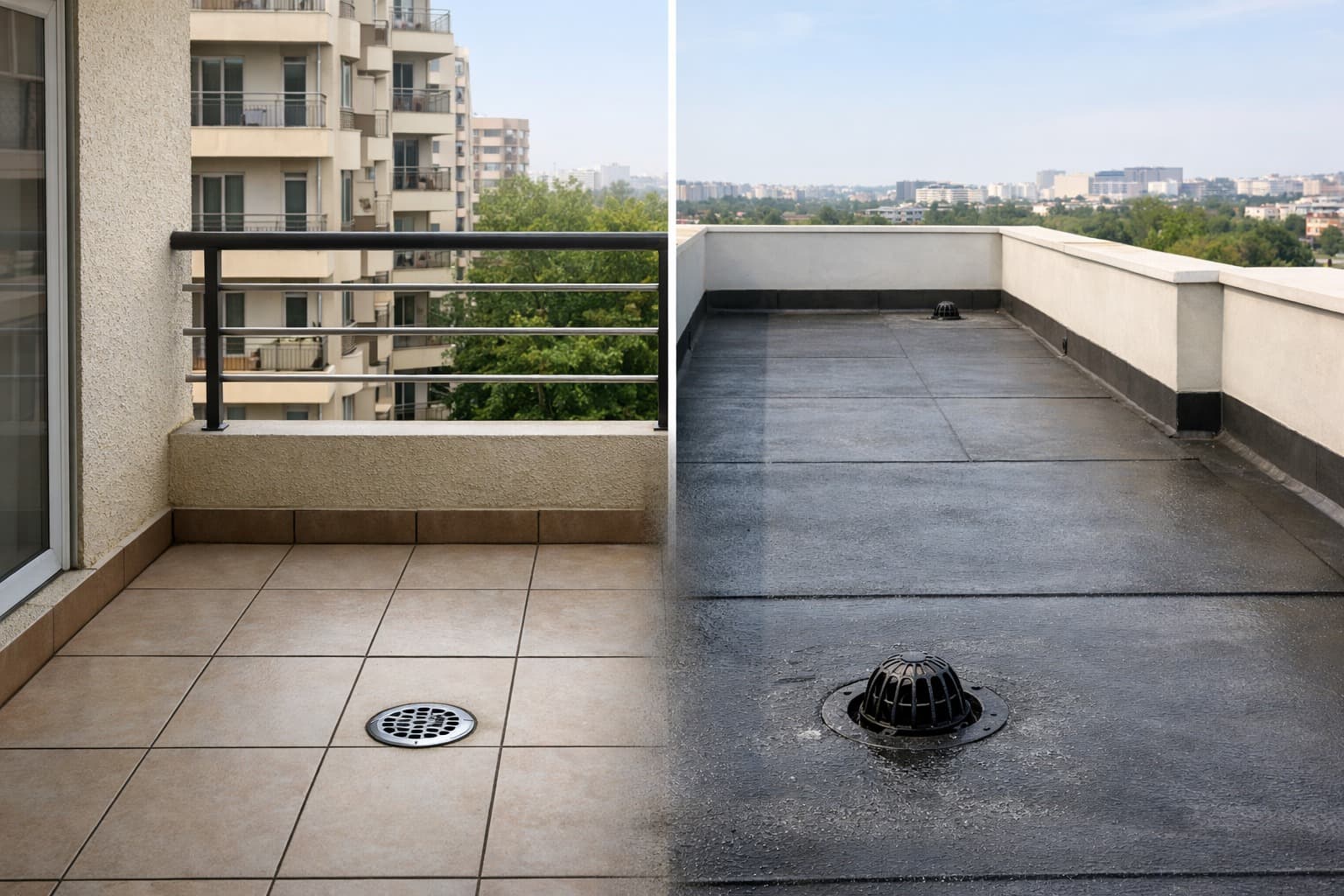
Waterproofing is one of the most critical checks. Ask the builder or owner about the waterproofing system used. Look for peeling paint, damp patches, or white salt marks on nearby walls. Check whether drainage outlets are clear and properly placed. Poor drainage is a common cause of long-term damage in terrace inspection cases.
Examine Wall and Railing Safety
Balcony railings must be strong and securely fixed. Push gently to check stability. Railings should meet height safety norms, especially for families with children. Inspect walls for cracks, seepage marks, or loose plaster. Small cracks may seem harmless but can grow larger over time if ignored during property inspection.
Review Ceiling and Underside Areas
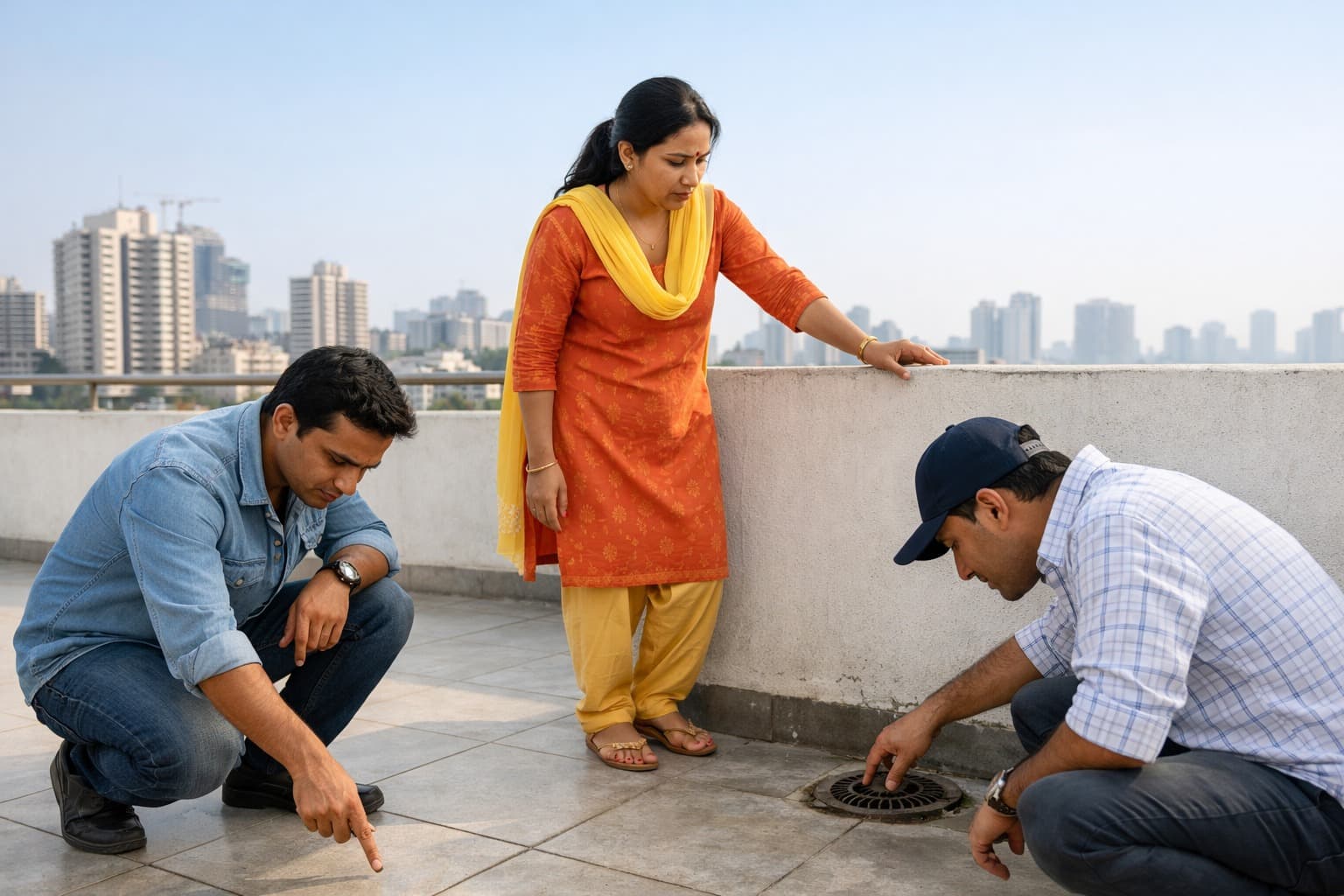
If you are inspecting a terrace above another flat, check the underside of the slab from the lower floor. Signs of leakage include water stains, peeling paint, and damp patches. These issues usually point to poor waterproofing above. This step is essential in any apartment inspection to avoid future disputes.
Check Door and Window Frames
Balcony doors and windows should open and close smoothly. Check for gaps between frames and walls. Poor sealing allows rainwater and dust to enter the flat. Aluminium or UPVC frames should be properly fixed and free from corrosion. Faulty frames often cause leakage during heavy rainfall.
Evaluate Load and Usage Suitability
Ask about the load-bearing capacity of balconies and terraces. Avoid placing heavy planters, furniture, or water tanks without confirmation. Some terraces are not designed for gatherings or heavy usage. Understanding usage limits is a key part of a home inspection checklist and helps prevent structural stress.
Look for Proper Slope and Expansion Joints
Balconies and terraces should have a visible slope directing water towards drains. Flat surfaces increase water retention. Check expansion joints, especially in larger terraces. These joints allow movement due to temperature changes and prevent cracks. Missing or damaged joints increase the risk of leakage.
Assess Safety Features and Barriers
For high-rise apartments, safety is critical. Ensure balcony grills, railings, and parapet walls are high enough. There should be no sharp edges or loose fittings. Glass railings should be toughened and properly secured. Safety checks are especially important for families and elderly residents.
Inspect Electrical and Utility Points
Check if any electrical points, lights, or outdoor sockets are installed in the balcony or terrace. These should be weatherproof and properly insulated. Exposed wiring is dangerous and should be avoided. Also check for proper placement of AC outdoor units and drainage pipes.
Verify Terrace Access and Rights
For terrace areas, confirm whether the terrace is private, shared, or exclusive use. Ask for documentation mentioning terrace rights clearly. Misunderstanding terrace ownership often leads to disputes later. This step is vital during property inspection checklist reviews for apartments.
Maintenance and Society Responsibility
Ask who is responsible for maintaining balcony and terrace areas. Some societies cover terrace waterproofing, while others place responsibility on individual owners. Understanding maintenance responsibility helps estimate future costs and avoid confusion.
Common Mistakes Buyers Should Avoid
Many buyers skip outdoor inspections due to time pressure. Others assume new buildings have no issues. Ignoring drainage slope, waterproofing quality, and safety norms can be costly. Always inspect balconies and terraces during or after rainfall if possible.
Long-Term Impact on Property Value
Well-maintained balconies and terraces improve ventilation, natural light, and overall living quality. Homes with leak-free and safe outdoor areas command better resale and rental demand. Regular inspection and early repair reduce long-term maintenance expenses.
Final Checklist Before Purchase
Before finalising the purchase, recheck flooring, waterproofing, railings, drainage, doors, and safety features. Document any issues and get written confirmation for repairs. A proper inspection ensures your home remains comfortable and secure for years.
Summary
Inspecting balcony and terrace areas is essential before buying a home. These spaces face constant weather exposure and often develop leakage and safety issues if poorly built. Buyers should carefully check flooring, waterproofing, drainage, railings, doors, and usage limits. Understanding maintenance responsibility and terrace rights is equally important. A thorough inspection reduces future repair costs, prevents disputes, and protects long-term property value while ensuring safe and comfortable living.