
How to Inspect Amenities Before Buying a Flat: A Practical Guide for Buyers
Summary
Before buying a flat, thoroughly inspect amenities for usability, safety, and long-term value. Verify approvals, assess maintenance, understand rules, and prioritize practicality over appearance to avoid future disappointments and ensure lasting satisfaction.

Introduction
Amenities often play a decisive role when buyers shortlist a residential project. Swimming pools, gyms, gardens, clubhouses, and play areas are showcased prominently during site visits. However, many buyers discover after possession that the promised amenities are incomplete, poorly maintained, or unusable. Inspecting amenities properly before buying a flat is essential to ensure that what you are paying for actually adds value to daily living and long-term satisfaction.
Why Amenity Inspection Matters
Amenities are not free additions; their cost is built into the property price and ongoing maintenance charges. Poorly designed or unfinished amenities increase expenses without delivering benefits. For first-time buyers especially, understanding the quality and usability of amenities prevents disappointment and financial strain later.
Check Whether Amenities Are Approved
Before inspecting physical facilities, buyers should confirm that the amenities are part of the approved plan. Only amenities shown in sanctioned layouts are legally assured. Verbal promises or brochure images that are not reflected in approvals may never be delivered. This check protects buyers from false expectations.
Inspect Actual Construction, Not Just Display Areas
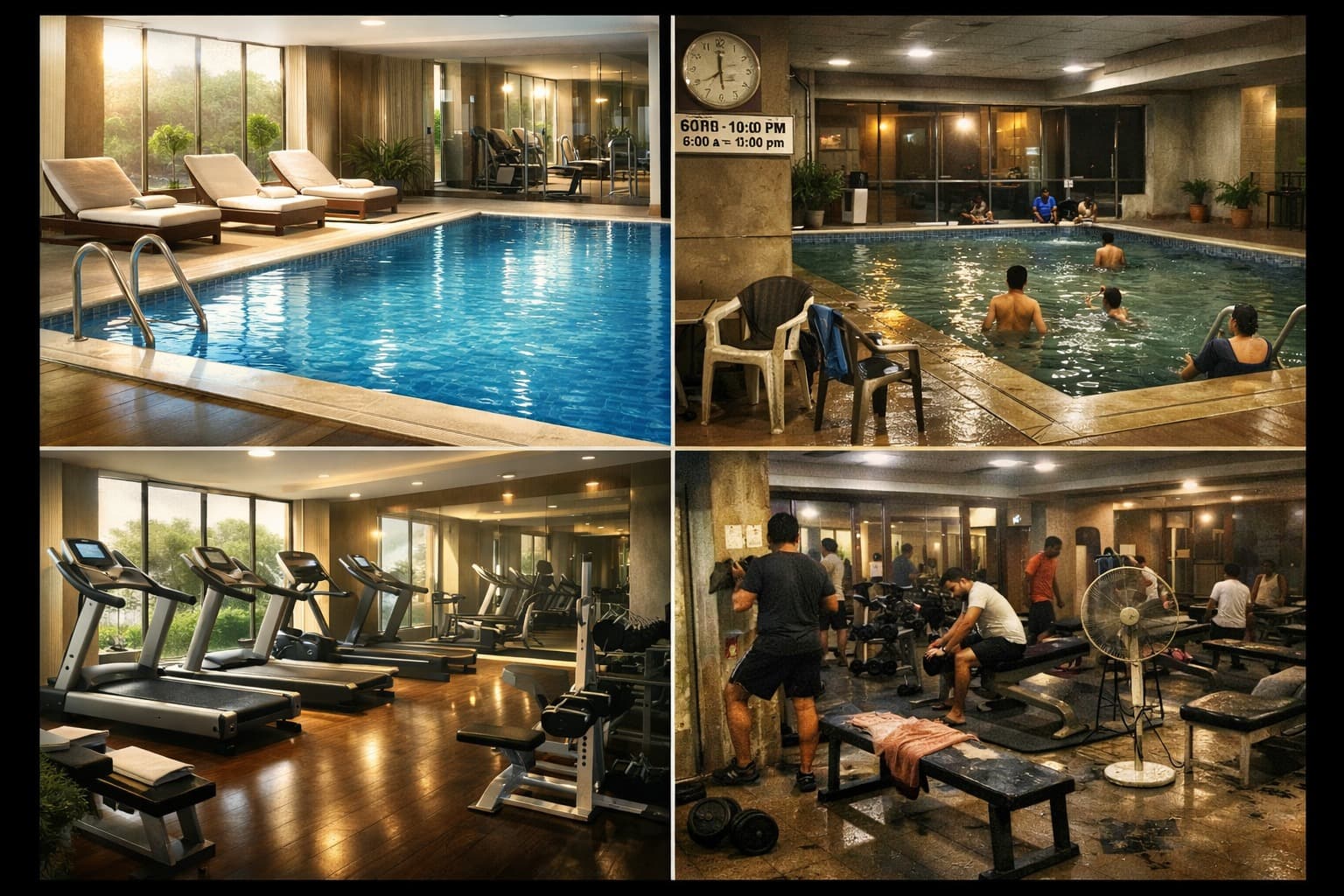
Many projects showcase model amenities or artist impressions. Buyers should ask to see completed or nearly completed amenities within the project. Temporary setups or sample installations do not reflect final quality. Inspect materials, finishes, and space allocation carefully.
Evaluate Usability, Not Just Appearance
Amenities should be practical, not just visually appealing. A gym with limited ventilation, a swimming pool with poor access, or a clubhouse that feels cramped reduces usability. Buyers should assess whether they would realistically use these facilities in daily life.
Assess Maintenance Requirements
High-end amenities often come with high maintenance costs. Buyers should understand how much maintenance fees are expected to increase due to amenities. Facilities that look attractive but require frequent repairs or staffing can strain monthly budgets.
Check Safety and Accessibility
Safety standards are critical, especially for families with children or senior citizens. Play areas should be secure, lifts should connect amenities conveniently, and common areas should have proper lighting and railings. Poor safety design can limit actual use.

Inspect Common Areas Around Amenities
Amenities do not exist in isolation. Corridors, entry points, washrooms, and storage areas supporting amenities should also be inspected. Poorly maintained surrounding areas indicate future neglect and higher repair costs.
Understand Usage Rules and Restrictions
Some amenities come with strict usage rules or limited timings. Buyers should ask about access policies, guest usage, booking procedures, and restrictions. An amenity that is rarely accessible offers little value despite being marketed heavily.
Verify Completion Timeline
If amenities are not fully ready, buyers should ask for clear timelines. Vague commitments like “to be completed soon” are risky. Completion dates should be linked to written commitments or possession conditions wherever possible.
Look for Overcrowding Risks
In large residential projects, the number of flats compared to amenity size matters. A single gym or pool serving hundreds of residents may lead to overcrowding. Buyers should assess whether amenity capacity matches project density.
Check Long-Term Maintenance Responsibility
Buyers should clarify whether amenities will be maintained by the builder initially and later by the society. Understanding this transition helps assess future maintenance quality and costs. Poor handover planning often leads to disputes.
Inspect Water, Power, and Backup Systems
Amenities like pools, gyms, and clubhouses depend on water and power availability. Buyers should check whether backup power covers amenity areas and how water usage is managed. Inadequate infrastructure can render amenities unusable.
Ask Existing Residents for Feedback
If some residents already occupy the project, their feedback is invaluable. They can share real experiences about amenity quality, maintenance issues, and usage challenges. This insight often reveals gaps that site visits do not show.
Do Not Be Influenced by Quantity Alone
Projects often advertise a long list of amenities. Buyers should focus on quality and relevance rather than quantity. A few well-maintained, usable amenities add more value than numerous poorly executed ones.
Understand Amenity Ownership and Rights
Some amenities are exclusive to certain phases or towers. Buyers should confirm whether access is shared across the entire project or restricted. Misunderstanding access rights can lead to dissatisfaction later.
Inspect Before Final Payment
Buyers should ideally inspect amenities before making final payments or signing possession documents. This timing gives buyers leverage to raise concerns or seek clarifications before commitments are irreversible.
Common Buyer Mistakes
Many buyers rely entirely on brochures or sales promises. Others assume amenities will improve over time without confirmation. These assumptions often lead to unmet expectations and disputes with builders or societies.
Role of Amenities in Resale Value
Well-maintained, usable amenities improve resale appeal. Poorly executed amenities increase maintenance burden and reduce buyer interest. Inspecting amenities carefully protects not just current comfort but future liquidity.
Practical Approach for Buyers
Buyers should approach amenity inspection methodically, asking specific questions and observing details. Treat amenities as functional assets, not decorative features. Clarity now prevents regret later.
Final Advice for Homebuyers
Amenities should enhance daily living, not inflate costs or create frustration. Inspecting them thoroughly before buying a flat ensures that your investment delivers real, lasting value.
Summary
Inspecting amenities before buying a flat is essential to ensure usability, safety, and long-term value. Buyers should verify approvals, inspect actual construction, assess maintenance costs, and understand access rules. Amenities must be evaluated for practicality rather than appearance alone. Careful inspection protects buyers from unmet promises, unnecessary expenses, and future dissatisfaction, making homeownership more comfortable and secure.