
How to Inspect a Lift Machine Room: A Guide for Housing Societies
Summary
Regular lift machine room inspections are crucial for Indian housing societies to ensure safety and prevent costly breakdowns. This guide outlines key areas to check, including structural condition, machinery, electrical systems, safety gear, and documentation.

Introduction
The lift machine room is the most consequential and most neglected space in most Indian residential buildings. It sits on the terrace or in a basement, locked away from daily view, and is typically visited only when something goes wrong. That reactive approach to lift machine room inspection is exactly the pattern that produces the kind of failures that strand residents between floors, damage lift components prematurely, and in serious cases create safety hazards that could have been caught months earlier with a basic check. Housing society members, facility managers, and building owners who understand what to look for in a machine room inspection hold a genuine safety and financial advantage over those who simply wait for the annual maintenance visit.
Access and Structural Condition
The machine room door should open cleanly without force and must be kept locked at all times when maintenance personnel are not present. Unauthorised access to a lift machine room is one of the more common causes of tampering-related failures in residential buildings. Check that the locking mechanism is functional and that the key is held by a designated authorised person whose identity the society formally records.
Once inside, look at the room's structural condition before touching or examining any equipment. The floor should be dry. Any sign of water seepage on the walls, ceiling, or floor is an immediate red flag because electrical equipment and moisture together create hazardous conditions. The room must be adequately ventilated with a functional exhaust or ventilation system. Machine rooms that run hot accelerate motor wear and reduce equipment life significantly.
The Traction Machine and Motor
The traction machine is the heart of the entire lift system. In a machine-room-dependent lift, it sits on a bed plate bolted to the machine room floor. Check that all foundation bolts are tight and that the machine does not show visible vibration during operation. Abnormal vibration during a test run is an early indicator of bearing wear or alignment problems that will worsen quickly if left unaddressed.
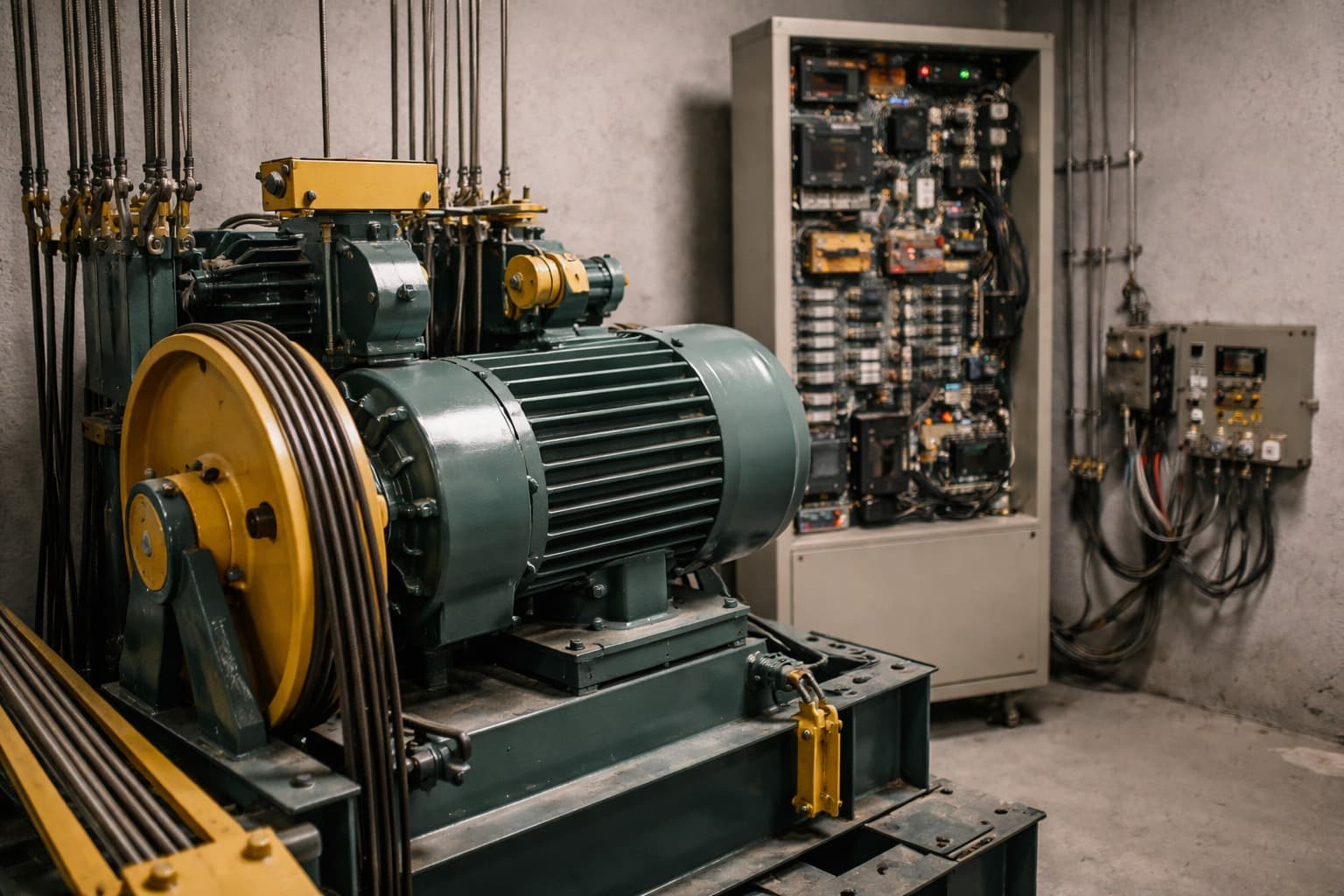
The motor should feel warm but not hot to the touch after a run cycle. Motors running significantly above ambient temperature indicate either overloading, inadequate ventilation, or internal electrical faults. Inspect the motor for oil leaks around the gearbox if it is a geared machine. Clean, dry surfaces around the machine base are the baseline you want to see.
Rope and Sheave Condition
The elevator machine room traction ropes are the physical link between the machine and the car. Look at all ropes simultaneously for uniform tension. Ropes that are visibly slack on one side while others carry full load indicate a tension imbalance that causes uneven wear and reduces rope life. Run your eye along each rope's length for broken wires, which appear as small bright metallic protrusions on the rope surface.
The deflector sheave and the main drive sheave should show even groove wear across all rope contact points. Deep, uneven, or sharp-edged grooves indicate sheave replacement is overdue. A sheave cutting into ropes accelerates rope deterioration far faster than the manufacturer's expected replacement schedule.
Control Panel and Electrical Systems
The building lift maintenance control panel is typically a floor-to-ceiling cabinet on the machine room wall. Open it during inspection only if a qualified technician is present. Inside, look for signs of overheating on any contactors or relays. Burn marks, discolouration, or a smell of burnt insulation are serious warning signs that require immediate professional attention before the lift is returned to service.
Verify that all isolators and circuit breakers are clearly labelled. A machine room where nobody knows which switch does what is a maintenance management failure waiting to create a safety event. The earthing connections should be visible, intact, and free from corrosion. Lift electrical systems require proper earthing more critically than most other building electrical systems because of the high-current switching involved.
Safety Gear and Emergency Equipment
Every lift inspection India should verify the presence and condition of a speed governor in the machine room. The governor is a separate spinning wheel connected by a rope to the car's safety gear below. If the car descends above a preset speed, the governor mechanically triggers the safety gear to arrest the descent. Inspect the governor rope for the same wire break criteria applied to the main traction ropes.
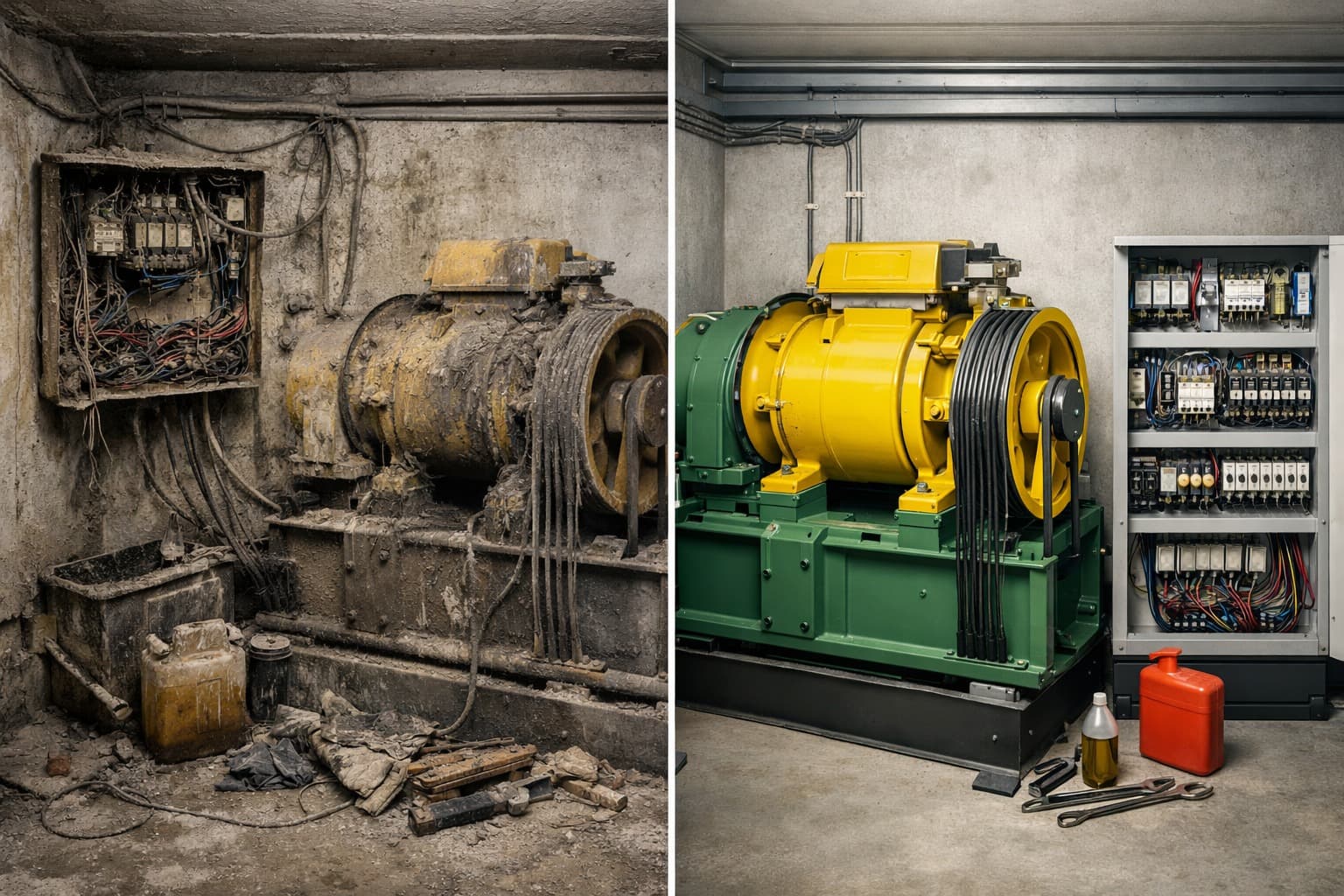
The machine room must have a functioning fire extinguisher of the correct type for electrical fires, typically CO2 rather than water or dry powder. Check the extinguisher's service tag for the last inspection date. Many machine rooms have extinguishers that have not been serviced in years, rendering them effectively useless in an emergency.
Documentation and Record Keeping
A machine room checklist serves no purpose if its findings are not recorded and acted upon. Every inspection should produce a written report noting what was checked, what was found acceptable, what requires monitoring, and what requires immediate rectification. Maintenance contractors who only produce verbal reports after visits are not providing a service that protects the society in any meaningful way.
Indian states have their own lift regulation frameworks and most require periodic inspections by government-approved competent persons. Keeping records of every such inspection, alongside the society's own internal checks, creates a maintenance trail that protects the society legally in the event of any incident.
Summary
Lift machine room inspection is a non-negotiable safety responsibility for every Indian housing society managing a residential building with elevator access. Key checks cover structural dryness and ventilation, traction machine and motor condition, rope and sheave integrity, control panel electrical health, governor and safety gear readiness, and fire extinguisher validity. Building lift maintenance that catches problems during routine inspection consistently costs a fraction of what emergency breakdowns and component failures demand. Inspect regularly, document everything, and act on findings before they become incidents.