
How to Compare Area Offerings from Different Builders in India
Summary
Comparing property values? Don't be fooled by superficial numbers! This guide reveals how to compare builder offerings in India by focusing on RERA carpet area, loading factors, and floor plan efficiency for a smart purchase.

Introduction
You have shortlisted three projects. Builder A is offering a 2BHK at 1,050 square feet for ₹75 lakh. Builder B quotes 1,200 square feet for ₹82 lakh. Builder C lists 980 square feet for ₹68 lakh. On the surface, Builder C looks cheapest and Builder B looks biggest. But none of these comparisons are reliable until you know one thing: which measurement are these figures based on? Until that question is answered, comparing area offerings from different builders is like comparing three different currencies without a conversion rate. This guide walks you through the only method that produces an honest, apples-to-apples comparison.
Why Builder Quotes Are Not Directly Comparable
Different builders use different area metrics in their sales material. Some quote carpet area. Some quote built up area. Many still lead with super built up area, burying the carpet area figure in footnotes or disclosing it only when pressed. Since RERA mandates that pricing be based on carpet area, reputable developers do provide it. But the presentation still varies widely, and the confusion this creates costs buyers real money.
A flat quoted at ₹5,000 per square foot based on super built up area actually costs ₹7,000 or more per square foot when recalculated on carpet area, once you account for the loading factor. That difference alone can mean several lakhs paid for corridors, lift shafts, and swimming pools that dozens of other families share with you.
Step One: Get the RERA Carpet Area for Each Project
The first and non-negotiable step is to ask each builder for the RERA carpet area of the specific unit you are evaluating. Under the Real Estate Regulation and Development Act of 2016, every registered project must disclose this figure in all marketing materials and sale agreements. If a builder hesitates or deflects to the super built up area, treat that as a red flag about their transparency in general.
Once you have the RERA carpet area from each builder, verify it independently by visiting your state's RERA portal, searching the project by name or registration number, and cross-checking the declared carpet area against what the builder told you. This takes ten minutes and removes the possibility of inflated figures being passed off as RERA-compliant disclosures.

Step Two: Calculate the Cost Per Square Foot of Carpet Area
This is the single most important number in any builder comparison. Take the total quoted price for the unit and divide it by the RERA carpet area. Do this for every project you are evaluating.
Consider an example. Builder A offers a flat at ₹75 lakh with a carpet area of 850 square feet. That works out to roughly ₹8,820 per square foot of usable space. Builder B's flat is ₹82 lakh with a carpet area of 950 square feet, coming to approximately ₹8,630 per square foot. Builder C's flat is ₹68 lakh with a carpet area of 760 square feet, making it ₹8,950 per square foot. Suddenly Builder C, which seemed cheapest by headline price, is actually the most expensive on a per-usable-foot basis. Builder B, which seemed priciest, gives you the most space for your rupee.
This recalculation is the only fair comparison. Everything else is noise.
Step Three: Calculate and Compare the Loading Factor
The loading factor tells you what percentage of the price you are paying for space that is not inside your flat. It is calculated by subtracting the carpet area from the super built up area, dividing by the carpet area, and multiplying by 100. A loading factor of 25 to 30 percent is considered reasonable in most Indian apartment projects. Anything above 35 to 40 percent means a larger proportion of your money is going toward shared spaces, which may or may not be justified by the quality of amenities on offer.
Two projects may both quote ₹9,000 per square foot of carpet area. But if one has a 28 percent loading factor and another has a 42 percent loading factor, the first project is offering meaningfully better value per rupee spent. The buyer in the second project is paying a significant premium for shared amenities, and the question to ask is whether those amenities are worth it.
Step Four: Inspect the Floor Plan for Layout Efficiency
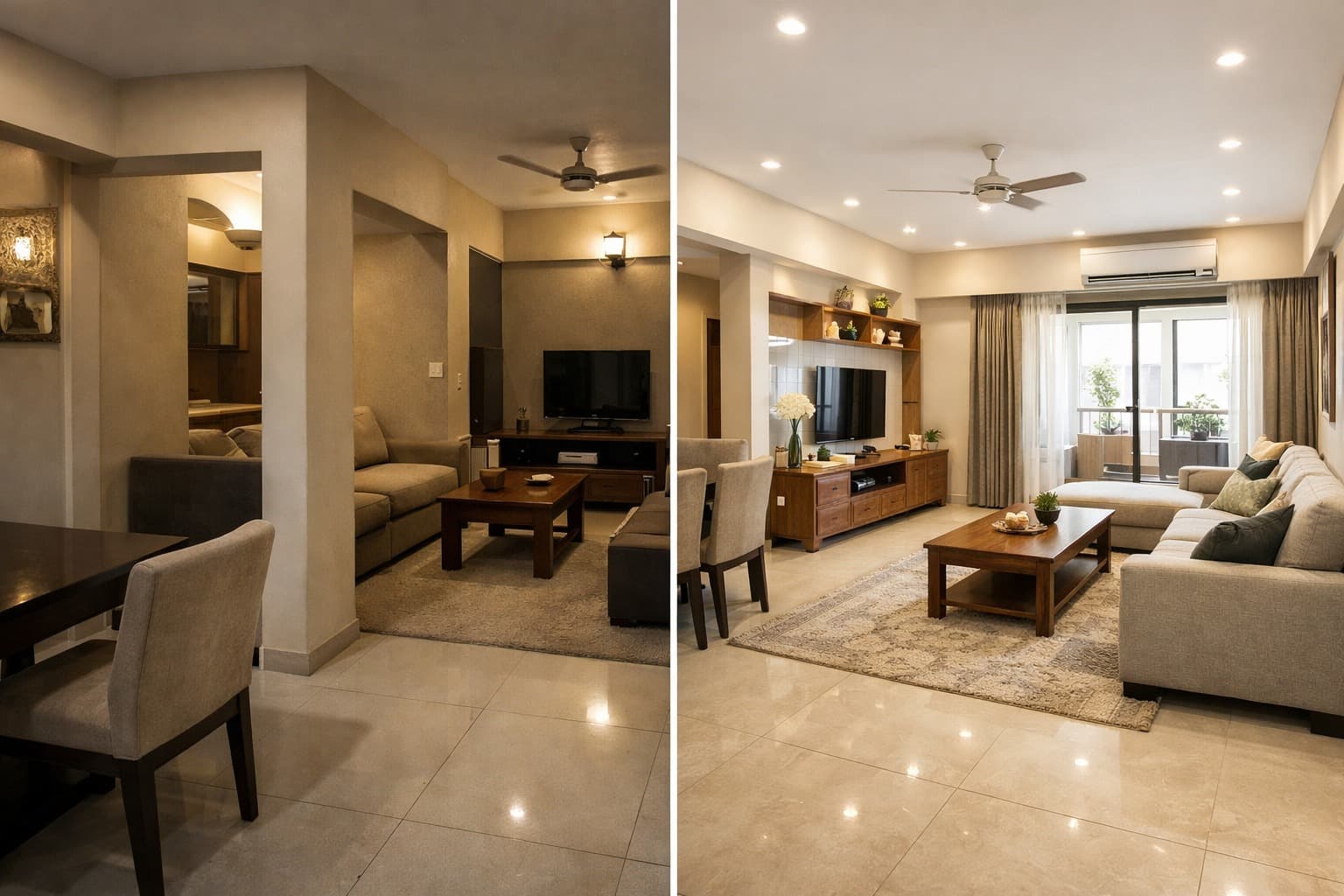
Numbers only tell part of the story. A carpet area of 900 square feet can feel spacious or cramped depending on how the space is distributed. A well-designed floor plan keeps bedrooms rectangular, avoids long narrow corridors that eat into usable area, places the kitchen where natural light reaches it, and ensures that no room has an awkward wall projection that kills furniture placement.
Ask each builder for the actual floor plan. Measure key rooms on paper. Count how many of the walls are shared with neighbours or common areas, since those walls cannot be modified later. A slightly smaller carpet area in a well-laid-out flat can feel far more liveable than a larger figure wasted on poor design.
Step Five: Verify Against RERA Registration
Before any booking amount is paid, check that the project is registered with your state's RERA authority. The portal will show the approved carpet area per unit type, the project's expected completion date, and any complaints or non-compliance notices. This step protects you from projects that cite RERA numbers verbally but have not actually filed consistent documentation with the regulator.
Summary
Comparing area offerings from different builders in India requires converting every quote to a common metric: cost per square foot of RERA carpet area. Calculate the loading factor to understand how much you are paying for shared spaces, inspect floor plans for layout efficiency, and verify all figures on your state's RERA portal before committing. These four steps turn a confusing multi-builder comparison into a clear, honest decision based on actual usable space rather than headline numbers designed to impress.