
How to Check for Bathroom Seepage: A Comprehensive Guide for Home Buyers
Summary
Learn how to identify bathroom seepage before buying a home to avoid costly repairs. This guide covers visual inspections, water flow tests, and key areas to check for hidden leaks and potential damage.

Introduction
Bathroom seepage is one of the most common and expensive property problems buyers face after possession. What starts as a small damp patch often turns into peeling paint, foul smell, and structural damage. Many buyers ignore bathrooms during inspection because surfaces look clean or newly painted. Learning how to check seepage in bathrooms before purchase helps buyers identify hidden water issues and avoid major repair costs later. This guide explains simple, practical checks every buyer should perform.
Why Bathroom Seepage Is a Serious Issue
Bathrooms handle constant water usage, making them highly vulnerable to leakage. Poor waterproofing, cracked tiles, or damaged plumbing allow water to seep into walls and slabs. Seepage spreads silently and affects neighbouring rooms or flats below. Once seepage sets in, repairs become disruptive and costly. Early inspection protects both the property and buyer peace of mind.
Common Causes of Bathroom Seepage
Seepage usually results from weak waterproofing layers beneath tiles. Cracked tile joints, poor slope, leaking pipes, or faulty drain connections are frequent causes. In older properties, ageing plumbing increases risk. Understanding these causes helps buyers inspect bathrooms more effectively.
Visual Inspection of Bathroom Walls
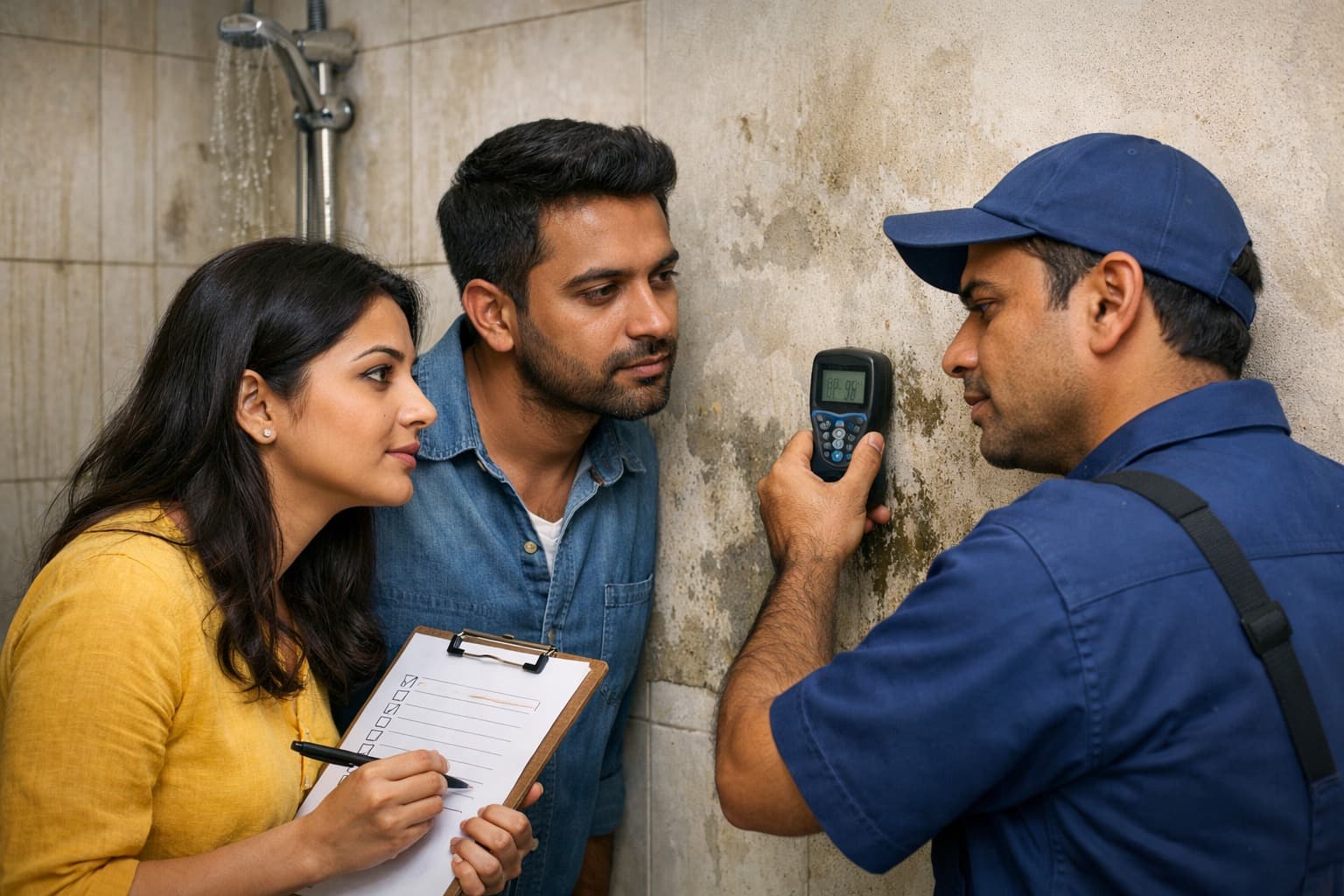
Buyers should carefully observe bathroom walls for discoloration, bubbling paint, or dark patches. Fresh paint can temporarily hide seepage signs, so uneven texture or slight color variation is a warning signal. Visual checks form the first step in bathroom seepage check.
Checking Floor Tiles and Grout Lines
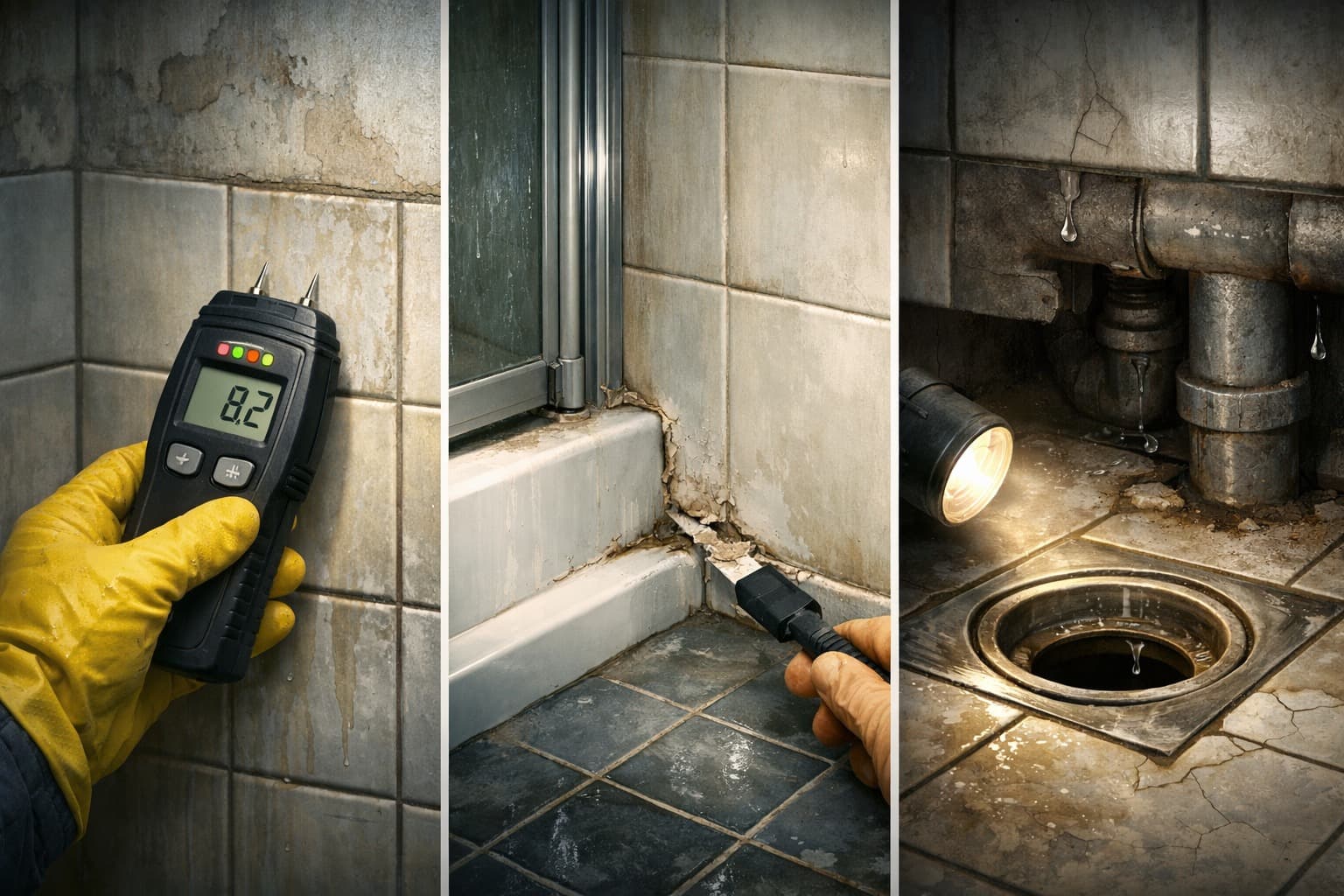
Grout lines between tiles should be intact and firm. Cracked, powdery, or missing grout allows water penetration. Buyers should check tile edges near walls, where seepage usually begins. Damaged grout is a strong indicator of waterproofing failure.
Inspecting Bathroom Floor Slope
Bathroom floors must slope gently toward the drain. Buyers should pour a small amount of water and observe flow direction. Water pooling away from the drain indicates improper slope, increasing seepage risk. Correct slope is essential for long-term bathroom health.
Checking Drain Area and Traps
Drain outlets are high-risk seepage zones. Buyers should inspect around drains for cracks, loose fittings, or gaps. Bad drain sealing allows water to escape beneath tiles. Properly sealed drains are critical for preventing bathroom waterproofing issues.
Tapping Test for Hollow Tiles
Hollow tiles around wet areas often indicate water damage below. Buyers should gently tap tiles near showers, washbasins, and WC areas. Hollow sounds suggest weak bonding or trapped moisture underneath.
Inspecting Adjacent Walls and Rooms
Seepage does not stay confined to bathrooms. Buyers should inspect walls of adjacent rooms and ceilings below bathrooms for dampness. Yellow stains or peeling paint outside the bathroom often indicate internal leakage.
Checking Under Washbasin and Fixtures
Areas under washbasins, faucets, and WC fittings should be dry and clean. Buyers should feel surfaces for moisture. Constant dampness near fixtures suggests plumbing leakage rather than surface water splash.
Odour and Damp Smell Test
Bathrooms with seepage often emit a persistent damp or musty smell. Buyers should notice odours even if surfaces look dry. Smell is a strong indicator of hidden moisture and mould growth.
Checking Ceiling of Lower Floor
For multi-storey properties, buyers should inspect the ceiling below the bathroom. Any stains, cracks, or discoloration indicate leakage from above. This is a critical check for apartments and duplex homes.
Testing During Active Water Use
Buyers should run shower, basin, and WC water for a few minutes. Observing walls and floors during usage reveals active leaks. Sudden damp patches appearing during use confirm seepage problems.
Window and Ventilation Impact
Poor ventilation worsens seepage damage. Buyers should check for windows or exhaust fans in bathrooms. Lack of ventilation traps moisture, accelerating waterproofing failure and mould growth.
Signs of Temporary Repairs
Fresh paint, silicon patches, or recently replaced tiles may indicate previous seepage repair attempts. Buyers should be cautious if repairs look localized. Temporary fixes often fail after short periods.
Age of Property and Seepage Risk
Older properties carry higher seepage risk due to worn waterproofing layers. Buyers should be extra cautious while inspecting bathrooms in resale properties. New properties can also have defects due to rushed construction.
Professional Moisture Testing Advantage
Professionals use moisture meters to detect hidden dampness. Buyers considering older or premium properties may benefit from professional water leakage inspection before finalising purchase.
Impact of Bathroom Seepage on Property Value
Seepage reduces resale value and rental demand. Buyers increasingly avoid properties with water issues. Repairing seepage after possession is expensive and disruptive, making early detection critical.
Common Buyer Mistakes While Checking Seepage
Many buyers inspect bathrooms only visually. Others rely on seller assurances. These mistakes lead to unexpected repair expenses. A systematic inspection approach avoids regret.
Questions Buyers Should Ask
Buyers should ask about waterproofing history, previous leakage complaints, and maintenance records. Honest answers provide insight into long-term bathroom condition.
Preparing for Bathroom Inspection
Inspection should be done during daylight with sufficient time. Buyers should not rush this process. Observing patiently reveals subtle signs of moisture.
Making a Safe Buying Decision
Bathroom seepage affects comfort, hygiene, and structural safety. Buyers who understand how to check seepage in bathrooms make informed decisions and avoid costly post-purchase repairs. Careful inspection ensures a healthier, stress-free living experience.
Summary
Bathroom seepage is a common but serious issue that can cause long-term damage and high repair costs. Buyers should carefully inspect walls, floors, grout lines, drains, and adjacent areas for dampness, stains, and odours. Testing water flow, checking floor slope, and observing nearby rooms help identify hidden leakage. Seepage often worsens silently after possession. Following a structured bathroom seepage inspection before purchase helps buyers avoid future inconvenience, protects property value, and ensures a safer, more comfortable home.