
How the Pandemic Quietly Rewrote the Rules of Office Space in India
Summary
India's office market defied pessimistic forecasts, with leasing surpassing pre-COVID highs as hybrid work reshaped occupancy. Demand for Grade A spaces, driven by GCCs and flex options, is prompting a complete reinvention of office design and utilization.

The Office Did Not Die. It Just Changed Jobs.
When COVID-19 forced every white-collar worker in India home in 2020, a certain kind of panic settled over commercial real estate. Office space would never recover. Hybrid work was the future. Physical offices were relics of a world that had passed.
None of that turned out to be true. What actually happened is more interesting and, for anyone tracking India's commercial real estate, more instructive.
The Numbers That Put the Debate to Rest
Before the pandemic, India's Grade A office market was leasing approximately 54 million square feet annually. That was considered a healthy, growing market. By 2023, annual leasing had already crossed 62 million square feet, roughly 15 percent above those pre-pandemic highs.
The first nine months of 2025 alone recorded 62.3 million square feet of absorption. One single quarter, the third quarter of calendar year 2025, clocked 19.6 million square feet. These are not recovery numbers. They are record numbers. The post-pandemic office market in India did not just bounce back. It surpassed everything that came before it.
Why Occupancy Tells a More Complicated Story
Leasing and occupancy are not the same thing. A company can sign a large lease and still have half its floor sitting empty on any given Tuesday. That distinction matters a great deal when understanding what is actually happening inside Indian offices right now.
Globally, average building utilisation stood at just 35 percent in 2023. It climbed to 38 percent in 2024. By 2026, CBRE's workplace benchmarking data puts it at 53 percent, the highest recorded since before March 2020. Peak utilisation has crossed 80 percent, which is the first time it has exceeded the 65 percent target that most occupiers had set for themselves.
Office space occupancy is recovering, but unevenly. And the days of the week tell you exactly where the fault lines sit.
Tuesday Is the New Monday
If you walk into any large office in Bengaluru, Pune, or Gurugram on a Tuesday, you will find it humming. HubStar's Hybrid Occupancy Index, which tracked over 300 million square feet of office space across 173 buildings globally through 2025, found that Tuesdays recorded the highest occupancy of any weekday at 58.6 percent.
Monday averaged 46.4 percent. Friday barely registered at 34.5 percent. The hybrid work pattern in India and globally has settled into a rhythm. The middle of the week is the office. The edges belong to home.
This midweek clustering is creating real pressure on office infrastructure. Meeting rooms are oversubscribed on Tuesdays and Wednesdays. The same building that feels half-empty on a Friday is at breaking point 48 hours earlier. Companies are now designing around this reality rather than pretending it does not exist.
Grade A Wins. Everything Else Struggles.
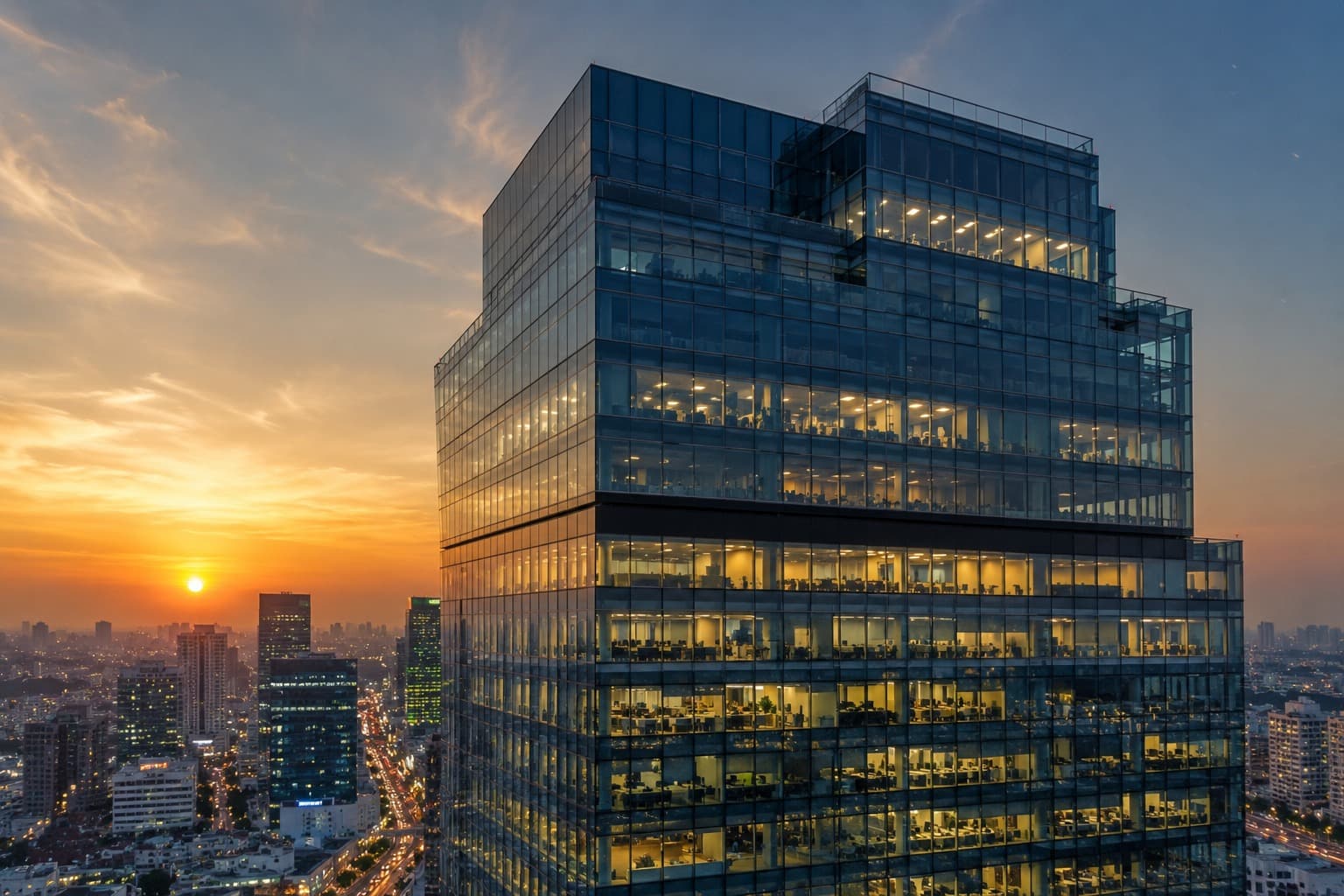
Not all office supply is benefiting equally from the demand surge. The market has bifurcated sharply. Tenants want Grade A and Grade A-plus buildings with modern amenities, strong green credentials, high-speed connectivity, and collaboration-focused design. Buildings that cannot offer these are losing tenants to those that can.
In Mumbai's BKC, prime office rents crossed premium benchmarks in 2025. Bengaluru's Outer Ring Road continued to record strong absorption. Hyderabad retained its appeal through competitive pricing. Delhi-NCR saw rental stability in Gurugram and Noida, anchored by BFSI and consulting demand.
Tier-2 cities like Ahmedabad, Coimbatore, and Indore are beginning to appear on the commercial real estate India map, driven by lower occupancy costs and improving talent availability.
GCCs and Flex: The Two Engines Driving Everything
Two categories of tenants are doing the heavy lifting in India's post-pandemic office market. Global Capability Centres, the India-based operations hubs of multinationals, account for close to 40 percent of all office leasing. These are long-commitment, large-format tenants who do not vacate at the first sign of trouble.
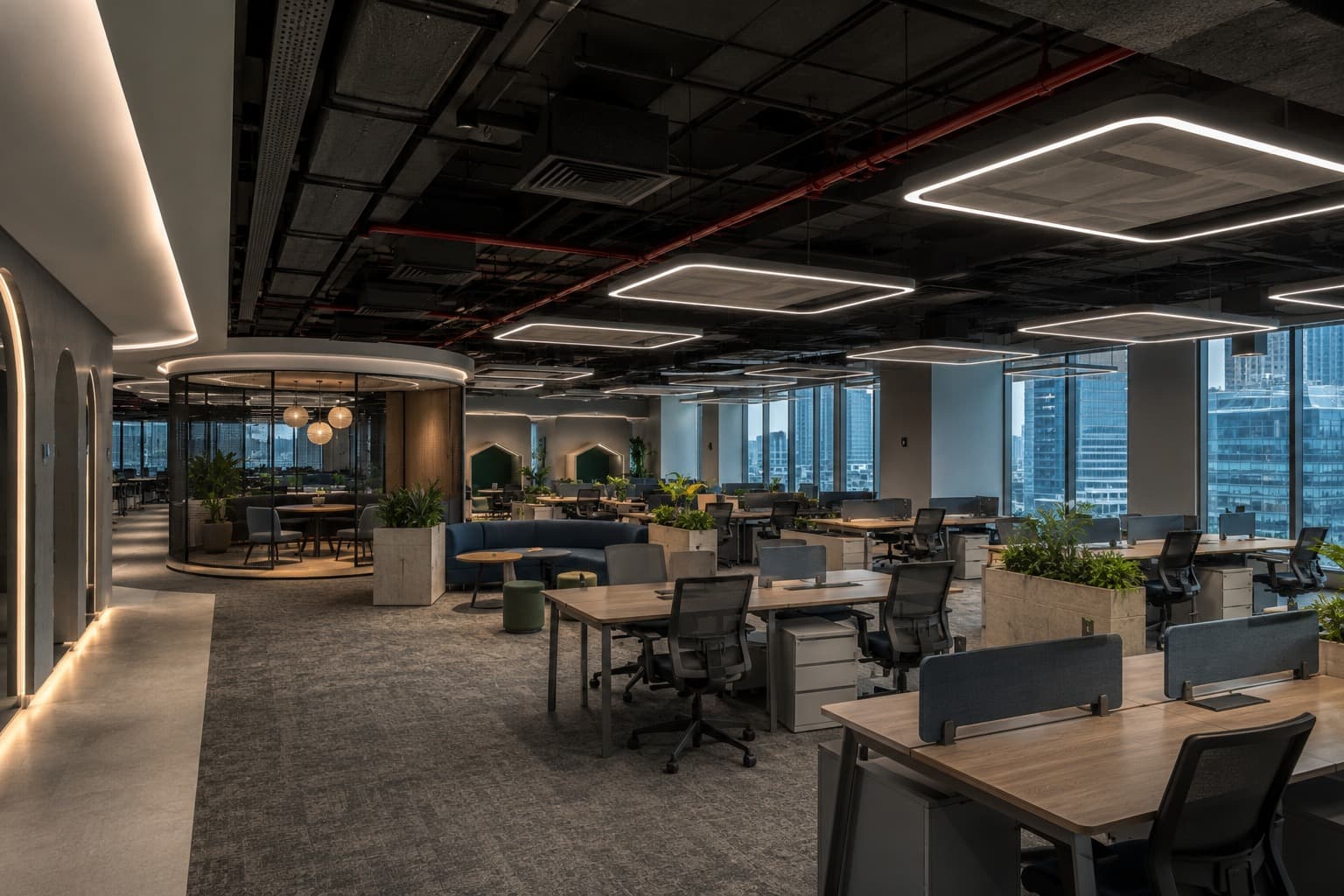
Flexible and co-working spaces are running at 70 to 85 percent capacity across India in 2025. Corporate teams now account for around half of all co-working memberships, a dramatic shift from the freelancer-heavy profile of a decade ago.
What Gets Built Next Will Look Different
An IT company in Hyderabad recently redesigned its 300,000 square foot campus by pulling out workstations and expanding collaborative zones. The result required more thoughtful space, not less space.
That is the signature move of the post-pandemic office era. Density is out. Design is in. The floor plate has not shrunk. It has been reorganised entirely around how people actually want to spend the hours when they do show up.
Summary
Post-pandemic office space occupancy in India has defied every pessimistic forecast. Annual leasing has crossed pre-COVID highs, Grade A office demand is at record levels, and hybrid work has created a midweek concentration that is reshaping how buildings are designed and managed. With GCCs driving 40 percent of leasing and flex workspaces running near full capacity, the Indian commercial real estate market heading into 2026 is not recovering. It is reinventing itself from the inside out.