
How Smart Metering Is Quietly Rewiring the Way Indian Homes Use Electricity
Summary
Smart meters are transforming how Indian homes manage electricity, offering real-time data, accurate billing, and enabling prepaid models. Driven by the RDSS scheme, this shift empowers users to actively monitor consumption, potentially reducing costs through informed choices and future Time-of-Use tariffs.

Introduction
Most people think of electricity bills the way they think of the weather. Something that happens to them, not something they can control. That assumption is slowly being dismantled across Indian cities and towns as smart meters replace decades-old mechanical units. The shift is more than a technology upgrade. It is changing what households know about their own electricity consumption, when they use power, and what they pay for it.
What Exactly Is a Smart Meter
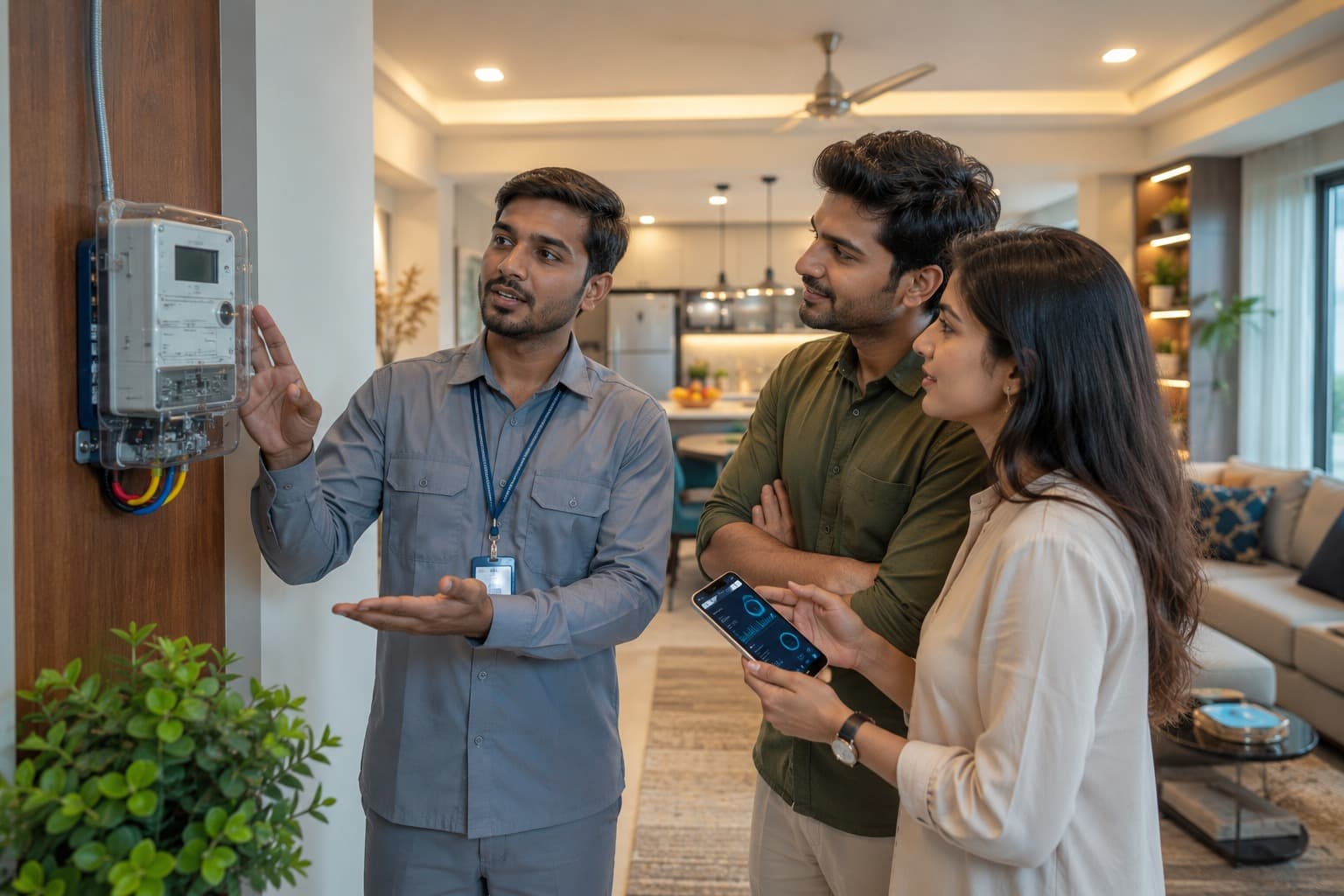
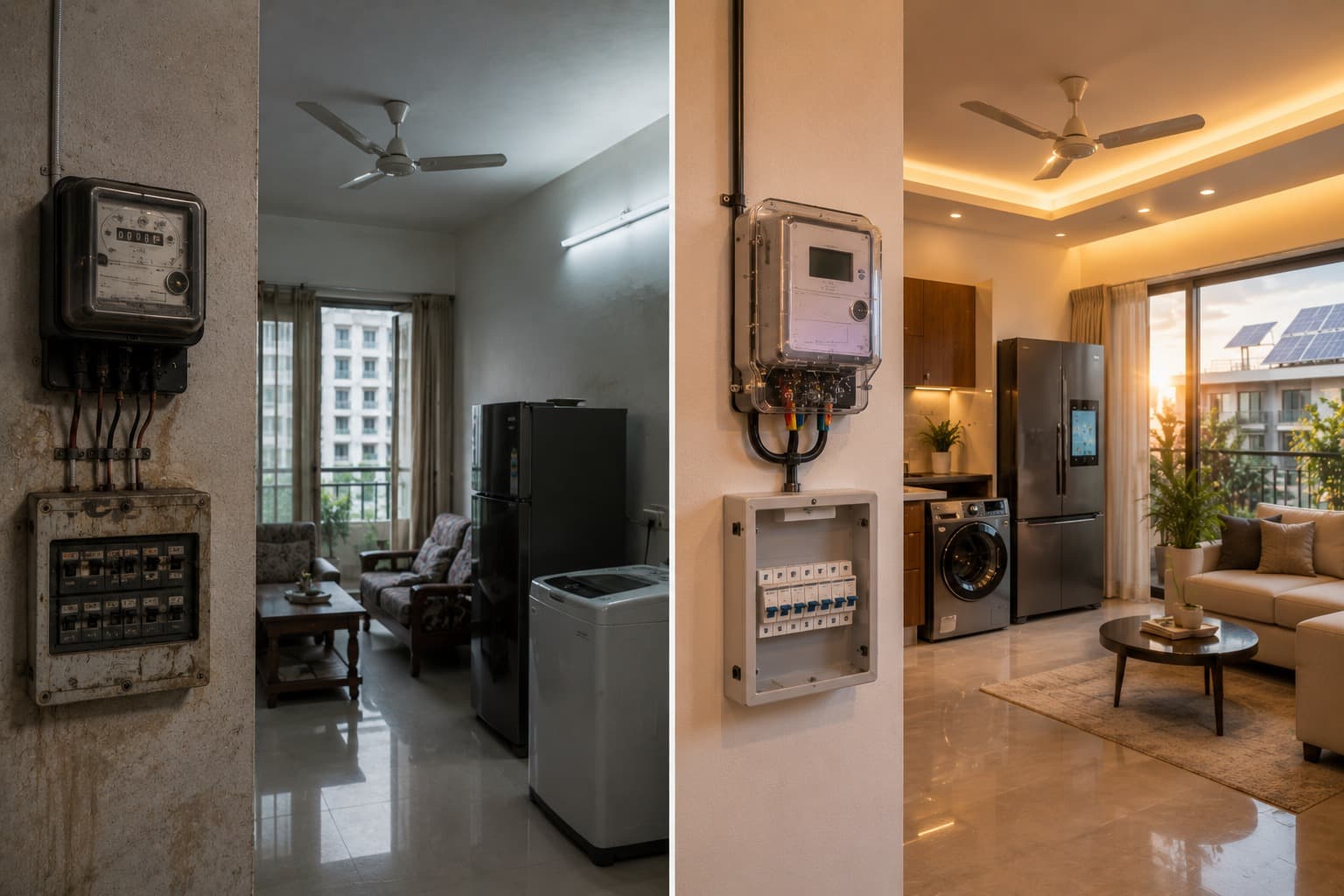
A smart meter is a digital device that records electricity usage in real time, typically in intervals of fifteen to thirty minutes, and automatically transmits that data to the distribution company. No more meter readers knocking on doors. No more estimated bills that bear little resemblance to what you actually used. Every unit is measured, recorded, and reported accurately.
The RDSS Scheme Driving the Rollout
The scale of this transition in India is enormous. Under the Revamped Distribution Sector Scheme, or RDSS scheme, the central government has set a target of replacing around 25 crore conventional meters with smart prepaid meters across the country. This is among the most ambitious metering infrastructure programmes anywhere in Asia. States like Uttar Pradesh and Rajasthan are already seeing large-scale installations, with North India leading the adoption curve nationally.
Real-Time Visibility Changes Behaviour
Here is what nobody tells you: the act of being able to see your consumption in real time, through a mobile app connected to your smart meter, changes how you use electricity without anyone forcing you to. When you can see that your old air conditioner draws twice the power of a newer inverter model, you start thinking differently. Studies on early adopters suggest households can cut energy costs by anywhere between five and fifteen percent simply by making informed adjustments to usage patterns.
The Prepaid Advantage
Prepaid meters work the way mobile recharges do. You load credit in advance and draw power against it. For households that struggle with unexpectedly large monthly bills, this model brings budgeting clarity. You know what you have, you spend it consciously, and you recharge when needed. In Uttar Pradesh, surveys found that a significant share of smart prepaid meter users recharged their accounts more than once a month, reflecting higher engagement with their own consumption habits.
Time-of-Use Tariffs Are Coming
Perhaps the biggest behavioural shift that smart metering enables is time-of-use pricing, referred to in Indian policy circles as Time of Day or ToD tariffs. Under this system, electricity costs less during off-peak hours and more during periods of high demand. If your smart meter records what time you run your washing machine or geyser, you can be billed differently based on that timing. This encourages households to shift heavy appliance usage to non-peak windows, which could mean meaningful savings on bills.
What It Means for Housing Societies and New Apartments
For buyers considering apartments in newly developed projects, smart metering is increasingly becoming a baseline feature. Developers in cities like Pune, Hyderabad, and Delhi NCR are incorporating AMI infrastructure into their projects. Residents benefit from transparent billing and reduced scope for disputes over shared electricity costs. Housing societies with smart infrastructure also tend to demonstrate better energy discipline overall.
The Challenges Still Being Worked Out
It would be unfair to paint a fully rosy picture. The RDSS scheme rollout has faced delays in several states because installing 25 crore meters at scale is genuinely complex. The Time of Day tariff rollout, originally planned for 2025, has been pushed to later timelines as meter installation catches up. Some consumers have also raised concerns about data privacy and the learning curve of managing prepaid accounts. These are real issues, even if solvable.
Why Homebuyers Should Pay Attention
If you are evaluating a new home today, ask about the metering infrastructure. A project equipped with smart metering is not just a convenience feature. It signals modern distribution compliance and gives you tools to manage your electricity costs actively rather than passively. In an era where electricity tariffs are only moving in one direction, that ability to monitor and manage electricity consumption is genuinely valuable.
Summary
Smart metering is shifting Indian households from passive energy consumers to informed, engaged ones. The government's RDSS scheme aims to roll out smart prepaid meters to 25 crore homes, bringing accurate billing, real-time tracking, and the foundation for time-of-use tariffs that reward off-peak consumption. For homebuyers, understanding smart meter benefits and looking for projects with advanced metering infrastructure is fast becoming part of a smart purchase decision. The way we pay for electricity in India is changing, and smart meters are at the centre of that change.