
How Smart Buyers Spot the Next Real Estate Growth Corridor Before Everyone Else Does
Summary
Smart buyers identify future real estate growth corridors by analyzing actionable signals: actual infrastructure execution, job market shifts, land price movements, developer land banking, and emerging social infrastructure. This strategic approach, coupled with prudent timing, helps investors enter at early, advantageous price points.

Introduction
Every big property boom looks obvious in hindsight. Whitefield in Bengaluru, Gurugram's Golf Course Extension Road, Thane a decade ago. Investors who bought early made returns that later buyers could only read about in newspapers. The real skill lies in spotting a growth corridor while it still looks unremarkable on the ground, not after the cranes have already shown up.
Follow the Infrastructure Money, Not the Announcements
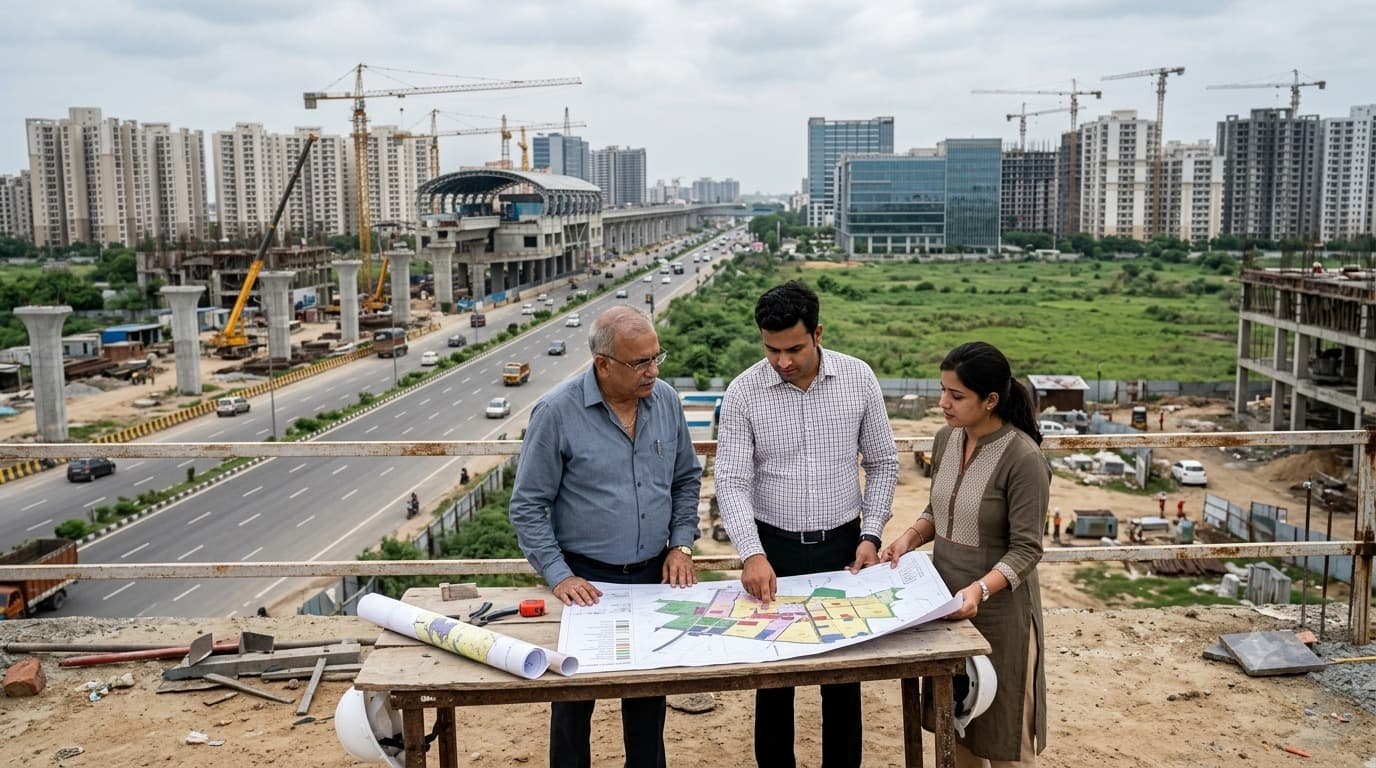
Governments announce hundreds of projects every year. Very few actually get funded and built on schedule. What separates a real signal from noise is whether land acquisition has started, whether tenders have been awarded, and whether construction machinery is physically present. A metro corridor with actual pillars coming up matters more than one still sitting in a policy document.
Look at Where Jobs Are Actually Moving
Property values eventually follow employment, not the other way around. When an IT park, a data centre cluster, or a large manufacturing unit sets up in a location, housing demand around it grows within two to three years. Tracking job announcements from large employers often gives a cleaner read on an emerging real estate location than any broker's pitch ever will.
Watch the Land Prices Before the Apartment Prices
Apartment prices are sticky and slow to move because developers price them based on cost plus margin. Raw land prices react faster because they are driven purely by speculation and early demand. When agricultural or semi-urban land parcels near a proposed corridor start changing hands quickly, that is usually the earliest tell that something is shifting.
Read Builder Behaviour Like a Weather Vane
Developers spend enormous sums on market research before they buy land, far more than an individual investor ever will. When two or three reputed builders quietly start acquiring parcels in the same stretch within a short window, they are rarely doing it for fun. Their land banking decisions often reveal a property hotspot long before it gets covered in the press.
Social Infrastructure Is the Quiet Confirmation
A good school opening branch, a hospital chain announcing a facility, or a large format retail brand signing a lease are not headline news. But they confirm that a location has crossed a certain threshold of livability that families actually care about. This kind of social infrastructure buildout tends to arrive just before residential demand accelerates.

Timing Matters More Than the Location Itself
Even a genuinely promising corridor can disappoint if bought too early or held with the wrong expectations. Infrastructure timelines in India routinely stretch two to three years beyond original estimates. Buying purely on rumour, without any visible execution on the ground, is closer to gambling than to a real estate investment strategy.
The Risk Nobody Talks About Enough
Not every corridor that looks promising delivers. Land use approvals get stuck, projects get shelved, and political priorities shift after elections. A sensible approach is to treat early stage bets as a smaller part of a portfolio, not the entire strategy, and to keep watching execution milestones rather than assuming a straight line to appreciation.
Summary
Spotting the next real estate growth corridor is less about instinct and more about reading real signals. Watch actual infrastructure execution, employment shifts, land price movement, builder land banking, and social infrastructure together rather than in isolation. Timing and patience matter as much as location selection itself. Buyers who track these patterns consistently, rather than chasing announcements, tend to identify emerging real estate locations well ahead of the crowd and enter at prices the later market simply will not see again.