
How Property Age Impacts Co-working Design
Summary
Property age significantly impacts co-working design, affecting everything from structural considerations and electrical capacity to acoustics and tenant appeal. Older buildings present unique challenges and opportunities, shaping design choices and attracting specific creative tenants.

Introduction
Walk into a co-working space in Bengaluru's Indiranagar or Mumbai's Bandra and there is a decent chance the building around you was not built for what it is doing today. The exposed brick, the uneven ceiling heights, the slightly creaking wooden floors — these are not design choices. They are the original bones of a structure that someone looked at and decided had more useful life in it than demolition would allow. Property age real estate is one of the most under-discussed variables in co-working design, and yet it shapes almost every decision a designer, operator, or investor makes before a single desk is bolted to the floor. The age of a building does not just affect aesthetics. It affects electrical capacity, acoustics, structural load limits, internet infrastructure, and the kind of community the space will ultimately attract.
Why Building Age Is a Design Brief Before Anything Else
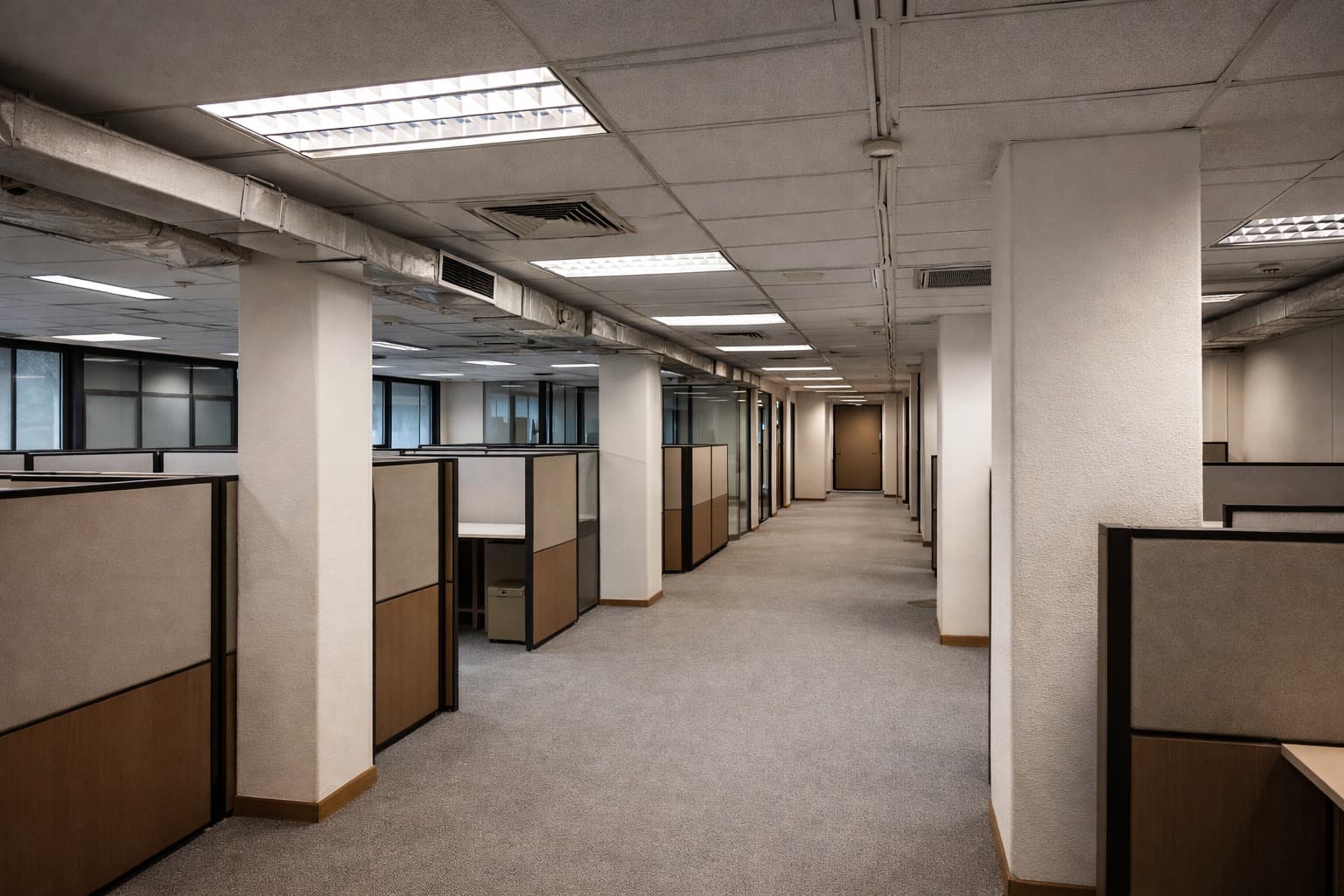
The conversation about co-working space design almost always starts with the operator's vision: what kind of members do we want, what does the brand feel like, how many seats can we fit. But in older buildings, the structure itself writes the first half of the brief. A commercial property from the 1970s or 1980s has floor-to-floor heights that were designed for a different era of office work. Column grids are tighter. Natural light penetration was not considered in the same way. The building may have been designed as a warehouse, a manufacturing unit, or a simple commercial block with no anticipation of the power loads that a modern co-working floor demands.
Designers working in older buildings spend as much time mapping constraints as they do imagining possibilities. And the most experienced ones will tell you that those constraints are often what produce the most interesting results.
The Structural Reality: What the Floor Can and Cannot Hold
Before any office building renovation for co-working use, a structural audit is non-negotiable. Older buildings in Indian cities were engineered to carry specific load specifications that made sense for their original use. A former textile storage building can carry extraordinary floor loads. A mid-century office block might struggle with the concentrated weight of server infrastructure, private cabin partitions, and densely clustered workstations.
This matters enormously for layout decisions. A designer planning a co-working floor in a 40-year-old building cannot simply replicate the floor plan of a new Grade A office. Partition locations, heavy amenity zones like pantries and server rooms, and high-density seating clusters all need to be mapped against what the existing structure can safely absorb. In some cases, quiet zones with lighter furniture and an open layout are not a design preference. They are a structural necessity in specific bays.
Electrical and Data Infrastructure: The Hidden Cost
This is where property age creates the most significant financial surprises for co-working operators taking on older stock. Buildings constructed before the internet era were wired for lighting and standard power outlets at a fraction of the density that modern workspaces require. A flex office India floor running 80 to 120 workstations with individual power access, multiple meeting rooms with AV infrastructure, kitchen equipment, and cooling systems demands electrical capacity that older distribution boards simply cannot handle without complete replacement.
The cost of upgrading electrical systems in an old building to co-working specifications is often 20% to 35% of total fit-out cost. Operators who underestimate this during diligence find themselves renegotiating budgets mid-project. The data cabling situation is equally complex. Retrofitting structured cabling through old masonry walls, false floors that did not exist in the original design, and ceilings with limited plenum space requires both creative routing and higher execution budgets.

The Acoustic Problem That New Buildings Rarely Have
Newer Grade A buildings use concrete slab construction between floors that provides reasonable acoustic separation. Many older commercial buildings in Indian metros were built with thinner slabs, lighter construction methods, or materials that transmit sound far more readily. For adaptive reuse coworking space India, this creates a specific design challenge: how do you build a space where phone calls and focused work coexist when the building itself amplifies ambient noise?
The solutions exist but they are not cheap. Acoustic ceiling treatments, partition systems with sound-dampening cores, carpet or acoustic flooring in call-heavy zones, and white noise systems all address the symptom. But the most effective approach is zoning the floor based on acoustic performance of different areas, which requires understanding the building's actual sound behaviour before any design is finalised.
Why Older Buildings Attract a Specific Co-Working Buyer
Here is the interesting flip side. The same constraints that make older buildings technically demanding also make them culturally magnetic for a very specific kind of co-working tenant. Heritage building coworking spaces in restored colonial-era structures, refurbished mills, and mid-century commercial properties in Indian cities attract creative firms, design studios, media companies, and early-stage technology ventures at a rate that sterile new construction simply cannot match.
The character that comes from high ceilings, industrial-grade original finishes, aged brick, and uneven spatial volumes creates an atmosphere of creative authenticity that tenants in branding, architecture, and content production actively seek. And they will pay a rental premium for it.
Summary
How building age affects coworking design India is a question every operator should answer before signing a lease, not after. From structural load audits and electrical upgrades to acoustic treatment and the cultural identity that heritage office coworking India spaces naturally carry, property age shapes design decisions at every level. The best co-working space design in older buildings does not fight the building's history. It works with its constraints, solves them intelligently, and lets the character of the structure become the space's most compelling selling point.