
How Location Affects Co-Working Demand in India
Summary
Location is key to coworking demand in India. Proximity to IT hubs & metro lines drives occupancy, while residential coworking thrives in dense areas. Tier 2 cities need precise location choices.

Introduction
You can have the best interiors, the fastest internet, the nicest coffee machine in the building. If the location is wrong, none of it saves you.
Coworking space demand in India is not spread evenly across cities or even across neighbourhoods within the same city. It clusters. Heavily. And the single biggest factor behind that clustering is location, not price, not amenities, not brand. Where a space sits determines who walks through the door, how full the desks stay, and ultimately whether the business model works at all.
This is something operators have learnt through expensive trial and error over the past decade. And it is something any company evaluating coworking office India options for their teams should understand before signing anything.
The IT Corridor Effect
The most reliable coworking demand in Indian cities runs along IT corridors. Whitefield and Outer Ring Road in Bengaluru. HITEC City and the Financial District in Hyderabad. Hinjewadi and Kharadi in Pune. These are not coincidences.
Why coworking spaces near IT parks have higher occupancy in India is fairly straightforward. The workforce in these corridors skews young, mobile, and project-based. Startups, freelancers, consultants, and satellite teams of larger companies all need professional workspace close to where their clients and colleagues are operating. A coworking centre sitting inside or adjacent to a major IT park captures that demand almost passively. The footfall is already there. The operator just needs to be in the right building.
Spaces that try to serve this audience from two or three kilometres away, even if the rent is meaningfully cheaper, often struggle with occupancy. The convenience trade-off matters enormously to someone who is already commuting 45 minutes to reach the corridor.
Metro Connectivity Is Now Non-Negotiable
Five years ago, metro adjacency was a nice-to-have for coworking operators. Today it is close to non-negotiable for premium locations.

Metro connectivity coworking space demand has a clear and measurable relationship in cities where the network has matured. In Bengaluru, spaces along the Purple Line between Baiyappanahalli and Mysuru Road consistently show stronger walk-in interest than comparable spaces in areas with road access only. In Hyderabad, the Raidurg and HITEC City metro stations have created a micro-market of their own for workspace operators because the catchment area they serve is simply enormous.
The logic is simple. A member who can reach your space by metro does not have to worry about parking, fuel costs, or traffic unpredictability. That removes the biggest daily friction in choosing to come into an office versus working from home. Occupancy data from operators in metro-connected locations versus non-metro locations in the same city bears this out consistently.
Residential Neighbourhood Coworking: A Different Game
Not all coworking demand comes from corporate corridors. A quieter but genuinely interesting trend is the rise of neighbourhood coworking in residential areas, places like Indiranagar and Koramangala in Bengaluru, Banjara Hills in Hyderabad, and Kalyani Nagar in Pune.
The buyer here is different. Remote workers, solopreneurs, creative professionals, and early-stage founders who do not want to commute to a business park but do want to get out of their apartments. They want a professional environment that is walkable or a short auto ride away.
How micro market selection determines success or failure of coworking spaces is nowhere more visible than in this segment. A neighbourhood space in Indiranagar works because the density of the right kind of resident is high enough to sustain demand without aggressive marketing. The same space in a residential area with lower density of knowledge workers would struggle to fill half its desks.
Operators who understood this built profitable neighbourhood centres at lower rents than IT corridor spaces while maintaining strong occupancy. Those who placed neighbourhood-format spaces in the wrong residential pockets found themselves with beautiful interiors and empty desks.
Tier 2 Cities: Location Rules Apply Even More Strictly
Why Bengaluru Hyderabad and Pune are India's top coworking demand cities is well understood. But coworking is growing in Tier 2 cities too, and the location dynamics there are even less forgiving.
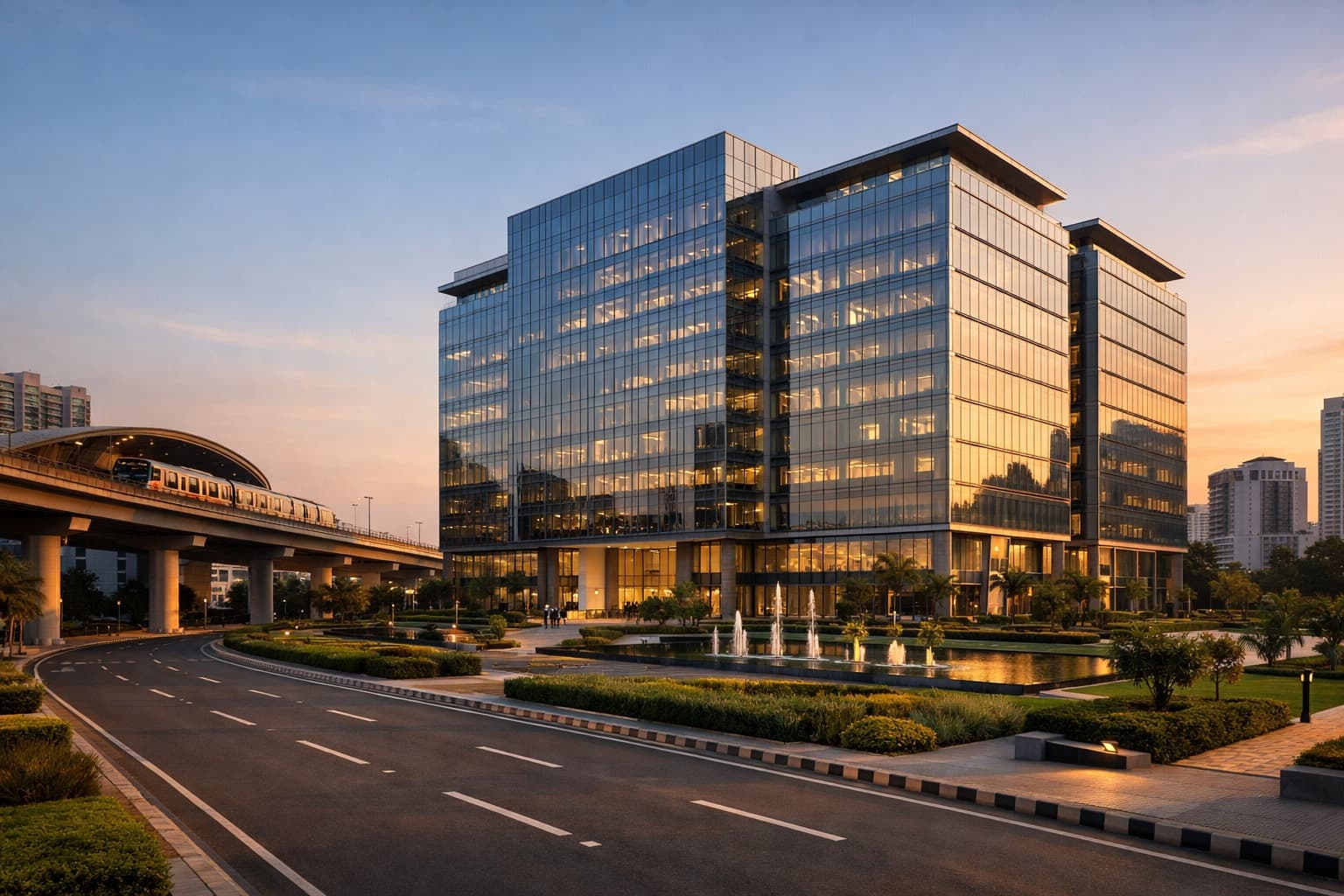
In cities like Indore, Jaipur, Coimbatore, and Kochi, the concentration of knowledge workers and corporates is significantly lower than in metro cities. That means the catchment area for a coworking centre is more sensitive to even small differences in location. A space in the right commercial pocket of Indore, say Vijay Nagar or the AB Road corridor, will consistently outperform a space two kilometres away in a mixed-use residential zone. The margin of error on location decisions in Tier 2 markets is simply smaller.
Operators expanding into these cities have learnt to research occupier density very carefully before committing to a lease. Unlike metro cities where demand exists across multiple sub-markets, Tier 2 cities often have one or two viable pockets and everything else is a gamble.
What This Means If You Are Choosing a Coworking Space
How proximity to corporate offices and transport hubs increases coworking desk occupancy is not just useful information for operators. It is directly relevant to companies and individuals choosing where to set up.
A coworking space close to your clients, your vendors, or your team's homes will get used. One that is theoretically well-priced but inconveniently located will quietly drain productivity through longer commutes, missed drop-in meetings, and the general friction of getting there. Before signing a membership or a dedicated desk agreement, map the commute for everyone who will use the space daily. If the location works for most of them most of the time, you have probably found the right one.
Summary
Location is the single most important variable in coworking space demand across Indian cities. Proximity to IT parks and corporate corridors drives the highest and most consistent occupancy, while metro connectivity has become a baseline requirement for premium spaces. Neighbourhood coworking works in residential pockets with high knowledge worker density, and Tier 2 cities offer real opportunity but demand even more precise micro market selection. Whether you are an operator choosing a location or a company evaluating coworking office India options for your team, understanding how location shapes demand is the foundation every other decision should rest on.