
How Infrastructure Projects Boost Office Rentals in India
Summary
Infrastructure projects like metros and expressways significantly boost office rentals in India by enhancing connectivity and attracting businesses. Areas near new infrastructure witness increased leasing activity and reduced vacancy rates, driving long-term rental growth.

Introduction
Infrastructure is the invisible hand that shapes the real estate market. When a new metro line opens or an expressway connects distant suburbs, the effect is immediate. Suddenly, office districts that once felt remote become accessible. And with accessibility comes demand. The story of office rentals in India over the past decade is closely tied to this cycle of infrastructure expansion.
The Link Between Connectivity and Office Demand
Companies choose office locations based on how easily employees and clients can reach them. A district with poor connectivity struggles to attract tenants, no matter how modern the buildings are. But once a metro station or freeway arrives, the same district can see a surge in office leasing demand. Infrastructure reduces commute times, widens the talent pool, and makes business travel smoother. That convenience translates directly into higher willingness to pay for office space.
Metro Projects as Game Changers
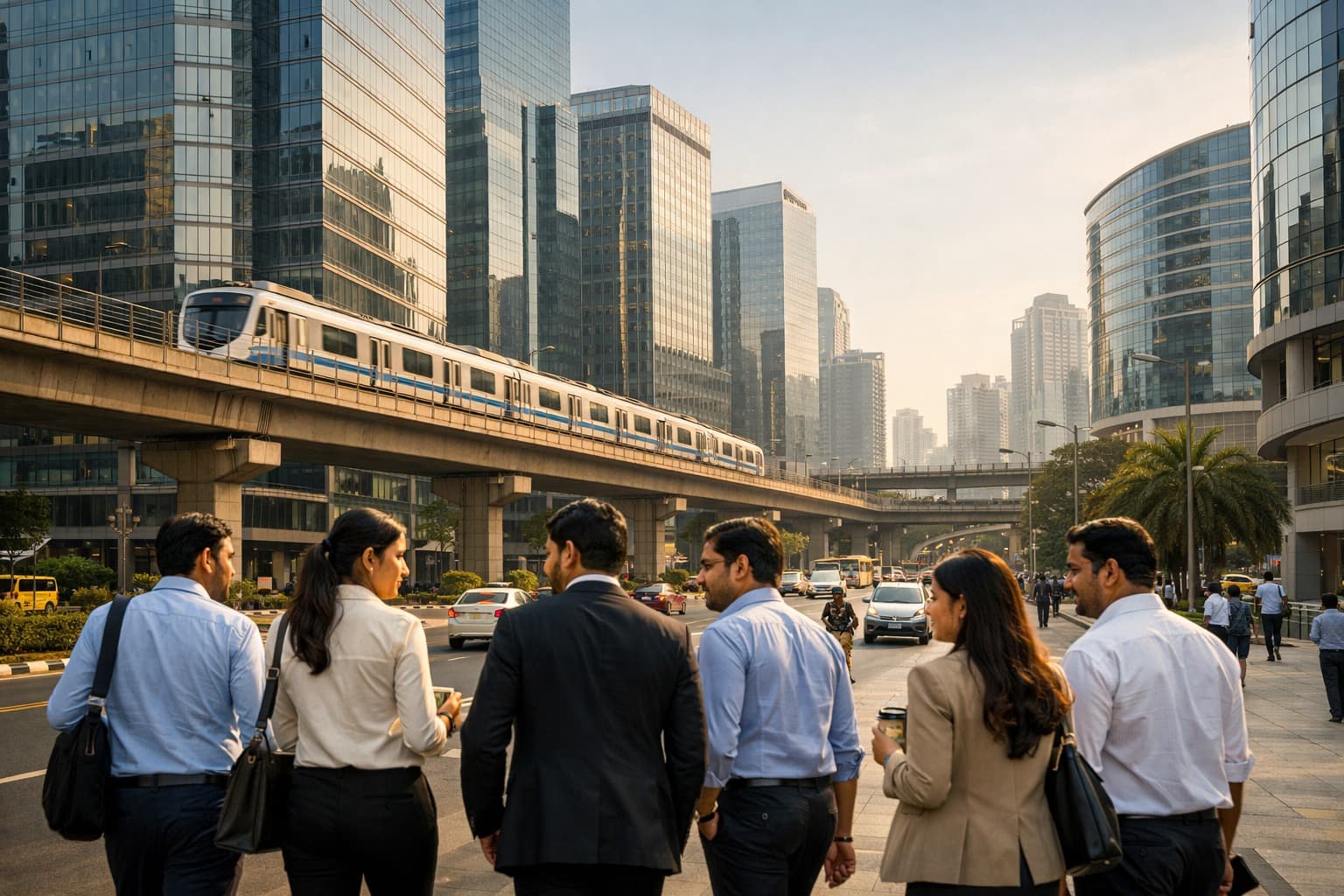
Take Bengaluru and Hyderabad. Both cities have seen rapid metro expansion. Areas along new corridors have witnessed rising office rentals because employees can now reach workplaces without battling traffic for hours. In Bengaluru, leasing activity along the Outer Ring Road picked up once metro connectivity was announced. Firms that once hesitated to move into peripheral zones suddenly saw value in relocating. The metro did not just move people; it moved the market.
Expressways and Peripheral Growth
Highways and expressways have a similar effect. Gurugram’s Dwarka Expressway is a prime example. Before construction, the belt was considered speculative. But as the project neared completion, developers launched large-scale commercial property projects, anticipating demand. Companies began exploring these areas, knowing that once the road opened, access to Delhi and the airport would be seamless. The expectation of connectivity alone was enough to push rentals upward.
Airports and Global Business Appeal
Airports are another powerful driver. Businesses in sectors like finance, consulting, and IT services rely on frequent travel. Proximity to an airport makes a location attractive to global occupiers. Navi Mumbai’s upcoming international airport has already influenced office rental growth in surrounding nodes. Developers are positioning projects to capture multinational tenants who value quick flight connections. Infrastructure here is not just about local commutes; it is about global reach.
Evidence from Market Numbers
India’s office sector has seen record absorption in recent years. Net absorption touched nearly 50 million sq. ft. in 2024, while gross leasing activity crossed 83 million sq. ft. in 2025. Much of this demand was concentrated in areas directly linked to new infrastructure. Chennai’s vacancy rate fell to 9.3 percent, the lowest among major cities, thanks to improved accessibility. These numbers show how infrastructure projects translate into real market outcomes.
Sectoral Preferences
Different industries respond differently to infrastructure. IT firms prefer metro-connected hubs to ease employee commutes. Financial services lean toward districts with quick airport access. Startups and co-working operators chase affordable but well-connected corridors, driving up rentals in emerging zones. Infrastructure projects therefore do not just raise rents; they also shape the profile of tenants in each district.
Investor and Developer Strategy
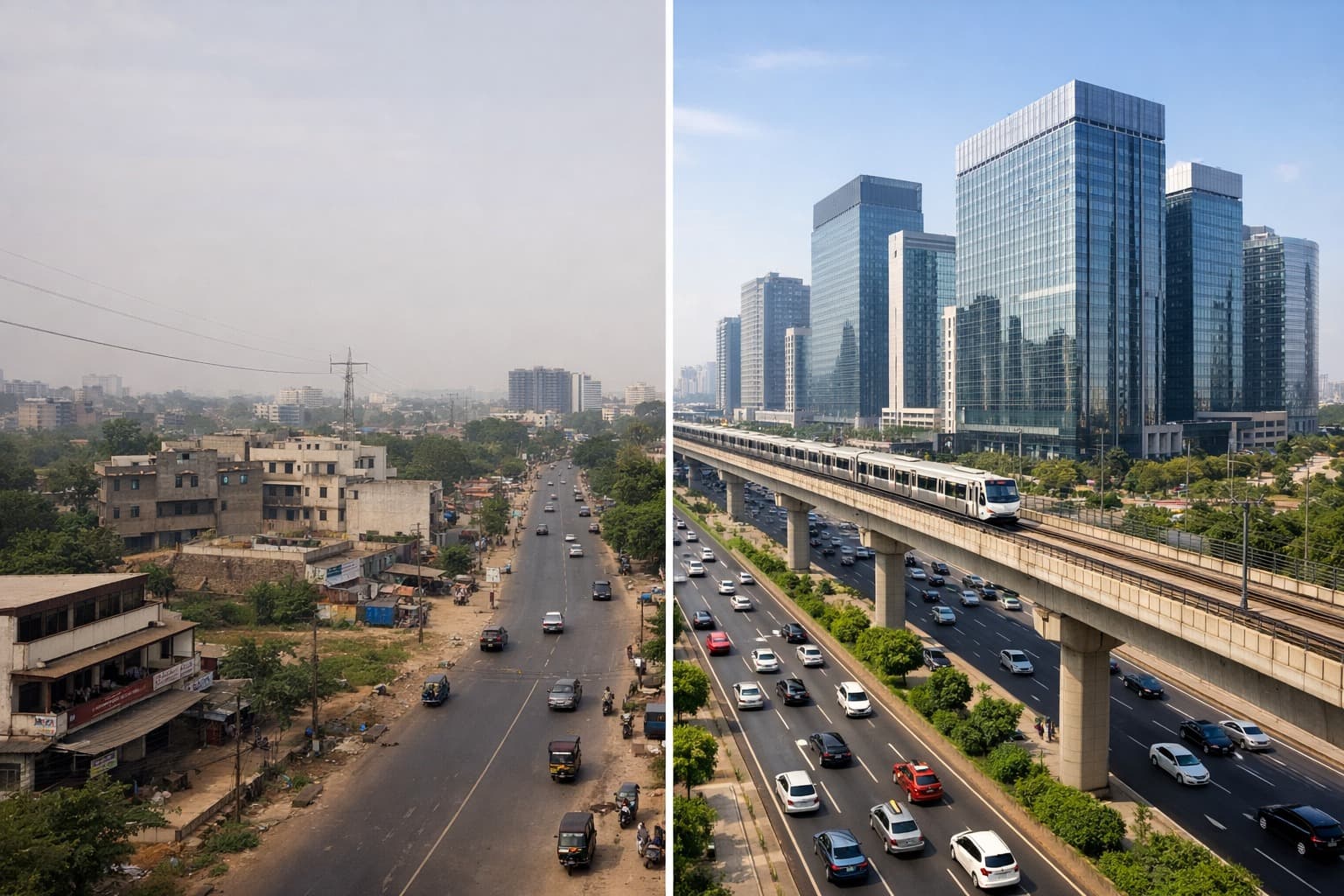
Investors often anticipate infrastructure years in advance. Acquiring land near upcoming metro stations or highways allows them to benefit from appreciation once connectivity improves. Developers too plan projects around these timelines, launching office towers in sync with infrastructure delivery. This speculative but calculated approach has paid off in Bengaluru’s metro-linked corridors and Gurugram’s expressway belt. The lesson is clear: infrastructure is the foundation of long-term rental growth.
Risks and Delays
Of course, not every project delivers immediate results. Delays in completion can frustrate investors and tenants alike. Poor last-mile connectivity can blunt the impact of a new metro or freeway. Oversupply of office stock can also dampen rental growth. Businesses weigh infrastructure quality, not just announcements. Smooth traffic flow and reliable public transport matter more than ribbon-cutting ceremonies.
Future Outlook
India’s urbanisation push ensures that infrastructure spending will remain central to real estate growth. Metro networks in Mumbai, Bengaluru, and Pune are expanding rapidly. New airports in Noida and Navi Mumbai are on the horizon. Expressways continue to link peripheral zones to city centres. Each of these projects will reshape office demand patterns. For landlords, this means stronger rental growth. For tenants, it means higher costs but better connectivity. The cycle will continue, with infrastructure as the key driver.
Summary
Infrastructure projects such as metro lines, expressways, and airports have a direct impact on office rentals in India. They reduce commute times, expand talent catchments, and attract global occupiers. Recent data shows record office leasing demand and falling vacancies in districts linked to new projects. For developers and investors, infrastructure-led growth offers long-term appreciation. For tenants, it brings higher costs but improved convenience. The future of commercial property will continue to be shaped by infrastructure, making it the most decisive factor in office rental growth.