
How EV Charging Influences Home Buyer Decisions in India
Summary
EV charging is now a key factor for Indian homebuyers, influencing decisions and resale value. Developers who proactively include EV infrastructure gain a competitive edge, as retrofitting is costly and complex.

Introduction
Three years ago, asking a developer about EV charging points during a site visit would have earned you a politely confused look. Today it is a standard question on serious buyers' checklists, particularly in Bengaluru, Pune, Mumbai, and Delhi NCR where electric vehicle ownership has crossed the threshold from early adopter curiosity into mainstream purchasing behaviour. EV charging home buyers in India are increasingly making it clear through their shortlisting decisions, their offer prices, and their resale choices that this amenity has moved from nice-to-have into a category that genuinely influences where they sign. Developers who understood this early are already seeing it in their sales velocity numbers.
The EV Ownership Shift That Changed Everything
India's electric two-wheeler and four-wheeler market has been growing at a pace that nobody predicted five years ago. Total EV registrations crossed 1.7 million units in FY2024 and the trajectory has continued upward. Tata Motors, MG, Hyundai, and a growing list of affordable EV brands have brought purchase prices into ranges that urban middle-income households can access without treating it as a luxury decision.
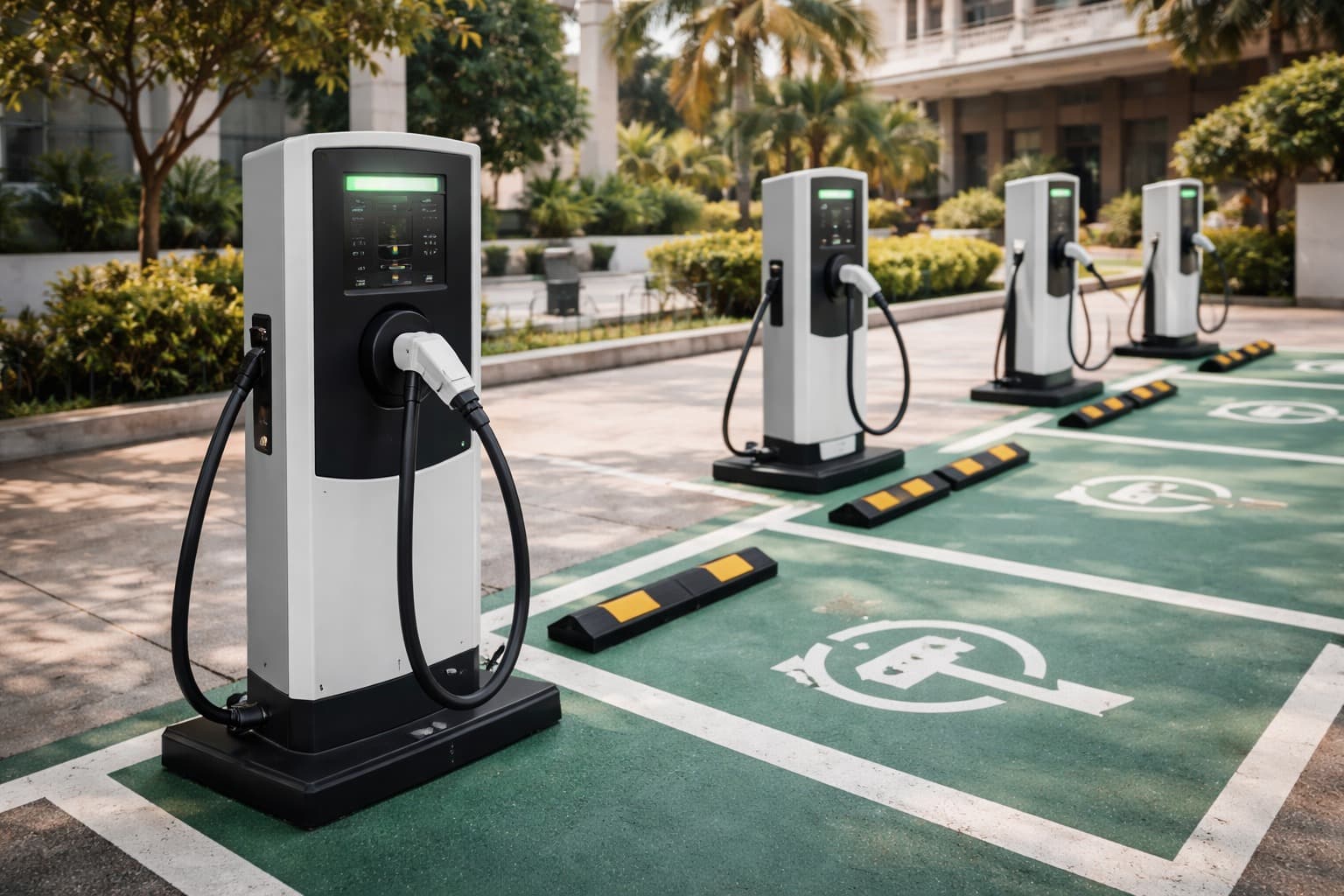
The consequence for EV charging real estate India is direct. A family that owns or is considering an EV needs to charge it somewhere. Workplace charging is unreliable and often unavailable. Public charging infrastructure outside metro cores remains patchy. The home charging point is the most practical, most convenient, and most used solution. And if the apartment society does not have it, that family either has to manage without or rethink which apartment they are buying.
How Buyers Are Actually Factoring This In
The influence on buyer decisions does not always show up as an explicit negotiation point. Sometimes it shows up as a project simply dropping off a shortlist without the developer ever knowing why. A buyer visiting three projects on a Saturday afternoon who discovers that one has dedicated EV charging apartment India infrastructure while the other two have vague promises about future installation will weight that finding in their decision even if they do not articulate it out loud.
Survey data from Indian property portals in 2024 and 2025 consistently showed EV charging rising up the amenity priority list for buyers in the 30 to 45 age bracket. This is the same demographic that is buying EVs at the highest rate. The overlap is not coincidental. It is the market telling developers something specific about what the next decade of residential buying looks like.
What Developers Are Doing in Response
The smarter developers moved early. Projects launched in Bengaluru's Sarjapur Road and Whitefield corridors from 2023 onward began specifying EV charging points per parking bay as a standard feature rather than an upgrade. Some Pune developers in Baner and Balewadi started including dedicated EV-ready conduit infrastructure during construction, which costs a fraction of retrofitting the same capability after the building is occupied.
EV infrastructure housing India is also being shaped by regulatory push from above. The Ministry of Housing and Urban Affairs mandated that 20% of parking spaces in new residential developments must be EV-ready. Several states including Maharashtra, Karnataka, and Haryana have added their own requirements. Compliance is no longer optional and buyers increasingly know this, which means a project that exceeds the minimum shows genuine intent rather than box-ticking.
The Resale Value Connection
This is where electric vehicle charging property investment logic starts to sharpen for buyers thinking beyond immediate use. A building with comprehensive EV charging infrastructure, meaning actual operational chargers rather than just conduit pipes in the wall, will serve the 2030 buyer pool far better than one without. And the 2030 buyer pool will have a significantly higher proportion of EV owners than today's buyer pool.
Resale properties in societies that have proactively installed EV charging are already beginning to command a small but measurable premium over comparable projects in the same micro-market where the infrastructure is absent. That premium will grow, not shrink, as EV penetration rates increase over the next five to seven years.
Retrofitting: Why It Is So Much Harder Than Building It In
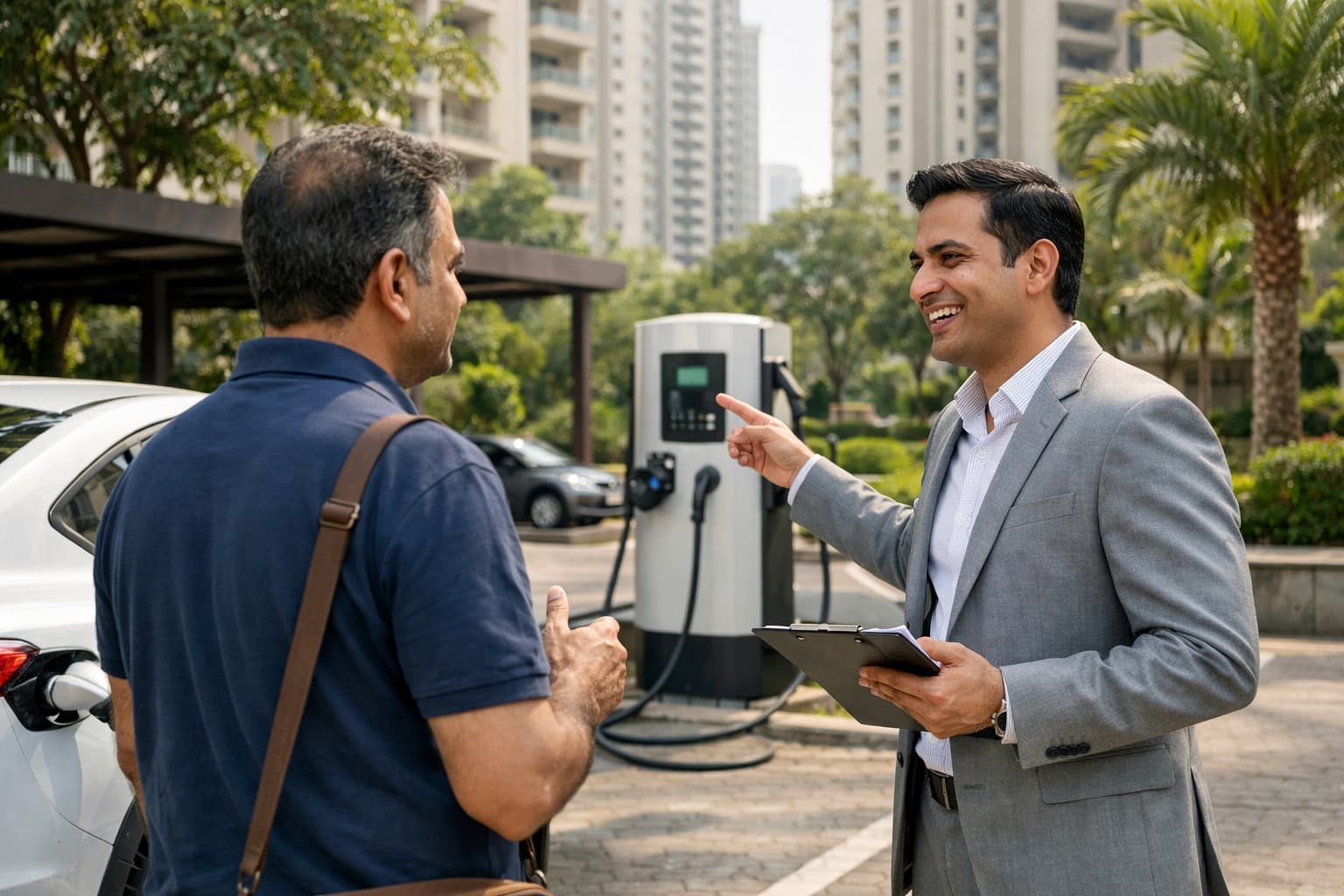
Societies that missed the construction-phase window for EV infrastructure face a genuinely difficult problem. Retrofitting EV charging into an existing residential building requires electrical load assessment, potential transformer upgrades, new cabling runs through finished walls and parking structures, and in many cases a special general body resolution from the society committee to approve the capital expenditure.
The cost of retrofitting a 100-unit society with meaningful EV charging capacity can run to Rs 15 lakh to Rs 40 lakh depending on the existing electrical infrastructure and the number of chargers installed. Spreading that across the society is politically difficult and technically disruptive. Buyers who understand this dynamic increasingly prefer projects where the infrastructure is already in place.
Summary
EV charging has crossed from amenity to decision-influencing factor for a growing segment of Indian home buyers in 2026. EV ready apartments command faster absorption, better resale interest, and a measurable price premium over comparable projects without the infrastructure. MoHUA's 20% EV-ready mandate has made compliance mandatory but the projects that go beyond minimum compliance are the ones winning buyer preference in competitive micro-markets. For developers, the cost of building it in during construction is a fraction of what buyers will eventually pay for its absence at resale.