
How Connectivity Shapes and Accelerates Commercial Hotspot Growth
Summary
Connectivity is crucial for commercial success, driving growth through robust infrastructure and accessibility. Road, air, and digital networks attract businesses, talent, and investment, shaping thriving commercial hotspots.

Introduction
In today’s fast-evolving urban economy, connectivity has emerged as one of the most powerful drivers of commercial success. Businesses no longer choose locations based only on affordability or availability of space. Instead, access, mobility, and infrastructure play a decisive role. Understanding how connectivity drives commercial hotspot growth helps investors and businesses identify locations with long-term potential. Cities and corridors that offer strong physical and digital connectivity consistently attract commercial activity, investment, and sustained demand.
Why Connectivity Matters for Commercial Development
Connectivity refers to how easily people, goods, services, and data can move in and out of a location. Strong business infrastructure improves operational efficiency and reduces time costs. Commercial hubs thrive when employees, customers, and suppliers can access them without friction. This direct relationship between connectivity and commercial growth explains why well-connected areas outperform isolated markets.
Road Infrastructure as a Growth Catalyst
Road networks are the foundation of commercial expansion. Highways, arterial roads, and flyovers improve accessibility and visibility. Businesses benefit from better logistics and higher footfall. Areas connected to national highways often evolve into commercial hotspots because they support retail, offices, and warehousing simultaneously. Road-led urban development creates clusters that attract long-term business activity.
Impact of Airport and Regional Connectivity
Proximity to airports significantly boosts commercial attractiveness. Businesses that rely on travel, logistics, or client interaction prefer locations near airports. Airport connectivity supports hospitality, corporate offices, and export-oriented businesses. This form of infrastructure driven business growth allows cities to compete beyond local markets and attract national and international brands.
Digital Connectivity and Modern Commerce
In the digital economy, physical roads alone are not enough. Reliable internet and telecom networks are critical for modern businesses. Strong digital infrastructure enables remote work, cloud operations, and data-driven decision-making. Locations with robust digital connectivity attract IT firms, service providers, and co-working spaces. This strengthens commercial real estate growth by supporting future-ready businesses.

Workforce Mobility and Daily Commute
Commercial zones depend heavily on workforce accessibility. Efficient public transport and shorter commute times improve employee productivity and retention. Areas that offer seamless daily travel attract employers across sectors. This business connectivity impact ensures consistent demand for office and mixed-use developments. Workforce mobility directly supports sustainable commercial ecosystems.
Residential Growth Supporting Commercial Demand
Commercial expansion often follows residential development. As population density increases, demand for retail, healthcare, offices, and entertainment grows. Well-planned cities integrate residential and commercial spaces, creating self-sustained hubs. This balance accelerates emerging commercial hubs by ensuring steady customer and workforce availability.
Planned Zoning and Organised Development
Connectivity works best when supported by planned zoning. Dedicated commercial corridors, high-street zones, and business districts reduce congestion and improve efficiency. Organised layouts enhance investor confidence and long-term value. Such planning reinforces infrastructure led commercial property growth rather than short-term speculative development.
Case Study: Zirakpur’s Commercial Rise
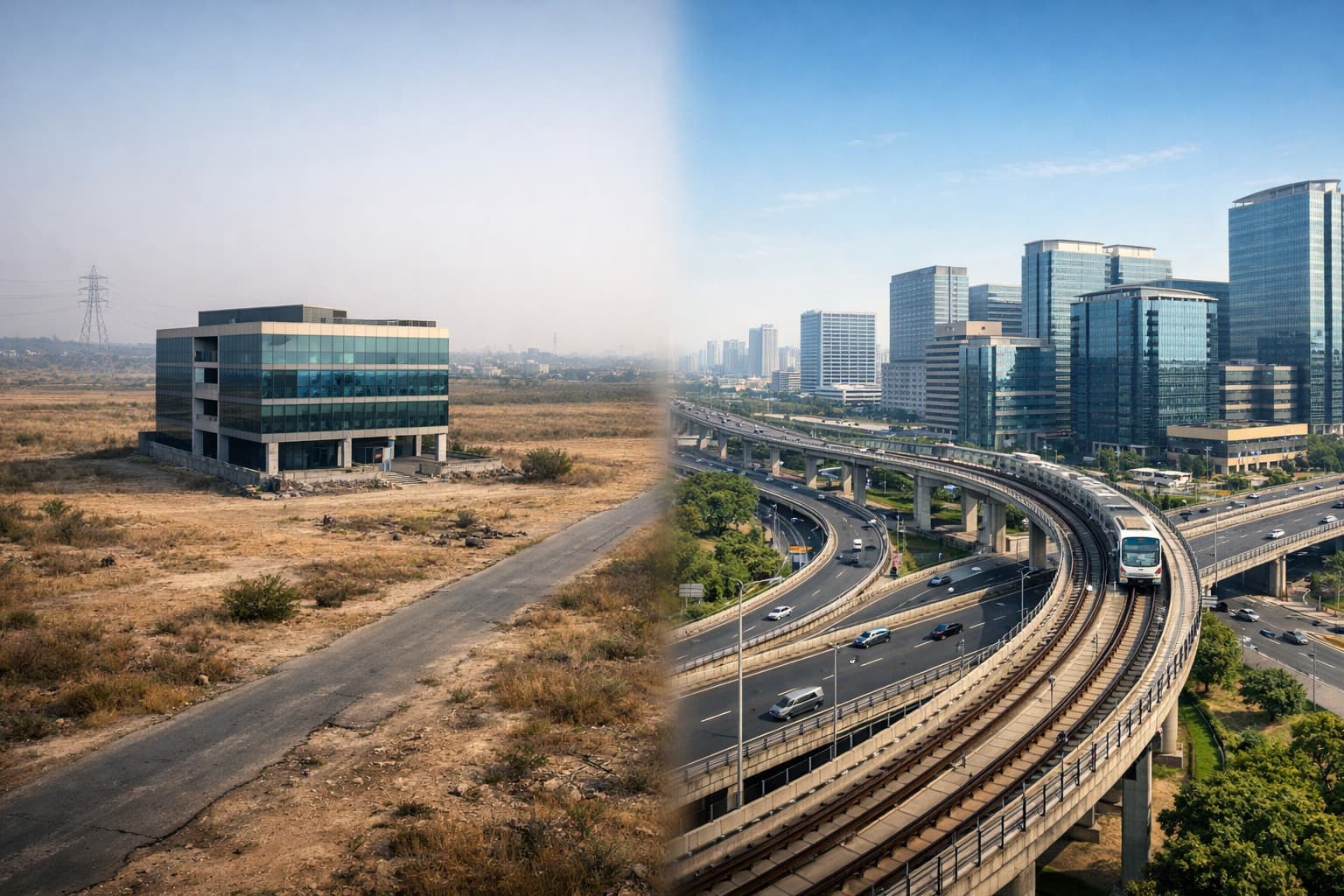
Zirakpur has transformed from a transit town into a major commercial destination. Its strategic position near Chandigarh, Mohali, and Panchkula has made it a gateway city. Strong road networks and airport access have driven connectivity driven commercial growth in Indian cities like Zirakpur.
Road and Highway Advantage in Zirakpur
Zirakpur benefits from direct access to major highways connecting Delhi and Chandigarh. Smooth road connectivity improves goods movement and customer reach. This infrastructure advantage has led to rising demand for commercial real estate growth in the region. Businesses benefit from visibility and efficient operations without metro-level costs.
Airport Proximity and Business Appeal
The nearby international airport has strengthened Zirakpur’s commercial profile. Corporate offices, hotels, and logistics firms benefit from faster connectivity. This has enhanced the role of connectivity in business hotspot development by positioning Zirakpur as a cost-effective alternative to saturated urban centers.
Digital Readiness and Business Operations
Zirakpur’s digital infrastructure supports modern business needs. Reliable internet and telecom services enable IT-enabled services, remote teams, and digital enterprises. This readiness supports long-term business infrastructure development and attracts diverse industries beyond traditional retail.
Cost Advantage and Investor Interest
Compared to core cities, Zirakpur offers affordable commercial spaces. Lower entry costs combined with strong connectivity make it attractive for startups and expanding firms. This affordability accelerates commercial growth while offering investors stable appreciation potential.
Long-Term Outlook for Connected Commercial Zones
Infrastructure investments signal long-term intent rather than short-term gains. Locations with ongoing connectivity upgrades show sustained growth patterns. Investors increasingly evaluate connectivity before price. This shift reinforces how connectivity drives commercial hotspot growth across India’s urban landscape.
Conclusion
Connectivity is no longer optional for commercial success. Roads, airports, digital networks, and planned development together shape business destinations. Cities that invest in connectivity consistently attract businesses, talent, and capital. Understanding this relationship helps stakeholders make informed decisions in a competitive commercial real estate market.
Summary
Connectivity plays a central role in shaping commercial hotspot growth. Strong road networks, airport access, digital infrastructure, and workforce mobility attract businesses and investors. Well-connected locations support efficient operations, higher footfall, and long-term demand. Cities like Zirakpur demonstrate how infrastructure and connectivity transform emerging areas into thriving commercial hubs. As businesses prioritise access and efficiency, connectivity-led development will continue to drive commercial real estate growth across Indian cities.