
How Climate Change Could Affect Property Values
Summary
Climate change is already reshaping Indian property values, causing price stagnation in flood-prone areas like Mumbai and Chennai. Rising sea levels and heatwaves also impact coastal properties and increase living costs in inefficient buildings. Smart buyers must assess climate risks to make financially sound investments.

Introduction
Real estate investors spend hours studying interest rates, location rankings and rental yields. Very few spend equal time asking a more basic question: will this land still be liveable in twenty years? Climate change is not a future problem for Indian property buyers. It is already reshaping where demand rises, where it stagnates, and which micro-markets quietly shed value while everything around them grows.
Understanding climate risk property investment India is no longer optional for serious homebuyers. It is essential.
The Numbers Behind the Risk
India ranks among the top ten countries globally most exposed to extreme weather events, according to the Climate Risk Index 2026. Between 1995 and 2024, the country faced approximately 430 natural disasters including floods, droughts, cyclones, heatwaves and landslides. Over a billion people were affected, with losses exceeding 170 billion dollars. In 2025 alone, over 5.4 million people were internally displaced by climate-related events, the highest figure in over a decade.
These are not abstract statistics. They are the upstream drivers of what happens to property prices in the areas these events hit repeatedly.
How Flood Risk Translates Into Price Stagnation
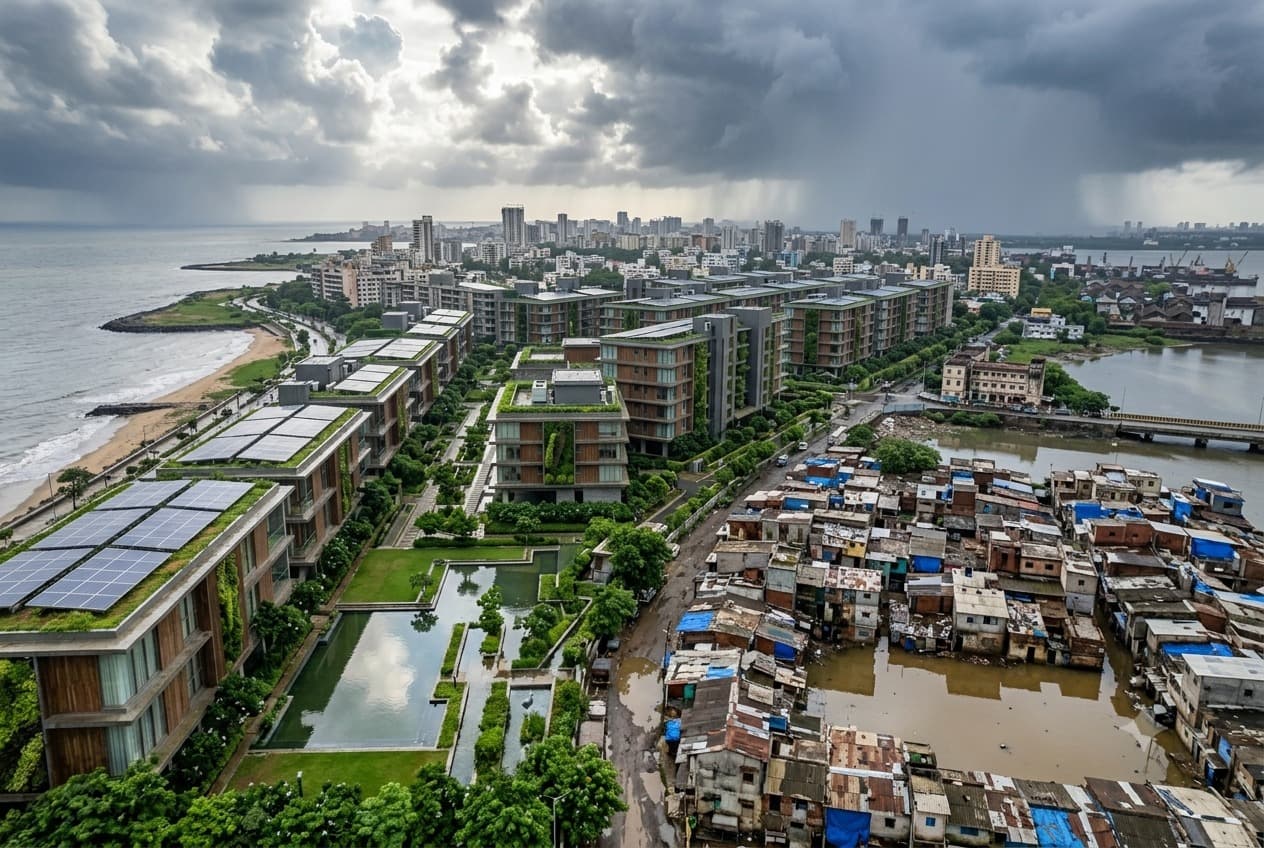
The most direct link between climate change and property value decline runs through flood exposure. In Mumbai, consistently waterlogged localities like Kurla and Vasai have recorded slower sales cycles and weaker year-on-year price growth compared to elevated or better-drained areas at similar price points. In Chennai, areas like Velachery that flood regularly during northeast monsoon season continue to see buyer hesitation despite being well-connected and relatively affordable.
Buyers are doing their homework now in ways they did not five years ago. Flood histories, drainage maps and local inundation records are increasingly part of the pre-purchase research that serious buyers undertake before committing.
Coastal Cities Face a Longer-Term Threat
Rising sea levels pose a particular challenge for Mumbai, Chennai and Kolkata. The risk is not immediate inundation but a slower erosion of buyer confidence in ground-floor units, basement-level parking, and low-lying residential pockets within a few hundred metres of tidal zones.
Insurance companies are already adjusting premiums for coastal properties in recognition of this risk. Lenders in some markets have begun applying climate risk overlays to property valuations. When the financing and insurance cost of owning a coastal flat rises, its effective value falls even if the headline price holds.
Heatwaves and the Rising Cost of Living
Heatwaves affect property values through a less obvious channel: the cost of staying cool. As summer temperatures across Indian cities regularly exceed 44 to 46 degrees Celsius, energy bills in poorly insulated, west-facing or top-floor apartments are climbing significantly. Buildings without adequate shading, cross-ventilation or insulated roofing become noticeably more expensive to occupy.
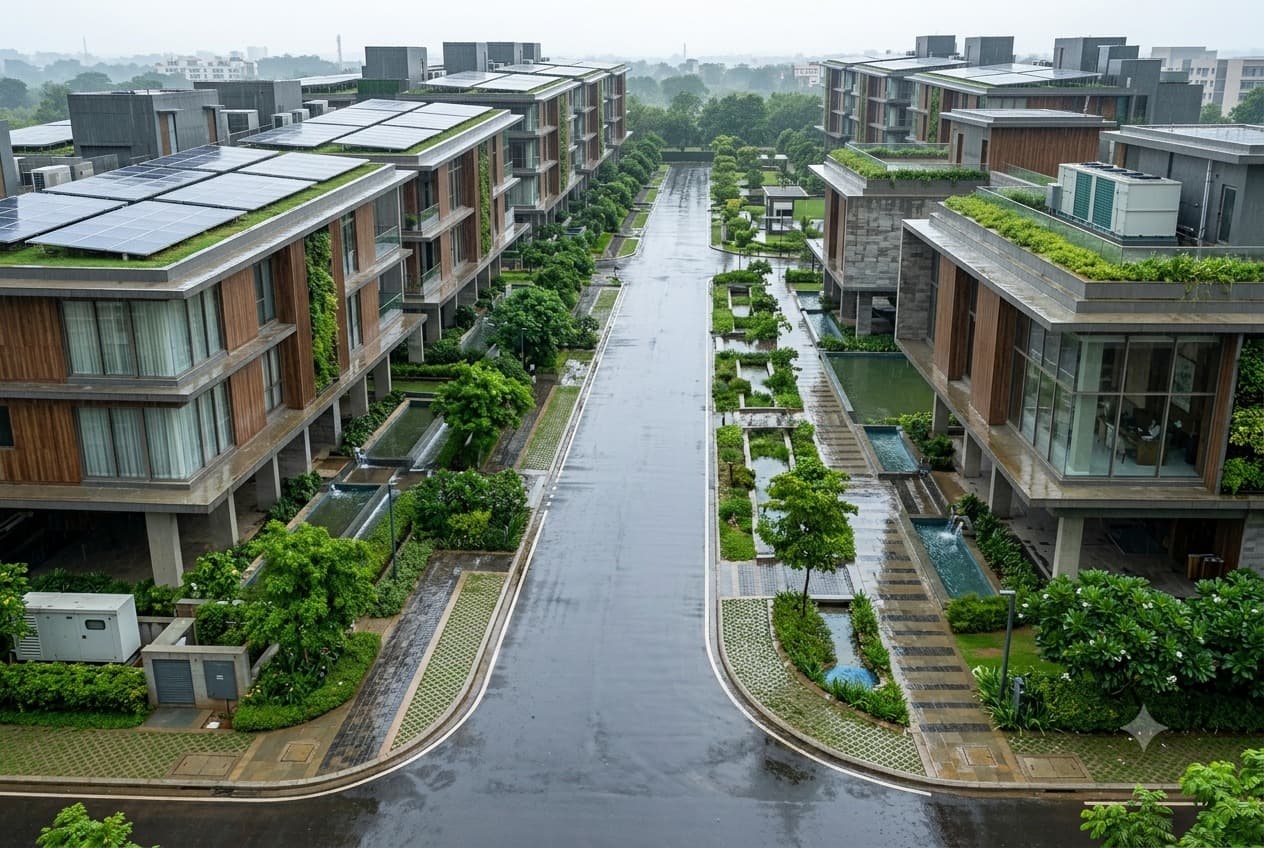
This is shifting buyer preference toward north or east-facing flats, upper floors in thermally efficient buildings, and projects with green canopy cover rather than concrete-heavy layouts. Over time, buildings that do not address thermal comfort will face resale headwinds even in otherwise strong micro-markets.
What Smart Buyers Are Checking
Before purchasing, check the National Disaster Management Authority's hazard maps for the locality. Ask the developer for the site's drainage plan and flood history. Verify whether the project is located in a notified flood zone. For coastal properties, review historical tidal and storm surge data for the micro-market.
Properties with higher plinths, elevated electrical infrastructure, green certification and natural ventilation are not just environmentally conscious choices. They are financially safer ones.
Summary
Climate change property values in India are already diverging between climate-resilient and climate-exposed locations. Flood risk real estate Mumbai Chennai and other cities is translating into slower price growth and buyer hesitation in repeatedly waterlogged localities. Heatwaves are adding to the heatwave impact property prices India story by raising the cost of occupation in thermally inefficient buildings. For any buyer in 2026, checking climate risk factors before signing is as important as checking carpet area and RERA registration.