
Homes That Think For Themselves: Where Smart Living In India Is Really Headed
Summary
Indian homes are rapidly embracing smart living, integrating IoT for automation, energy efficiency, and advanced security. Driven by 5G, this trend redefines modern housing, moving from luxury to standard despite challenges.

Introduction
Indian homes are quietly turning into something closer to a living organism than a static structure. Lights that know when you have left a room. Thermostats that learn your evening habits without being told twice. This is the direction the entire housing market is leaning toward right now.
Ask any developer in Bengaluru, Gurugram or Pune what buyers ask about first during a site visit, and connectivity infrastructure often comes up before the size of the balcony.
Smart Homes Are No Longer A Luxury Tag
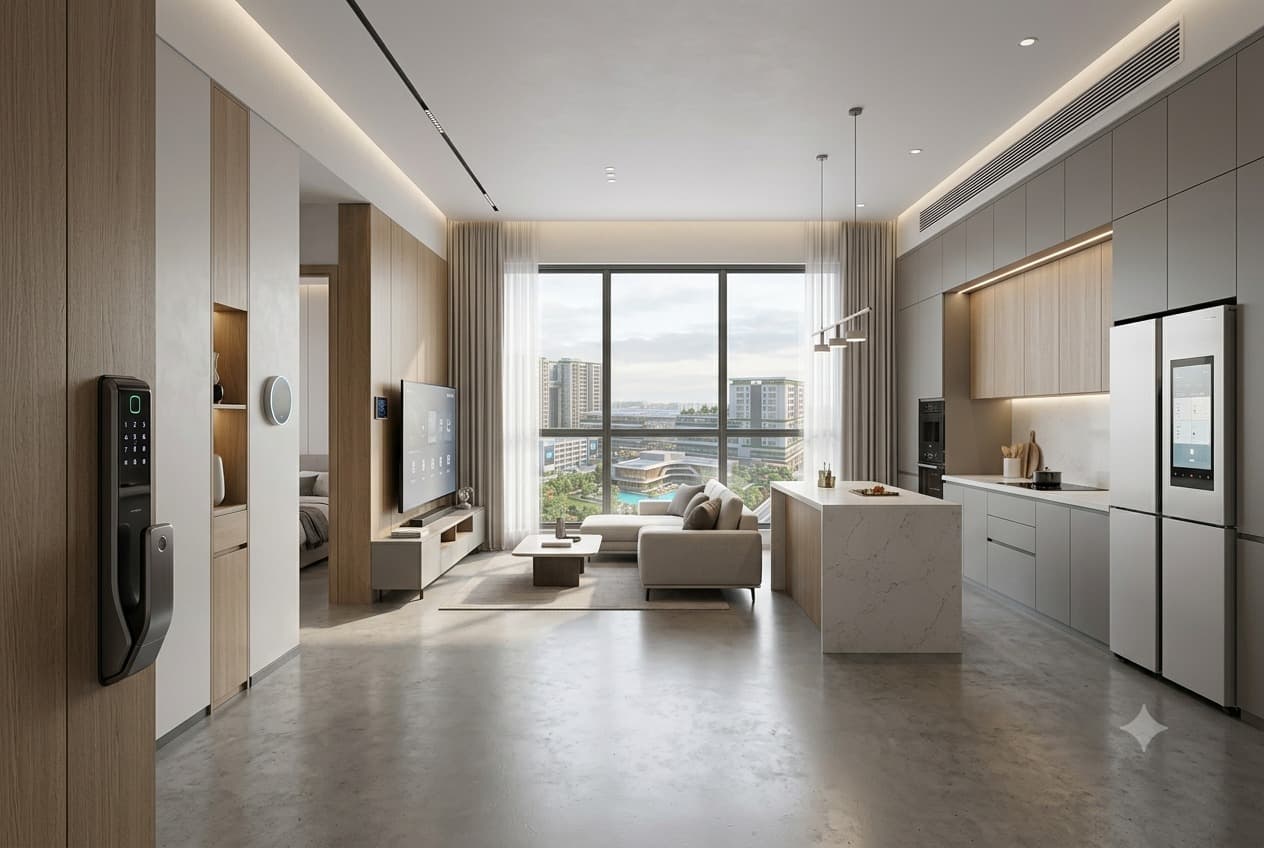
A smart home once meant a fancy doorbell and a voice assistant plugged into a speaker. That definition feels outdated now. Today, smart home automation covers lighting, security, climate control, water leak detection and energy monitoring, working together through a single app rather than five disconnected gadgets.
Builders across metro and Tier 2 cities are baking this into base specifications instead of offering it as a costly add-on package.
Why IoT Enabled Housing Is Gaining Real Traction
IoT enabled housing works on a simple premise, every device in the home talks to every other device. Your door sensor can inform your lighting system, your air quality sensor can trigger your purifier automatically, no person needs to stand there flipping switches.
For working professionals juggling long commutes, that kind of quiet automation buys back time and mental bandwidth.
Energy Efficiency Is Becoming The Real Selling Point
Buyers today care about power bills the way they once cared about parking space. Smart thermostats, solar integration and app based consumption tracking are increasingly deciding factors during a purchase, not afterthoughts mentioned in a brochure footnote.
A household that can see exactly where electricity is being wasted tends to correct that waste within weeks. Developers who understand this are marketing energy efficient homes as a financial argument now, not just an environmental one.
Security Has Moved From Guards To Sensors
Gated communities used to rely almost entirely on human security staff and CCTV footage nobody watched in real time. Smart security systems have changed that equation with motion sensors, facial recognition entry points and instant mobile alerts.
For NRI owners or families who travel often, this feature alone can decide between two otherwise similar projects.
The Role Of 5G And Faster Connectivity
None of this smart ecosystem functions well without dependable connectivity. As 5G connectivity expands across Indian cities, the lag between a command and a response shrinks to almost nothing, making automated homes feel far more responsive than before.
Developers are now wiring buildings with this future need in mind rather than retrofitting later, an approach that used to be expensive and messy.
What This Means For Housing Societies
Entire townships are experimenting with centralised smart living dashboards where residents can monitor water usage, book amenities and report maintenance issues from one screen, reducing friction with management associations considerably.
Societies that adopt this early often see fewer disputes over shared utility costs, since everything is transparently metered.

Challenges That Still Need Solving
None of this is without friction. Data privacy remains a real concern for buyers who worry about how much information their own home is quietly collecting. Interoperability between brands of smart devices is still patchy, and after sales support varies widely across developers.
Cost matters too. High end smart integration adds a noticeable premium, and not every buyer is convinced the return justifies the spend just yet.
What Buyers Should Actually Look For
Before getting swept up by glossy marketing, ask which systems are actually installed versus which are merely wiring provisions for later. Ask about the after sales service contract too, because a smart home with a dead app is just an expensive regular home.
Summary
The future of smart living in India is arriving faster than expected, driven by connectivity, energy consciousness and a generation of buyers who expect their devices to talk to each other. For homebuyers, understanding smart home automation and IoT enabled housing is fast becoming as basic as checking the carpet area before signing on the dotted line. As 5G connectivity spreads and energy costs climb, smart security systems and energy efficient homes are shaping what a good address looks like in India today.