
Home Lighting Tips According to Vastu Shastra
Summary
Discover how Vastu Shastra principles can transform your home's energy through strategic lighting. Learn the best directions, light types, and placements for each room to invite positivity and well-being.

Introduction
Walk into two homes with identical furniture and floor plans. One feels alive and welcoming. The other feels flat, slightly draining. Nine times out of ten, the difference is light. Vastu lighting home principles have understood this for centuries. Long before interior designers started talking about layered lighting and lux levels, Vastu Shastra had already mapped the relationship between illumination, direction, and human wellbeing. The good news is that most of these principles require no structural changes. You can shift the energy of a room significantly just by changing where you place a light fixture or what kind of bulb you use.
Why Lighting Matters in Vastu
Lighting as per Vastu Shastra is not treated as decoration. It is treated as energy. A dimly lit home invites stagnation. According to Vastu, inadequate light is associated with Rahu's shadow energy and contributes to stress, blocked progress, and low mood. A brightly lit home, particularly in the zones governing wealth and social life, keeps energy circulating and opportunities flowing. Vastu Shastra classifies artificial lighting into three types: general lighting for overall illumination, task lighting for focused work, and accent lighting for decoration and emphasis. Each type has its place, and applying all three appropriately across different rooms makes the difference between a home that feels charged and one that feels depleted.
Direction Is Everything
Vastu lighting directions home principles begin with one clear rule. Light fixtures placed on North and East walls are considered auspicious and are said to attract good luck, financial stability, and positive energy into the space. North is governed by Kubera, the deity of wealth, and keeping this zone well-lit supports career and financial growth. East, governed by the Sun, is the direction of health and new beginnings, and ensuring natural as well as artificial light flows from this side supports physical vitality. South-East, the fire zone, is conditionally strong for lighting since it already carries fire energy, but the main source of light should not enter predominantly through this direction alone, as it can overstimulate and create imbalance. South-facing spotlights are specifically noted to support career success.
Living Room Lighting
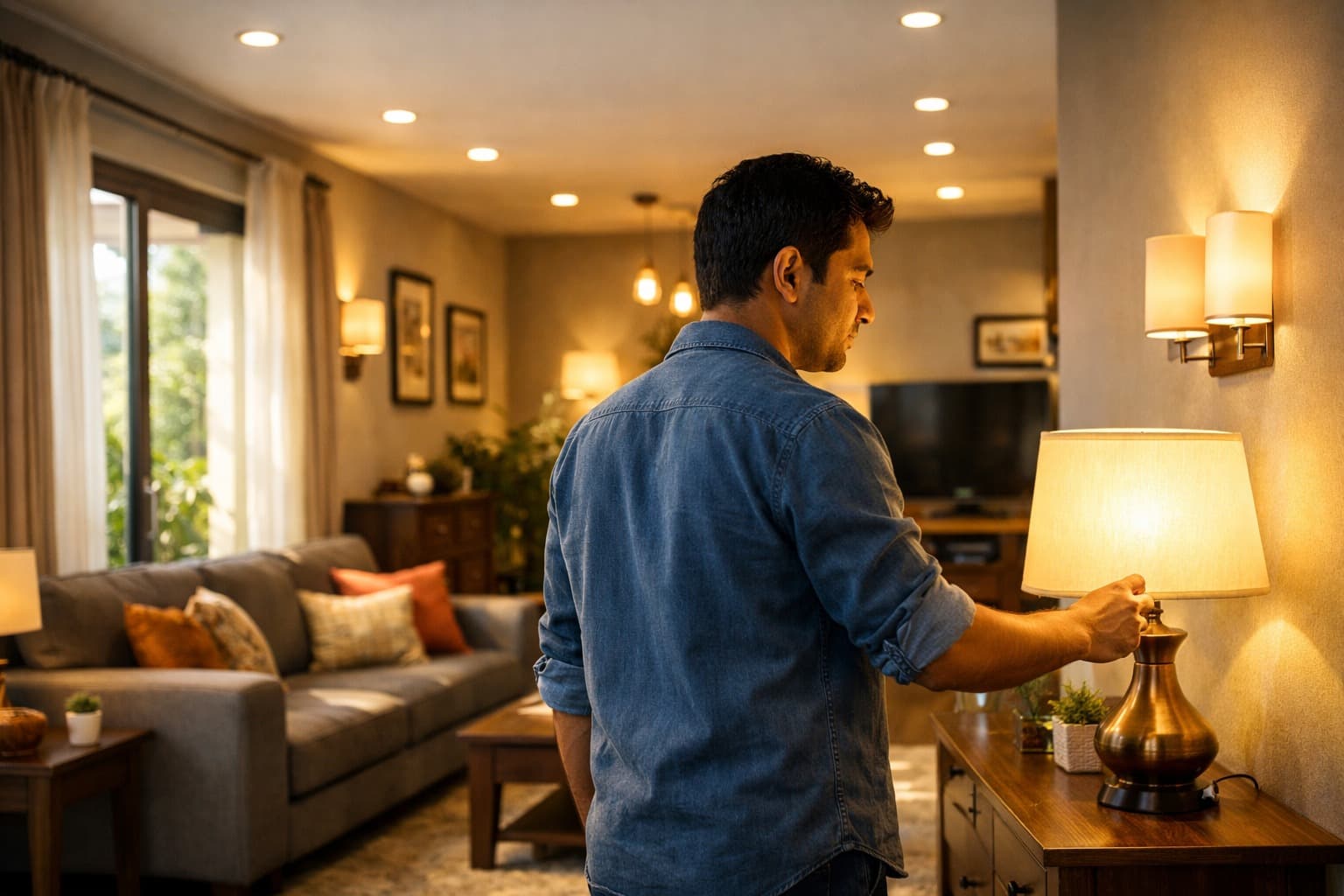
The living room is where family energy converges and guests are received. Vastu tips for home lighting for this space lean toward generous, even illumination. General lighting should dominate, with accent lighting kept secondary. The room should feel bright and open, never shadowy or theatrically dim. Heavy light fixtures should not be placed on the West wall of the drawing room. Mounting lights on the North or East walls keeps the directional energy flowing correctly. Photographs of family members placed in the living room should be well-lit, as Vastu associates this with good health and fortune for the people depicted.
Bedroom Lighting
This is the room where most people go wrong. Harsh overhead lighting directly above the bed overstimulates the nervous system and disturbs both sleep and emotional recovery. Bedroom lighting Vastu tips call for soft, warm, and indirect sources. Table lamps with warm white or yellow bulbs placed to the side of the bed create the kind of subtle, grounded atmosphere that supports rest and intimacy. For master bedrooms located in the South-West, warm yellow light is considered particularly auspicious because it supports the Earth element governing that zone, reinforcing stability in relationships and health. A dim night lamp should always be kept on rather than leaving the room in complete darkness, as total darkness is associated with fear and stress accumulation over time.
Kitchen Lighting
The kitchen is the fire zone of the home. Kitchen lighting Vastu India requires bright, evenly distributed illumination with no dark corners or shadow zones. Task lighting installed under wall cabinets to illuminate the cooking and chopping areas is essential, not just functional. The kitchen that is well-lit and free from shadows supports the fire element's role in driving cash flow, metabolism, and daily vitality. Fluorescent and LED fixtures work well here, provided the distribution is even across the full working area.
Pooja Room, Dining and Main Door
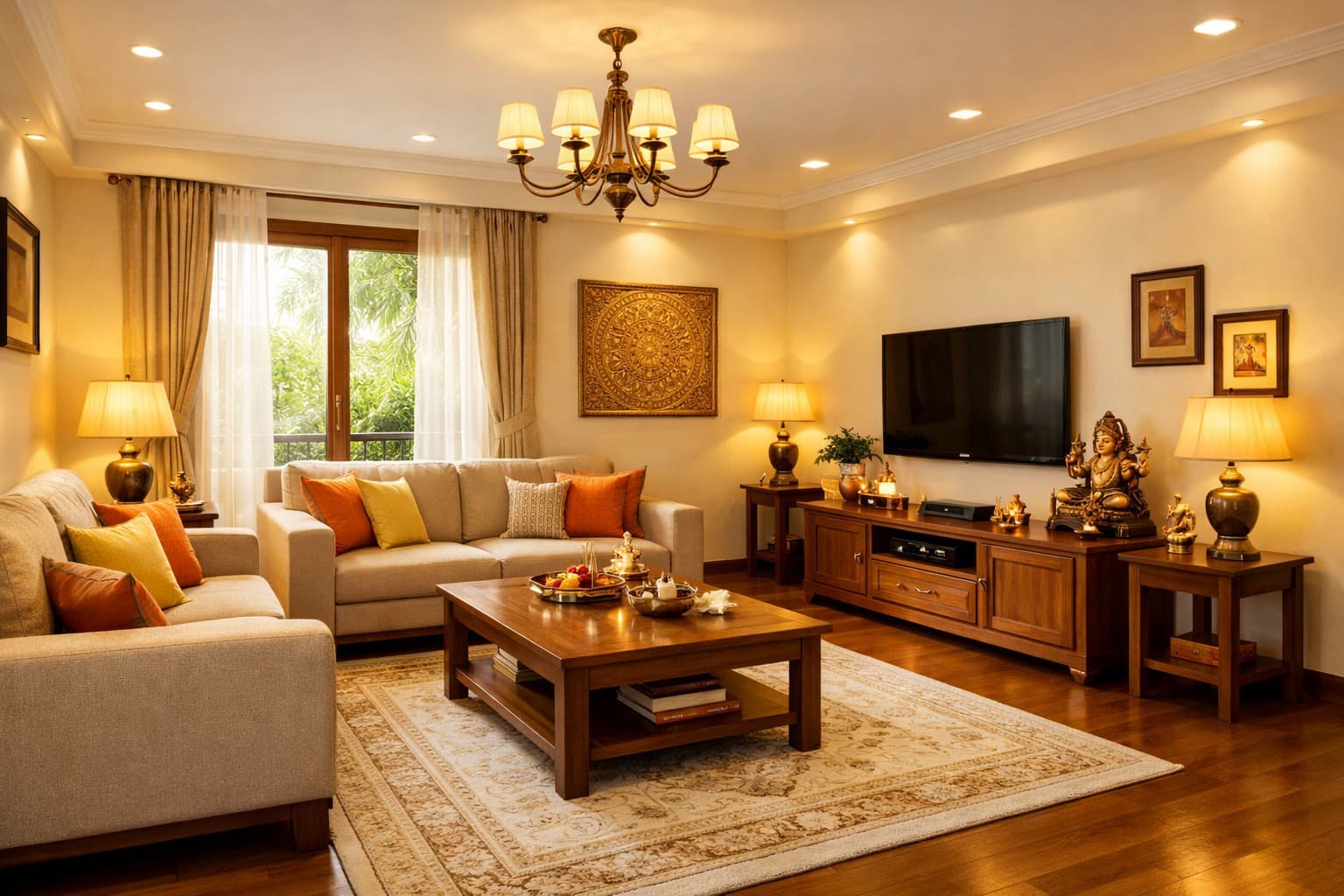
The pooja room deserves white or off-white light if it is placed in the North, East, or North-East direction. Coloured decorative lights may be used here unlike in living spaces where RGB or multicoloured lights disturb mental peace. The dining area benefits from a chandelier or focused fixture over the table, which Vastu associates with abundance and family harmony. Perhaps the most overlooked detail: the main entrance must never be dark or poorly lit. A gloomy entrance is considered one of the strongest Vastu defects, blocking prosperity and creating persistent stress in both personal and professional life.
Summary
Home lighting tips according to Vastu Shastra for every room come down to three principles: keep the home well-lit overall with no dark pockets, mount fixtures on North and East walls wherever possible, and match the quality of light to the function of each room. How lighting affects energy flow in home according to Vastu is not mystical, it is spatial and psychological. Bright, well-directed light creates alertness and openness. Soft warm light supports rest. Even distribution prevents energetic stagnation. What colour lights to use in each room according to Vastu follows a simple logic: warm yellow for bedrooms and stability zones, bright white for kitchens and work areas, white or off-white for the pooja room. Best direction to place lights in home as per Vastu is consistently North and East. Start there and the rest of the room's energy tends to follow.