
Home EV Chargers: Installation Guide for India
Summary
Discover the essentials of installing a home EV charger in India. Learn about charger types, electrical setup, installation steps, costs, subsidies, and apartment considerations for seamless EV ownership.

Introduction
India's electric vehicle story is moving fast. Tata, MG, Mahindra, and a growing list of manufacturers are putting genuinely good electric cars on the road, and first-time EV buyers are discovering something quickly: the real convenience of owning one depends almost entirely on having a charger at home.
Public charging networks are improving, but they are still patchy outside major metro cities. Plugging in at a public station still involves planning, waiting, and sometimes driving a few kilometres out of your way. A home EV charging setup eliminates all of that. You park your car at night, wake up to a full battery, and your day starts without a single charging thought. Getting that setup right, though, requires understanding a few things before you call an electrician.
Understanding the Types of Chargers Available
Not all chargers are the same and knowing the difference before you buy anything saves money and frustration.
The most basic option is a Level 1 slow charger, which simply uses your home's existing 15 ampere three-pin socket. It draws about 3.3 kW and adds roughly 15 to 20 kilometres of range every hour. For someone with a short daily commute and a full night to charge, this is enough and costs virtually nothing to set up since most EVs come with a portable cable for this purpose.
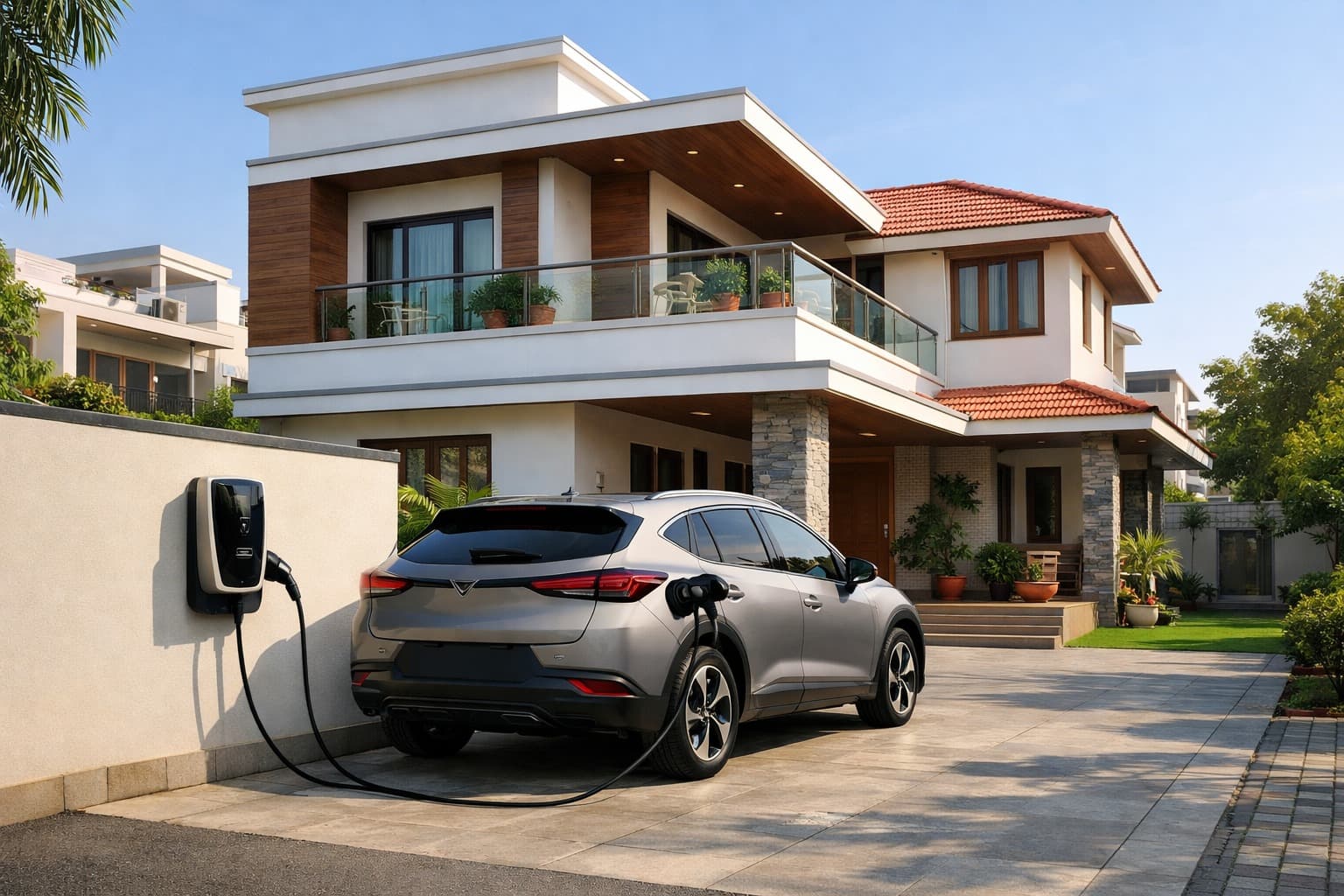
The smarter choice for most Indian homes, especially if you own a car rather than a scooter, is a Level 2 AC EV charger India setup. These are wall-mounted units that draw 7.4 kW on a single-phase connection or 11 kW on a three-phase connection. A 7.4 kW charger adds around 35 to 40 kilometres per hour, which means a typical 40 kWh battery pack charges from near-empty to full in roughly five to six hours. For almost every Tata Nexon EV, MG ZS EV, or Mahindra BE6 owner, this is the right setup.
DC fast chargers are a third category but they are designed for commercial and highway use. The capital cost is several lakhs, they require three-phase industrial connections, and they make no sense for residential use.
Checking Your Electrical Setup Before Anything Else
Before purchasing a charger or calling an installer, check what your home's existing electrical connection can handle. Most Indian homes run on a single-phase 230V supply. A 7.4 kW home EV charger installation India works perfectly well on that.
However, if your current meter load is approved for only 3 kW or 5 kW, which is common in older apartments, you will need to apply to your state electricity board or DISCOM for a load enhancement. This is a straightforward process but it takes time, sometimes two to four weeks, so factor it in before planning your installation date.
Owners of 11 kW chargers will need a three-phase connection, which is less common in individual flats but standard in independent homes and many larger apartments. Your electrician can assess this in a site visit lasting under an hour.
The Step-by-Step Installation Process
The actual EV charger installation breaks into a clear sequence once your electrical capacity is confirmed.
Start with a site survey. A certified electrician visits your parking space, checks the distance from your main electrical panel, evaluates earthing quality, and confirms which circuit breaker configuration will work. This survey typically costs nothing if you are booking installation through your EV manufacturer's partner network.
Next comes charger selection. Go with a BIS-certified unit from a brand like Tata Power EZ Charge, ChargeGrid, Exicom, or Lectrix. All best home EV charger India options from these manufacturers come with Type 2 connectors, which is now the standard across nearly every electric car sold in India. Smart chargers with Wi-Fi connectivity and app monitoring cost slightly more but let you schedule charging during off-peak tariff hours, which genuinely saves money over time.
The installation itself involves running a dedicated cable from your distribution board to the charger wall unit, fitting a separate Miniature Circuit Breaker and an RCCB, which is a residual current circuit breaker that cuts power immediately if it detects a fault, and ensuring proper earthing throughout. The whole job typically takes three to five hours.
After installation, a load test and safety inspection confirms that grounding, circuit integrity, and overcurrent protection are all functioning correctly before you start using the charger regularly.
What It Actually Costs
The EV charger installation cost India 2026 varies depending on the charger capacity, brand, and how complex your electrical setup is.
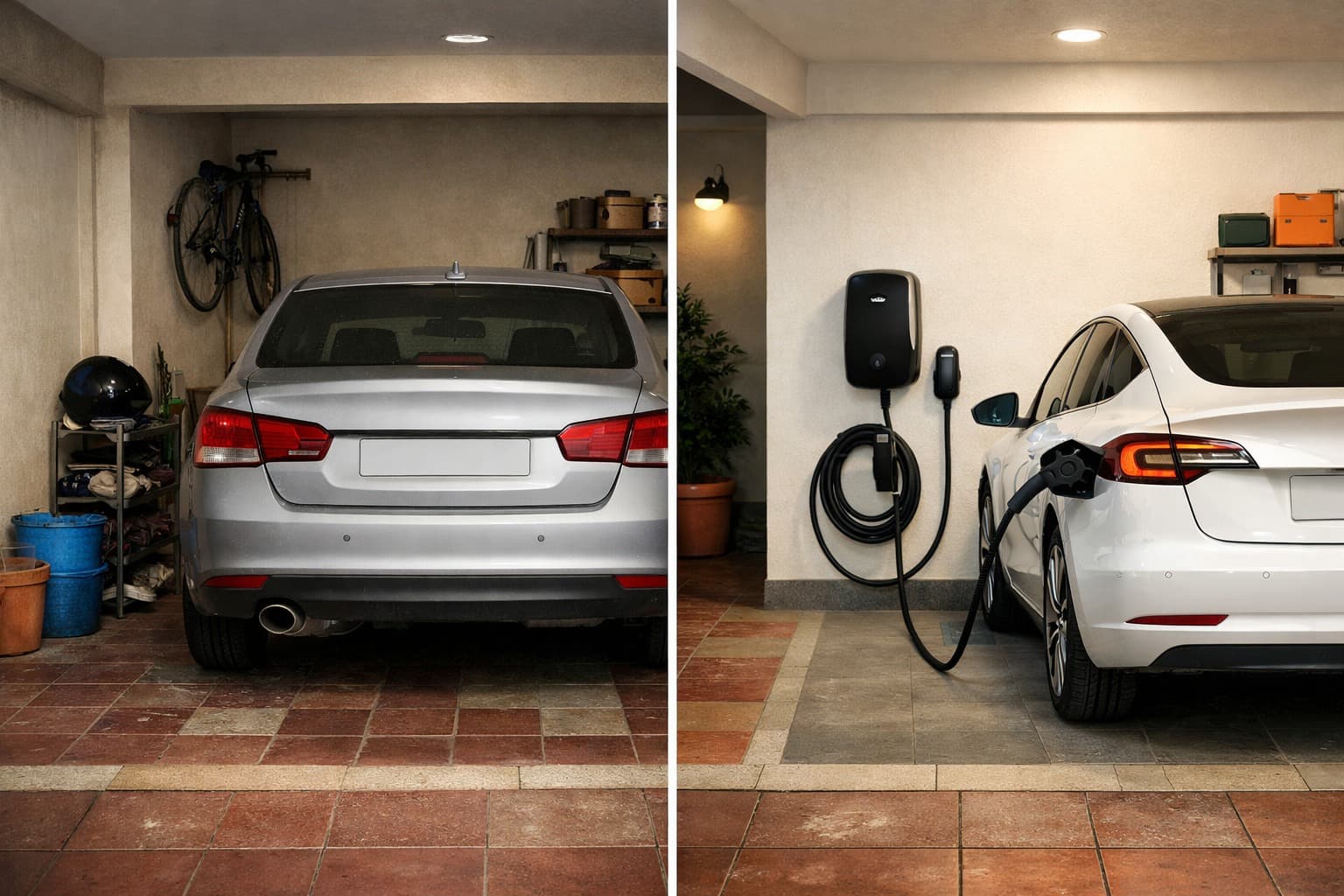
A 7.4 kW wall-mounted unit from a reputable brand costs between Rs 25,000 and Rs 50,000. The 11 kW three-phase variant runs from Rs 40,000 to Rs 70,000. Add installation labour, wiring, conduit, MCB, and RCCB, and the total spend for a complete setup typically lands between Rs 35,000 and Rs 80,000. Many EV manufacturers now bundle a charger and installation package with new vehicle purchases at subsidised prices, so check this before buying separately.
Government Subsidies You Should Know About
The FAME India scheme has been the central government's primary instrument for supporting EV infrastructure, including home charging. Several state governments have added their own incentives on top.
States including Delhi, Maharashtra, and Tamil Nadu offer rebates of Rs 6,000 to Rs 10,000 specifically for home EV charger installation. State DISCOMs in several regions have introduced preferential electricity tariffs for EV charging, particularly during nighttime hours, which can meaningfully reduce the per-kilometre running cost of your vehicle. Check with your local electricity board for what applies in your city.
Apartment and Housing Society Installations
If you live in a flat, the process has one extra step. You need written approval from your housing society before proceeding. Most societies are becoming more accommodating as EV ownership rises, and some forward-thinking ones have already installed common charging points in parking areas.
If your society resists, the MNRE guidelines and several state EV policies explicitly support an individual resident's right to install a private charger in their designated parking space. Having that documentation handy tends to move the conversation along.
Summary
Installing a home EV charger in India is a one-time investment that transforms the daily ownership experience of any electric vehicle. A 7.4 kW AC EV charger on a single-phase connection handles most Indian buyers' needs, with total setup costs running between Rs 35,000 and Rs 80,000. The process involves a site survey, load assessment, dedicated wiring with MCB and RCCB protection, and a final safety test. Government subsidies under FAME and state schemes can offset a portion of costs. For apartment owners, society approval is the only added step before a certified electrician handles everything else.