
Home Electrical Safety: Checking Meters and Wiring Panels Before Moving In
Summary
Before moving into a new home in India, inspect the electrical system. Check the meter for accuracy, the panel for damage and proper labeling, and verify earthing. This simple check can prevent future hazards.

Introduction
Nobody thinks about the electrical panel until something goes wrong. Then it gets thought about urgently, usually at night, sometimes with a burning smell involved. For homebuyers in India taking possession of a new flat or a resale property, the electrical system deserves far more attention than it typically receives during site visits. A faulty meter, an overloaded circuit breaker, or loose wiring hidden behind a panel cover can cause fires, appliance damage, and significant repair bills. Checking these systems before you move in is not an electrician's job alone. There is plenty you can verify yourself, and knowing what to look for makes you a much more informed buyer.
Understanding What You Are Looking At
The electrical panel India homes use goes by several names: distribution board, breaker panel, or meter board. It receives power from the utility supply and distributes it across all the circuits in your home. Most Indian apartments have a main service panel near the entrance or in a utility area, containing the main switch, individual circuit breakers for different zones like bedrooms, kitchen, and AC units, and the earthing connections. Older properties may still have fuse boxes rather than circuit breakers. Both serve the same protective function but fuse boxes are significantly less convenient and generally considered less safe in modern residential contexts.
Start With the Electricity Meter
How to check electricity meter home India begins with the most basic verification: is the meter reading accurately and displaying correctly? Check the digital or dial display for any error codes or blank segments that suggest malfunction. Compare recent electricity bills against your actual usage to spot unexplained spikes that could indicate meter inaccuracy or an illegal connection tapping into your supply. Check for any physical damage, tampering marks, or broken seals around the meter housing. In Maharashtra, Gujarat, and most other states, a tampered or damaged meter must be reported to the DISCOM immediately. Never ignore discrepancies between your bills and your usage patterns.
Inspecting the Circuit Breaker Panel
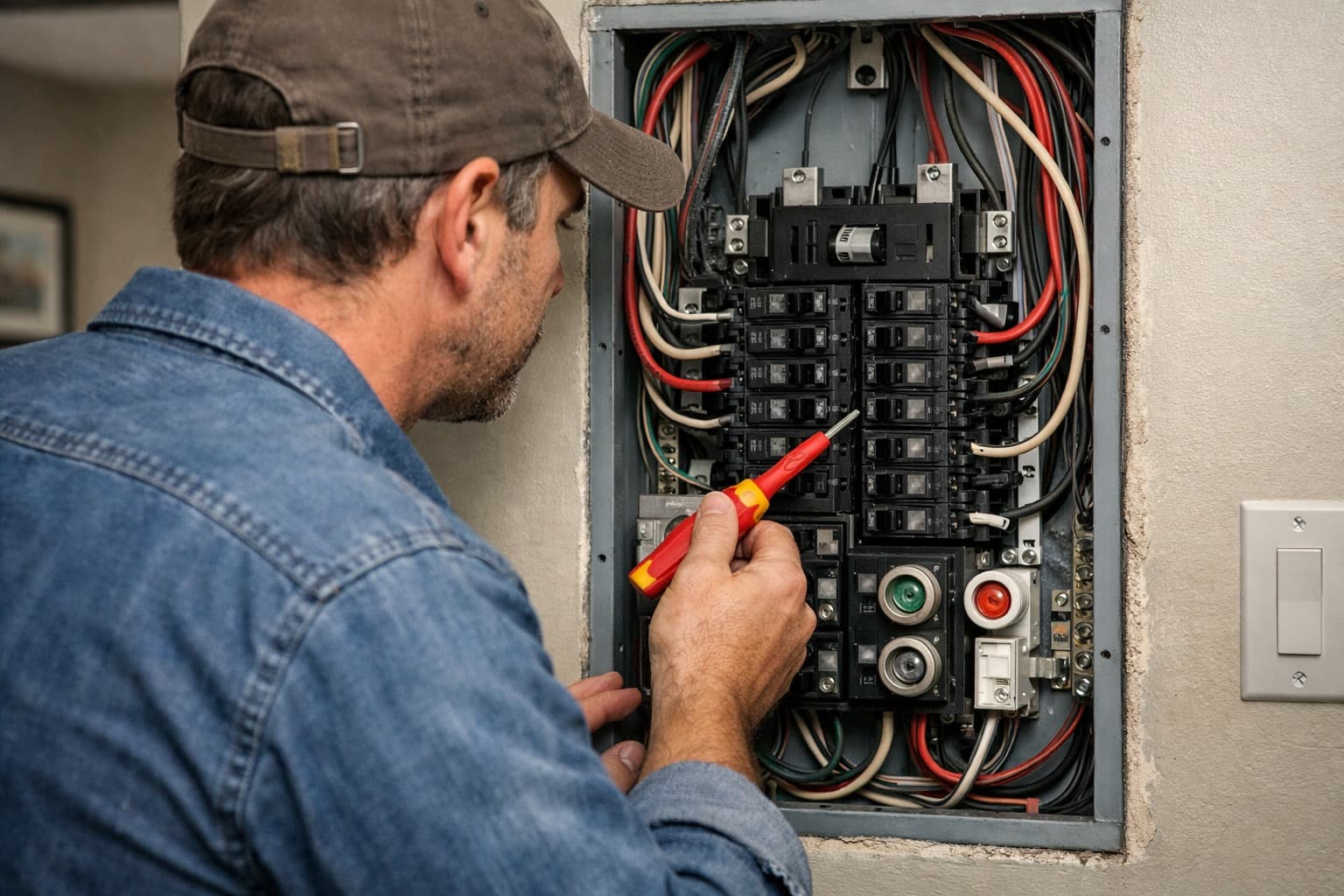
Open the panel cover carefully and look at the circuit breakers systematically. Each breaker should be properly labelled identifying which room or circuit it controls. Unlabelled breakers are a red flag because they make fault diagnosis impossible and suggest the installation was done carelessly. Check that breakers are appropriately sized for their circuits. A 20-amp breaker feeding a circuit with 10-amp wiring is a serious fire risk. If you are unsure about compatibility, this is exactly the point at which a licensed electrician should be involved. Look for any breakers in the tripped position, which indicates a past overcurrent event. A single tripped breaker is normal. Multiple tripped breakers suggest chronic overloading.
What Physical Damage Tells You
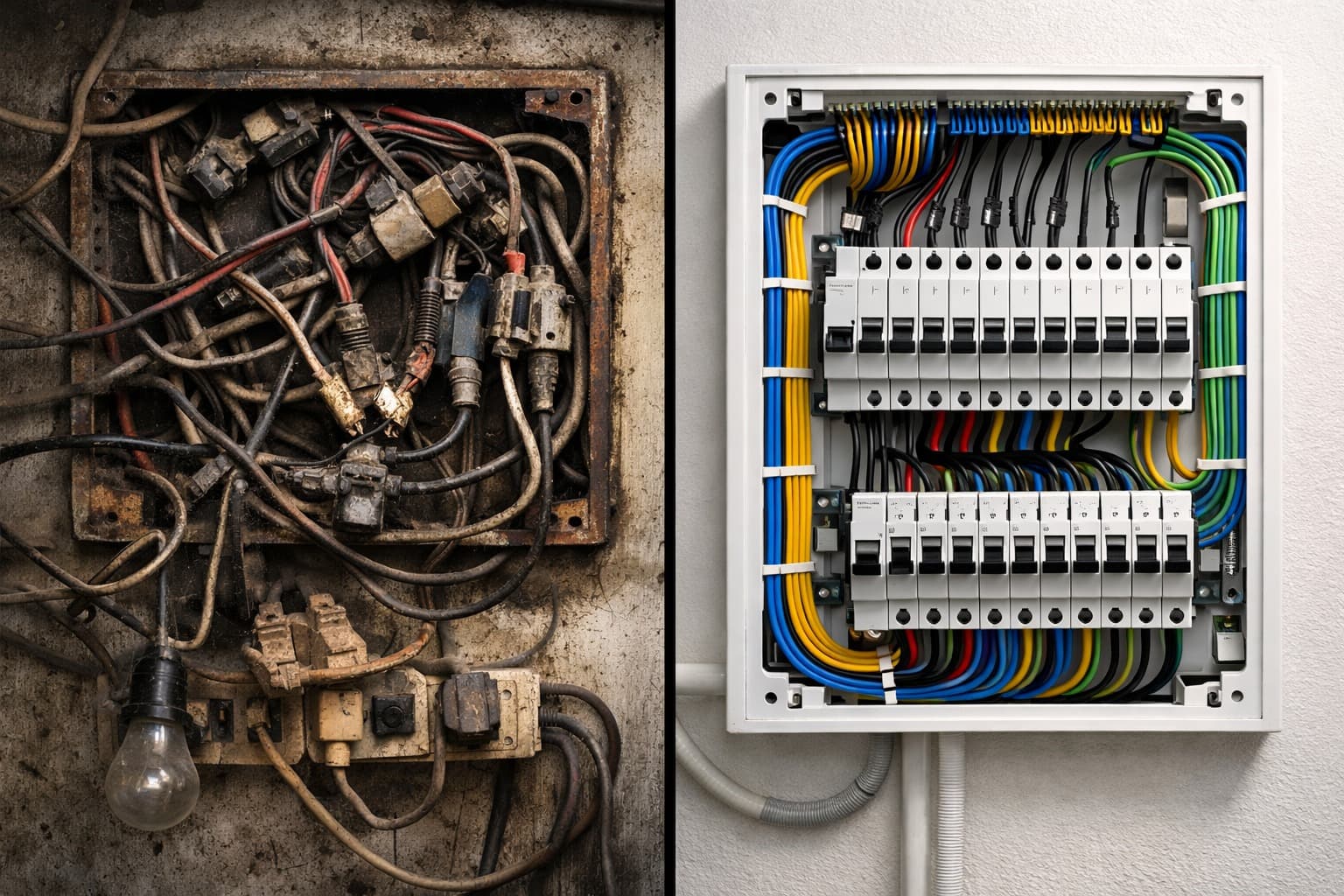
Signs of faulty wiring and electrical panel problems in Indian homes are often visible on the panel itself. Look for scorch marks, burn discolouration, or melting around any breaker or busbar. These are not cosmetic issues. They indicate historical overheating which is a direct precursor to electrical fire. Check the wiring entering the panel for any fraying, cracked insulation, or exposed copper. Any wire whose protective coating is visibly damaged needs replacement before the property is occupied. Loose connections inside the panel are harder to spot without a professional, but you can check if any visible wire terminals appear loose or have burn marks around them.
Earthing and GFCI Protection
The earthing system is the most underappreciated part of home electrical safety in Indian residences. A proper earth connection protects occupants from electric shock when insulation fails anywhere in the system. You can verify basic earthing with an inexpensive plug-in socket tester available at any electrical shop. Insert it into the sockets and the indicator lights will confirm whether earthing is present, neutral and live are correctly connected, and whether the circuit is protected.
Ground Fault Circuit Interrupter outlets, commonly found near bathrooms and kitchen sinks in newer constructions, trip instantly when they detect a current leakage. Press the test button on the GFCI outlet. It should cut power immediately. Press reset and power should restore. If the test button does nothing, the GFCI is non-functional.
Overloading and Labelling
What to check in home electrical system before possession always includes a load assessment. Indian homes increasingly run multiple air conditioners, inverters, washing machines, and microwaves simultaneously. If the panel has fewer circuits than the load demands, you will face frequent tripping and potential damage. Count the circuits against your planned appliance usage. Ensure the main switch rating is adequate for your total expected load. And confirm that every single circuit breaker has a clear, accurate label. This seemingly minor detail becomes critical the moment you need to isolate a faulty circuit quickly.
Summary
Electrical panel inspection checklist for homeowners India covers meter accuracy, physical damage inspection, breaker labelling and sizing, wiring condition, earthing verification, and GFCI testing. How to identify electrical hazards in residential property India requires nothing more than attentive observation, a socket tester, and the willingness to open the panel cover. How to check electricity meters and wiring panels before buying home in India is a 30-minute exercise that can prevent years of trouble. If anything during your inspection raises doubt, bring in a licensed electrician before signing the possession papers. The cost of an inspection is trivial. The cost of ignoring one is not.