
Green Homes Are Filling Up Faster Than Anything Else on the Rental Market Right Now
Summary
India's rental market is witnessing a significant shift towards eco-friendly homes, which now fill up faster and command 10-20% higher rents. This demand is driven by tenants seeking lower utility bills, corporate ESG commitments, and leading metro cities like Bengaluru. The trend offers lucrative opportunities for property investors.

Something Has Quietly Shifted
A few years ago, eco-friendly homes in India were mostly a selling point in glossy developer brochures. Tenants did not particularly seek them out. Landlords did not charge extra for them. The whole green housing conversation felt more like aspiration than reality.
That picture looks very different today. Tenants across India's major cities are actively hunting for sustainable apartments, and they are walking away from standard units to find them. The rental market has begun to price this preference in a meaningful way.
What Eco-Friendly Actually Means Here
The term gets used loosely, so it helps to define what genuinely qualifies. An eco-friendly apartment in the Indian context typically sits inside a building certified by the Indian Green Building Council under the IGBC rating system, or holds a LEED certification from the US Green Building Council.
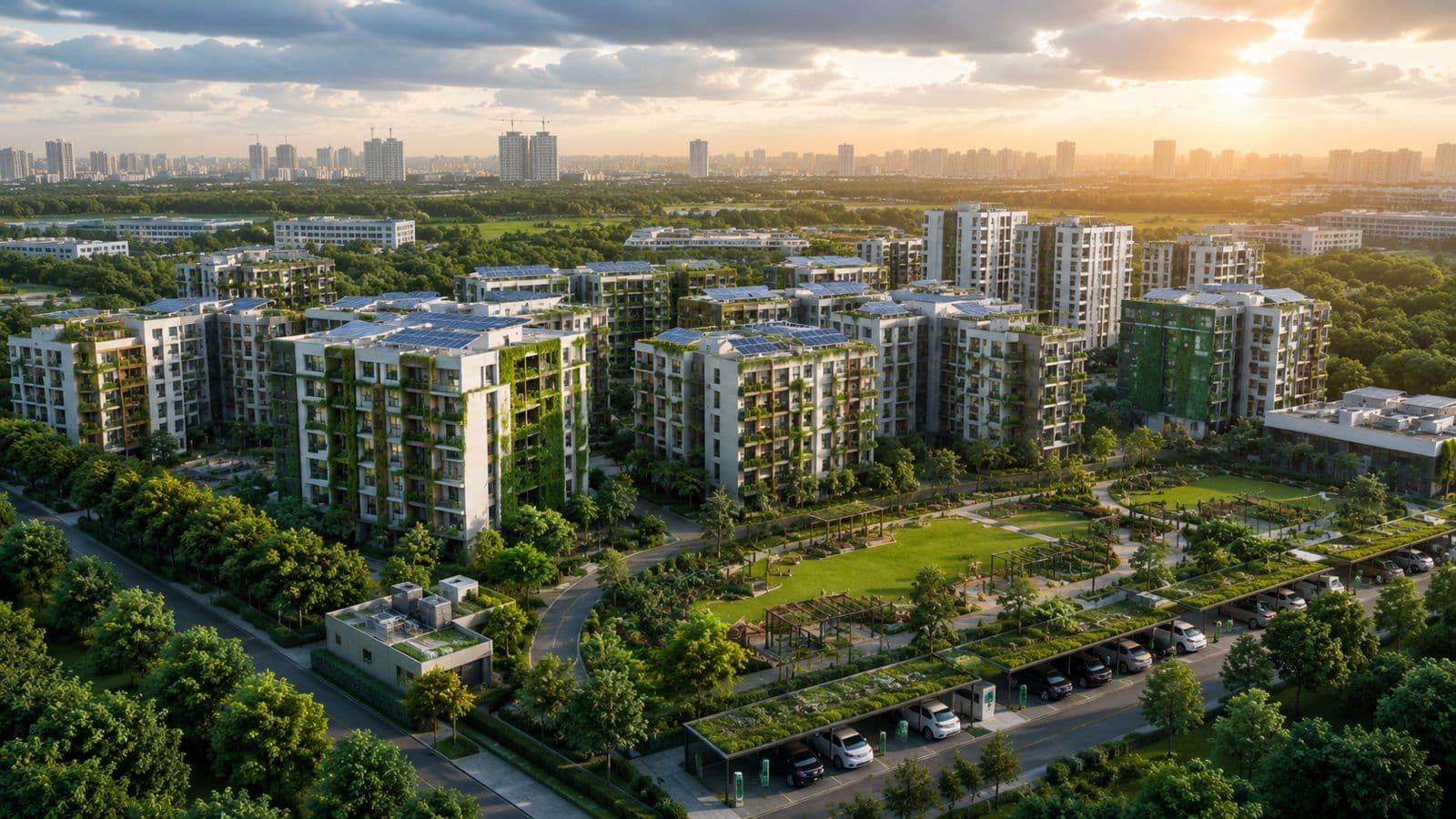
These are not cosmetic labels. Certified buildings are engineered to use substantially less electricity and water than conventional construction. Features include solar water heating systems, energy-efficient lighting, rainwater collection infrastructure, double-glazed windows that reduce heat gain, and proper waste segregation systems within the complex.
The Rent Premium Is Real
Rental data tracked across Bengaluru, Mumbai, Hyderabad, Pune, and Chennai consistently shows that green-certified apartments attract between 10 and 20 percent higher monthly rent compared to non-certified units of equivalent size in the same neighbourhood.
The reason tenants accept this premium is practical rather than ideological. Monthly electricity and water bills in a certified green building run noticeably lower than in a conventional apartment. A tenant paying ₹4,000 to ₹5,000 extra in rent but cutting utility costs by ₹3,000 a month is making a rational financial decision, not just an environmental one.

Bengaluru Leads, Hyderabad Follows
Bengaluru is the city driving the most visible eco-apartment rental demand in India right now. The workforce employed in its technology sector skews heavily toward millennials and professionals in their early thirties, a demographic that consistently ranks living environment and sustainability among their top housing priorities.
Localities like Sarjapur Road, Whitefield, and Hebbal have seen a genuine uptick in IGBC-rated residential inventory over the past three years, and occupancy in these complexes tends to run higher than the surrounding market. Hyderabad is the closest rival, especially in the Kokapet and Financial District corridors where GCC employees who relocated from other countries bring global lifestyle expectations with them.
Corporate Leasing Is a Bigger Force Than Most Realize
Individual tenants are not the only demand driver. Multinational companies leasing apartments for their relocated employees are playing a significant role in keeping green residential complexes occupied.
Large corporations operating in India now carry formal ESG commitments that cover not just their offices but also how they house their staff. A company that reports sustainability metrics globally cannot justify repeatedly booking conventional energy-intensive apartments when greener alternatives exist at competitive rents in the same city. This institutional segment pays well and renews consistently, making it the most stable occupancy base any green residential complex can have.
Developers Are Responding Differently Now
The developer community has picked up on this shift and is responding more seriously than before. The proportion of new residential projects seeking IGBC or LEED certification at the design stage rather than after construction has increased measurably since 2022.
Mahindra Lifespaces, Godrej Properties, and Puravankara are among the established developers who have made sustainability a structural commitment in their residential pipeline. A growing number of mid-sized developers in Bengaluru and Hyderabad are following, recognising that green credentials now support both sales velocity and rental yield rather than just brand positioning.
Supply Remains Tight Against Demand
For all the progress, the honest reality is that eco-friendly rental inventory across Indian metro cities remains limited relative to the demand that now exists for it. The vast majority of what tenants can actually rent on any given day is older, conventional housing stock that cannot realistically be upgraded to meet green standards.
This supply constraint keeps certified units well occupied and supports the premium rents they command. Until green construction at scale catches up with tenant preferences, the imbalance will continue to work in favour of landlords who own certified properties.
What This Means for Property Investors
For anyone evaluating residential real estate purchases with rental income in mind, eco-friendly apartments in metro cities now represent a category worth targeting deliberately.
Certified units attract a more stable tenant profile, command higher rents, and see shorter vacancy gaps because fewer competing properties exist in the same sub-segment. The operational savings from energy and water efficiency also reduce the maintenance burden on the building over time. An investor who buys into a well-located green residential project today is building a rental asset that becomes more relevant each year as the demand side continues to grow.
Summary
Eco-friendly apartment rental demand across Indian metro cities is no longer an emerging trend but an established market reality. Green-certified apartments in Bengaluru, Hyderabad, Mumbai, and Chennai consistently command 10 to 20 percent rental premiums, driven by IT professionals, ESG-mandated corporate leasing, and environmentally aware urban tenants. With sustainable housing supply still lagging well behind the appetite for it, investors who position themselves in IGBC or LEED-certified residential projects today are placing capital in exactly the kind of asset the metro rental market will continue to reward.