
Freehold vs Leasehold: A First-Time Homebuyer's Guide
Summary
Understand the critical difference between freehold and leasehold properties in India. This guide helps first-time homebuyers navigate ownership rights, loan implications, and renewal processes to make informed decisions.

Introduction
Ask ten first-time homebuyers what due diligence they did before booking a property and nine of them will mention RERA registration, builder credibility, and carpet area calculations. Almost none will mention checking whether the land under the building is freehold or leasehold. That gap in awareness is not harmless. The freehold vs leasehold distinction is one of the most consequential title-related decisions a buyer makes, and the consequences show up years later in loan complications, resale difficulties, and renewal negotiations that nobody budgeted for. If you are buying your first home India, this is the concept that deserves your full attention before anything else.
The Core Difference in Plain Language
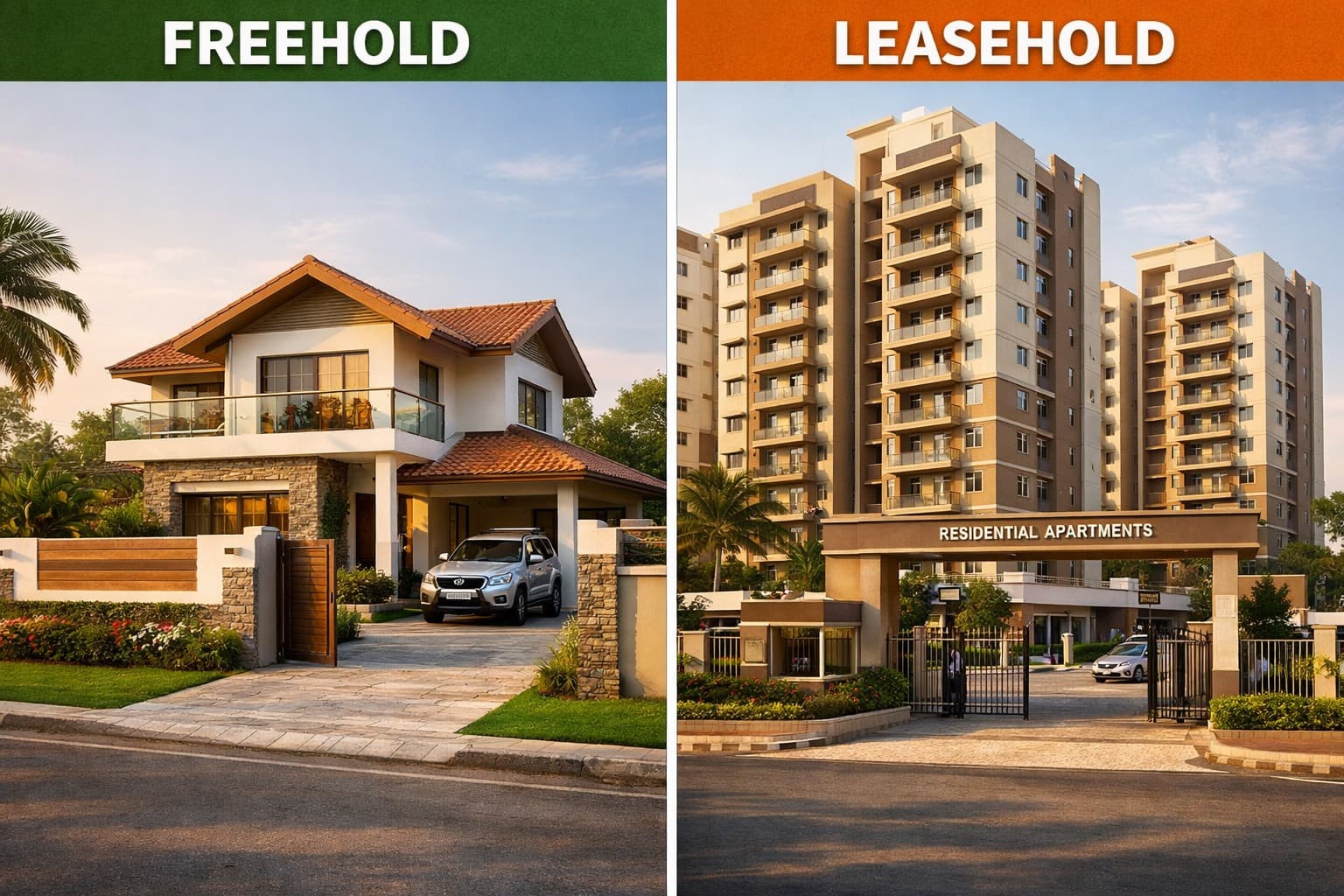
A freehold property India means you own the building and the land beneath it permanently. No expiry. No permission required from a higher authority to sell, rent, or renovate. No annual ground rent to pay. The ownership is absolute, subject only to standard municipal and legal frameworks that apply to every property owner equally.
A leasehold property India means something structurally different. You own the right to occupy and use the property for a specified period, which in Indian contexts typically runs between 30 and 99 years. The land itself remains with the original owner, usually a government body or development authority. When the lease runs its course, ownership of the land reverts unless you apply for a renewal and pay the charges the authority demands.
The building is yours. The ground it sits on is borrowed for a fixed term. That is the essential distinction.
Where Leasehold Properties Appear in India
Understanding which cities and zones carry leasehold titles helps buyers recognise what they are dealing with before documents are signed. Properties allotted by the Delhi Development Authority represent the largest single concentration of leasehold residential stock in the country. CIDCO in Navi Mumbai, HUDA in Haryana, and several other state development authorities have historically allotted properties on 99-year leasehold terms.

Many residents of these zones have lived in their homes for decades without ever feeling the practical weight of leasehold status. Renewals have been processed, transfers have happened, and daily life has been indistinguishable from freehold ownership. But the structural difference exists beneath the surface, and it surfaces with full force when a buyer applies for a home loan, tries to sell, or faces a lease renewal negotiation.
The Home Loan Problem That Catches Buyers Off Guard
This is where leasehold property risks India become immediately financial rather than theoretical. Banks and housing finance companies assess leasehold properties with significantly greater caution than freehold ones. The fundamental reason is collateral value. If a lender needs to enforce security and sell the property to recover dues, a leasehold asset with a short residual tenure becomes very difficult to sell in the open market. Buyers will not queue up for a property whose land reverts to a government body in 15 years.
Several major banks in India maintain internal policies that restrict lending against properties where the residual lease tenure falls below a defined threshold, often 30 years beyond the loan repayment period. Some institutions decline such applications entirely. For a first-time buyer who has spent months shortlisting a property in a DDA sector or a CIDCO zone, discovering this restriction during loan processing can derail the transaction completely.
Checking land title for freehold status before applying for a loan is not optional caution. It is basic protection against a very avoidable situation.
What Lease Expiry Actually Looks Like
The lease expiry concern sounds distant when the remaining tenure is 60 or 70 years. But several leasehold properties allotted in the 1960s and 1970s across Delhi and other cities are now approaching or have already crossed their original lease terms. The renewal process involves a formal application to the relevant authority, supporting documents, and payment of a conversion or renewal premium.
That premium is where genuine friction emerges. In Delhi, DDA has periodically calculated renewal charges as a percentage of current circle rates rather than original allotment values. On a property whose market value has appreciated twenty-fold since original allotment, the renewal premium calculated on current value can feel completely disproportionate to the original cost of ownership. Disputes over renewal charges have ended up in courts, creating the kind of title uncertainty that makes institutional buyers and serious investors avoid leasehold stock in secondary market transactions.
Converting Leasehold to Freehold
The convert leasehold to freehold India process exists and is actively used by property owners who want to exit leasehold status permanently. The mechanism involves applying to the relevant authority, paying a one-time conversion charge, and receiving a revised title document that grants freehold ownership. DDA, CIDCO, and most state development authorities have documented processes for this conversion.
The conversion charge is typically calculated as a percentage of the current market value or circle rate of the property, and it varies between 2% and 5% depending on the authority, locality, and applicable policy at the time of application. Properties in the same complex where some owners have converted and others have not frequently trade at measurable price differences in the secondary market. Converted units command a premium that often exceeds the conversion cost, making the financial case reasonably clear for most long-term holders.
Which Should a First-Time Buyer Choose
For the vast majority of first home India buyers who are not specifically targeting a government-allotted zone for affordability or locational reasons, freehold property benefits make it the cleaner and more defensible choice. Simpler home loan processing, unrestricted resale, no lease renewal obligation, and full ownership permanence all favour freehold. The lower entry cost of some leasehold properties may look attractive in year one but carries ongoing obligations that compound over time.
If a specific leasehold property in a DDA or CIDCO zone makes sense for budget or location reasons, the two things to verify immediately are the remaining lease tenure and whether conversion has been completed. A property with a long remaining lease and clear conversion eligibility is manageable. One with under 30 years remaining and no conversion completed warrants very careful consideration before commitment.
Summary
The freehold vs leasehold question is one that every first home India buyer should resolve before shortlisting any property. Freehold property India delivers permanent ownership, easier financing, and unrestricted transfer rights. Leasehold property India carries renewal obligations, home loan complications as tenure shortens, and resale constraints that only grow over time. Understanding freehold property benefits and knowing how to convert leasehold to freehold India if needed are two pieces of knowledge that protect your investment across its entire lifetime.