
Flooring Inspection: A Comprehensive Guide to Tiles, Granite, and Uneven Surfaces
Summary
Don't overlook flooring! Inspect tiles, granite, and surfaces for cracks, unevenness, and poor workmanship before buying. This proactive approach ensures comfort, safety, and prevents costly repairs later.

Introduction
Flooring is one of the most visible and heavily used elements in a home. Buyers often judge flooring based on appearance alone, ignoring deeper quality checks. Cracked tiles, uneven surfaces, or poorly laid granite can cause long-term inconvenience, safety risks, and costly repairs. Conducting a flooring inspection: tiles, granite & uneven surfaces before purchase helps buyers identify workmanship issues early and ensures comfort, durability, and value after possession.
Why Flooring Inspection Matters Before Buying
Floors experience constant load, movement, and wear. Even minor installation errors can worsen over time. Poor flooring affects walking comfort, furniture stability, and cleaning ease. Uneven surfaces increase tripping risk, especially for children and elderly residents. Inspecting flooring properly protects both safety and long-term maintenance budgets.
Understanding Different Flooring Materials
Homes commonly use ceramic tiles, vitrified tiles, or granite. Each material behaves differently under load and temperature changes. Tiles may crack if laid improperly, while granite may develop uneven joints if not polished or supported correctly. Understanding material behaviour improves property flooring check accuracy during inspection.
Visual Inspection of Tiles
Buyers should begin with a visual scan of tile surfaces. Look for cracks, chips, discoloration, or inconsistent shade patterns. Tiles should appear uniform across rooms. Visible damage often indicates rushed installation or substandard material quality.
Checking Tile Alignment and Joint Consistency
Tiles should be aligned in straight lines with consistent joint gaps. Misaligned tiles indicate poor workmanship. Uneven joint spacing becomes more noticeable over time and affects aesthetics. This is a critical part of tile flooring inspection.
Tapping Test for Hollow Tiles
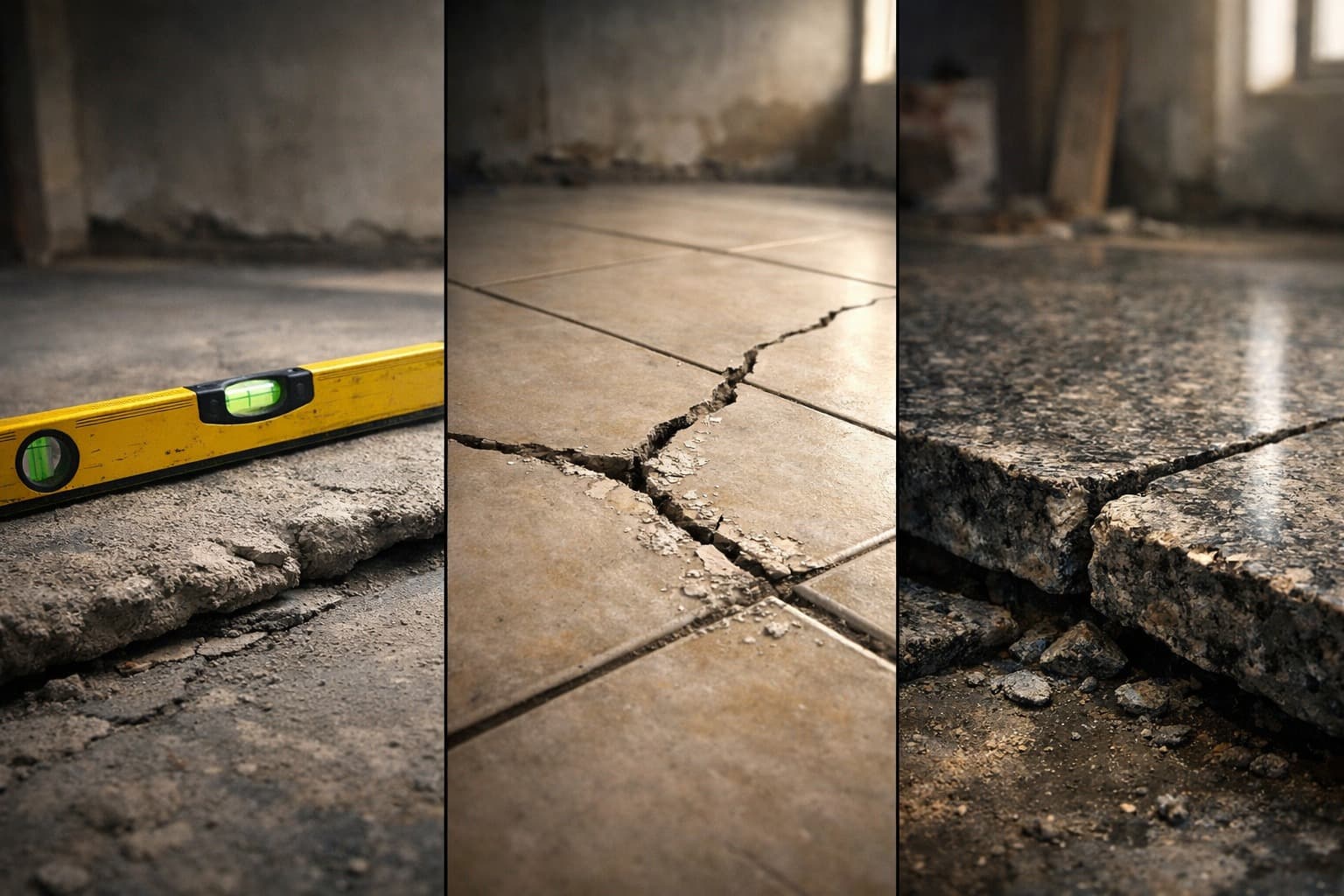
Buyers should gently tap tiles using fingers or a key. Hollow sounds indicate air gaps beneath tiles, which can lead to cracking later. Solid tiles produce a firm sound. Hollow tiles are one of the most common hidden flooring defects.
Inspecting Granite Flooring Finish
Granite floors should have a smooth, polished finish without scratches or dull patches. Buyers should check reflectivity and surface consistency. Poor polishing or uneven finishing reduces durability and visual appeal, especially in high-traffic areas.
Checking Granite Joints and Edges
Granite slabs must be joined seamlessly. Wide or uneven joints suggest improper cutting or laying. Sharp or uneven edges are safety hazards. Inspecting joints is essential when identifying granite floor defects.
Identifying Uneven Floor Levels
Uneven floors are not always visible. Buyers should walk slowly across rooms and feel for slope or dips. Furniture wobbling is another indicator. Uneven floors can result from poor base preparation or structural settlement.
Using Simple Tools to Detect Unevenness
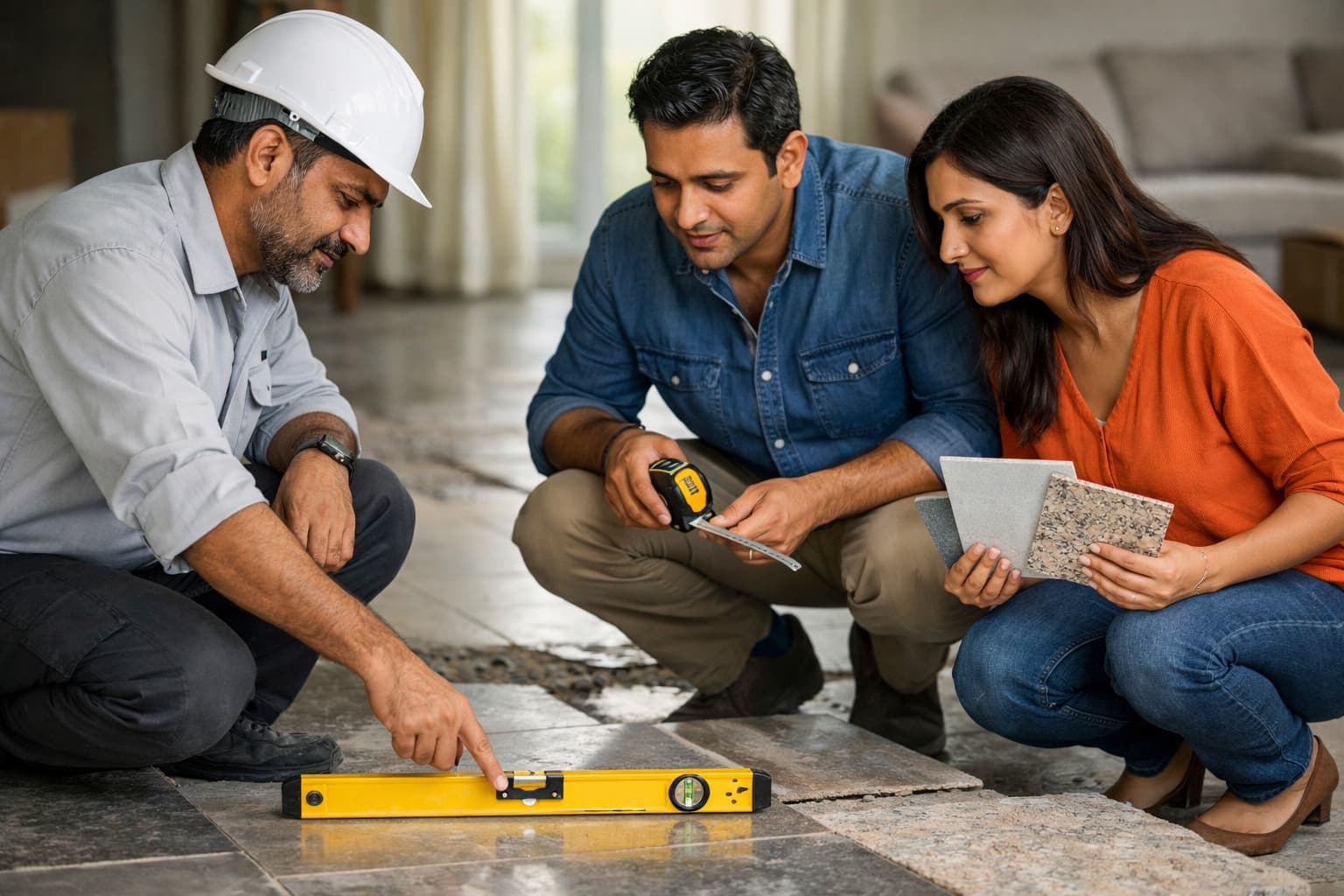
A straight object or spirit level can help detect uneven surfaces. Place it across the floor and observe gaps. Significant gaps indicate levelling issues. This simple test strengthens uneven floor problems detection during inspection.
Door and Skirting Alignment Check
Uneven floors often affect door swing and skirting alignment. Doors scraping the floor or irregular skirting gaps indicate level issues. These signs often reveal deeper installation flaws.
Checking Flooring Near Walls and Corners
Corners and edges are prone to poor finishing. Buyers should inspect tile cuts near walls and under doors. Rough cuts or gaps may indicate rushed work and future chipping risks.
Expansion Gap and Grouting Quality
Floors require expansion gaps to handle temperature changes. Poor grouting or absence of gaps can cause tiles to crack over time. Buyers should check for proper grouting without cracks or powdery finish.
Bathroom and Balcony Flooring Inspection
Wet areas require special attention. Tiles should slope slightly toward drains. Standing water indicates incorrect slope. Slippery tiles also pose safety risks. Inspecting these areas is vital for home flooring inspection checklist for buyers.
Sound and Movement Test
Buyers should press firmly on tiles to check movement. Tiles should feel solid underfoot. Any movement suggests weak adhesion or base issues. Such problems worsen with regular use.
Checking Transition Areas Between Rooms
Transitions between rooms should be smooth and level. Height differences indicate poor planning. Uneven transitions increase tripping risk and reduce aesthetic quality.
Impact of Flooring Defects on Daily Living
Flooring defects affect walking comfort, cleaning, furniture placement, and noise levels. Repairs often require removing entire sections. Early detection saves money and avoids disruption after possession.
Flooring Issues in New Versus Resale Properties
New properties may hide defects under fresh finishes, while resale homes show wear signs. Buyers should inspect both with equal seriousness. New does not always mean defect-free.
Common Buyer Mistakes During Flooring Inspection
Many buyers inspect floors only visually. Others assume small cracks are harmless. These mistakes lead to future repairs. A structured pre-purchase flooring inspection checklist prevents oversight.
Professional Flooring Inspection Advantage
Professionals can detect base issues, moisture problems, and installation faults. Their expertise helps buyers negotiate repairs or pricing before finalising purchase.
Questions Buyers Should Ask
Buyers should ask about flooring material type, installation method, and warranty. Clear answers reflect construction quality and builder transparency.
Preparing for Flooring Inspection
Inspection should be done in daylight. Buyers should walk barefoot if possible to sense unevenness. Taking time improves detection accuracy.
Making a Smart Flooring Decision
Flooring quality impacts safety, comfort, and resale value. Buyers who thoroughly inspect tiles, granite, and level consistency avoid future frustration. Understanding flooring inspection: tiles, granite & uneven surfaces helps buyers make confident, informed property decisions.
Summary
Flooring inspection is essential before buying a property, as defects often become costly after possession. Buyers should carefully check tiles and granite for cracks, hollow sounds, uneven joints, and surface finish. Uneven floors can affect comfort, safety, and furniture stability. Special attention should be given to bathrooms, balconies, and transition areas. Using simple tests and observing movement helps identify hidden issues. A detailed flooring inspection ensures long-term durability, safer living conditions, and protects buyers from avoidable repair expenses after purchase.