
Electrical Inspection Checklist: A Buyer's Guide Before Purchase
Summary
Don't overlook electrical inspections when buying property! This guide provides a checklist for buyers to identify potential hazards like faulty wiring and overloads, ensuring safety and preventing costly repairs.

Introduction
When buying a property, buyers often focus on location, price, and layout. Electrical systems are rarely examined closely, yet they directly impact safety, comfort, and long-term maintenance costs. Faulty wiring, overloaded circuits, or outdated components can lead to frequent failures or serious hazards. Conducting an electrical inspection checklist before purchase helps buyers identify risks early and avoid costly repairs after possession. This guide explains what buyers should practically check before finalising a property.
Why Electrical Inspection Is Critical Before Buying
Electrical systems are hidden behind walls, making defects difficult to detect later. Problems may not appear during a short site visit but can surface after regular use. Poor electrical quality increases fire risk and appliance damage. A proper inspection ensures the property meets safety standards and supports modern electrical load. For buyers, this step protects both safety and financial investment.
Checking Main Electrical Panel and Meter
The main electrical panel is the heart of the system. Buyers should check whether the panel is properly installed, clearly labelled, and easily accessible. Circuit breakers should be in good condition without signs of rust or overheating. The electricity meter should be secure and tamper-free. This basic check forms the foundation of any home electrical inspection.
Wiring Condition and Type
Wiring quality determines long-term safety. Buyers should verify whether the wiring is copper and properly insulated. Old or damaged insulation, exposed wires, or loose connections are warning signs. Aluminium or outdated wiring may not support current appliance loads. Inspecting wiring condition is essential in any electrical wiring inspection.
Earthing and Grounding System
Proper earthing protects occupants from electric shocks and equipment damage. Buyers should confirm that earthing points are available and connected correctly. In apartments, common earthing systems should be functional. Poor grounding is a serious safety risk often ignored during property electrical check processes.
Switches, Sockets, and Fixtures
All switches and sockets should be firmly fixed and function smoothly. Loose switches, cracked plates, or sparking sounds indicate internal wiring issues. Buyers should test multiple sockets using simple plug devices. Adequate socket placement also matters for daily convenience and appliance usage.
Load Capacity and Power Distribution
Modern homes use multiple high-load appliances such as air conditioners, ovens, and water heaters. Buyers should check whether the electrical system can handle this load. Separate circuits for heavy appliances indicate better planning. Insufficient load capacity leads to frequent tripping and overheating, affecting overall electrical safety checklist results.
Lighting Points and Fittings
Lighting points should be evenly distributed and properly wired. Flickering lights may indicate voltage fluctuations or loose connections. Buyers should verify that all lighting points function correctly and match the layout provided. This check helps avoid hidden wiring faults after possession.
Condition of Distribution Boards
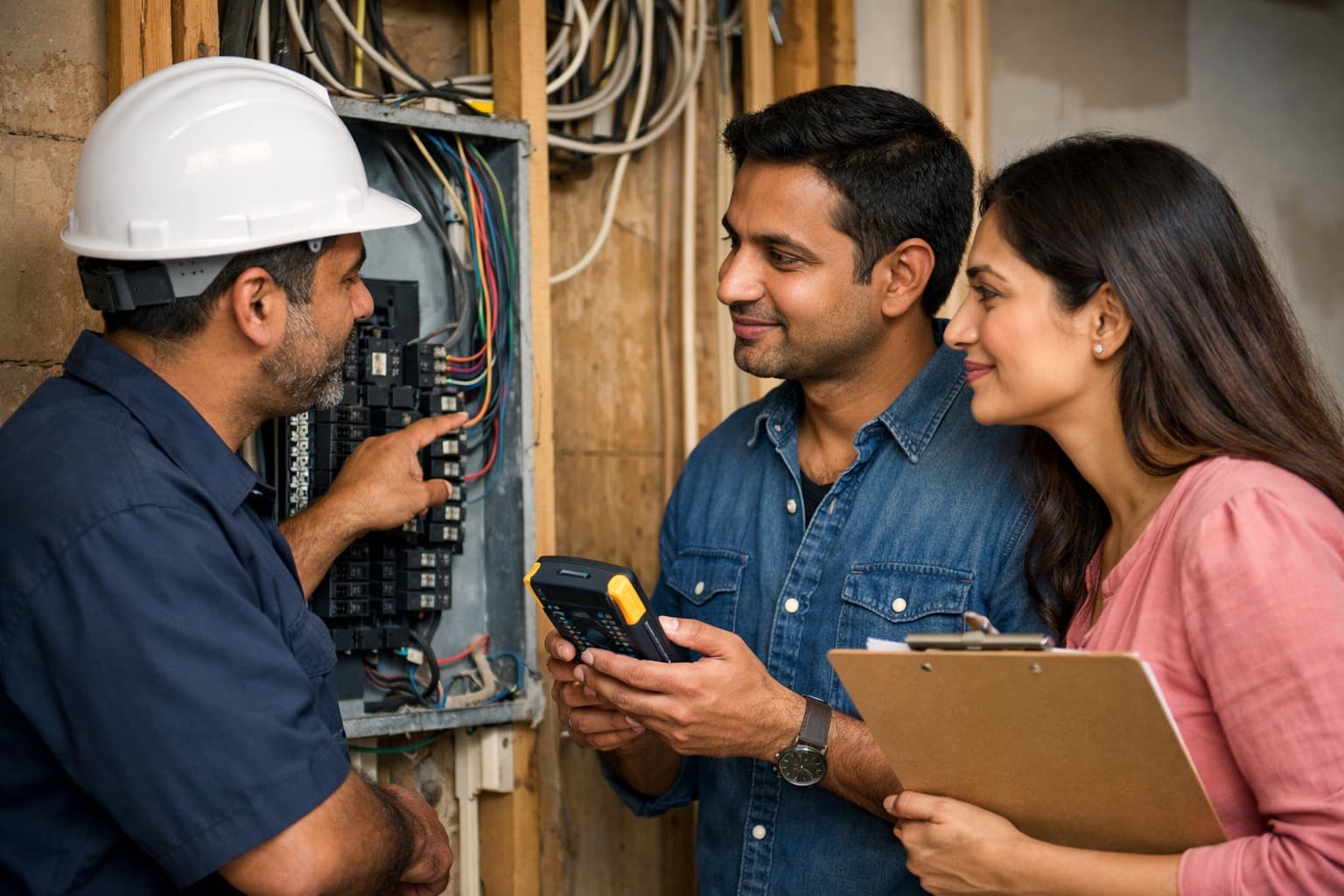
Distribution boards should have proper covers and clearly marked circuits. There should be no exposed terminals or temporary connections. Buyers should check whether modern safety devices like miniature circuit breakers are installed. This is a key step in a reliable electrical inspection checklist.
Safety Devices and Protection Systems
Safety devices such as circuit breakers protect against overload and short circuits. Buyers should check if these devices trip correctly when tested. Absence of protective systems increases fire risk. Ensuring safety devices are present strengthens overall home inspection outcomes.
Electrical Compliance and Standards
Buyers should verify whether the electrical installation follows local safety standards. In new properties, compliance certificates may be available. For resale properties, professional inspection may be required. Compliance ensures legal and safety assurance during ownership.
Checking for Overloading Indicators
Signs of overloading include frequent power trips, warm switches, and buzzing sounds. Buyers should look for extension-heavy setups indicating poor planning. Overloaded systems wear out faster and increase risk. Identifying this early supports safe property safety decisions.
Backup Power and Generator Connections
If the property offers backup power, buyers should check generator wiring and changeover switches. Improper backup connections can damage appliances. Clear separation between main and backup power systems is essential for safety.
Common Area Electrical Systems in Apartments
In apartment buildings, buyers should inspect common area lighting, lifts, and backup systems. Poor common electrical infrastructure reflects overall maintenance quality. This indirectly affects long-term safety and maintenance costs.
Electrical Points in Wet Areas
Bathrooms, kitchens, and balconies require special attention. Electrical points near water sources should be properly insulated and placed safely. Improper placement increases shock risk. This is a critical part of home electrical safety checklist for buyers.
Signs of Temporary or Improvised Wiring
Temporary joints, exposed cables, or tape-based fixes indicate poor workmanship. Buyers should avoid properties showing such practices. Improvised wiring often hides deeper system issues and future repair costs.

Professional Electrical Inspection Advantage
While basic checks help, professional inspection provides deeper evaluation using instruments. Electricians can detect hidden faults, load issues, and compliance gaps. The cost of inspection is minimal compared to repair expenses later.
Impact on Insurance and Resale
Properties with safe electrical systems face fewer insurance issues and attract better resale value. Buyers increasingly prioritise safety during purchase decisions. Electrical inspection therefore adds long-term value beyond immediate safety.
Common Buyer Mistakes Regarding Electrical Checks
Many buyers assume new properties are automatically safe. Others ignore electrical checks to save time. These mistakes often lead to unexpected expenses and safety risks. Awareness prevents regret.
Preparing for the Inspection Visit
Buyers should carry a checklist, test sockets, and ask for load details during site visits. Asking the right questions improves inspection quality and confidence.
Making a Safe Buying Decision
Electrical systems affect everyday living more than visible finishes. Buyers who follow a structured pre-purchase electrical inspection checklist make safer, smarter property decisions. Electrical safety should never be an afterthought.
Summary
Electrical inspection is a critical yet often ignored step before buying a property. Checking wiring quality, earthing, load capacity, switches, and safety devices helps identify risks early. Faulty electrical systems can cause safety hazards, frequent breakdowns, and high repair costs. Buyers should inspect both private and common electrical infrastructure and consider professional evaluation when needed. Following a detailed electrical inspection checklist before purchase ensures safer living, protects investment value, and prevents unexpected electrical issues after possession.