
Eco-Friendly Homes and Better Indoor Air Quality
Summary
Eco-friendly homes offer more than just energy savings; they are fundamentally tied to better indoor air quality through thoughtful design, low VOC materials, and recognised certifications. This creates healthier living spaces, reduces utility costs, and improves resale value for buyers.

Introduction
Say the word eco-friendly around a homebuyer and solar panels usually come to mind first. Fewer people connect it to something far more personal, the actual air sitting inside their bedroom every night. Turns out the two are tied together more closely than most buyers realise.
Why Eco-Friendly Isn't Just a Marketing Word Anymore
Builders used to slap green tags on projects for brochure appeal. That's shifting. With buyers asking sharper questions and certification bodies auditing actual performance, an eco-friendly home today usually means something measurable, not just a leafy render on a hoarding.
The Direct Link Between Green Design and What You Breathe
Green building standards weren't created to lower electricity bills alone. A meaningful chunk of the criteria focuses squarely on what residents breathe indoors every day. Ventilation planning, material selection and even paint choice all factor into how a certifying body scores a project.
Low VOC Materials and the Difference They Actually Make
Ordinary paints, adhesives and flooring finishes release volatile organic compounds into a room for months after application. Low VOC alternatives, now standard in most certified green projects, cut this off gassing dramatically, which matters most for children, elderly residents and anyone with existing respiratory sensitivity.
Ventilation by Design Beats Ventilation as an Afterthought
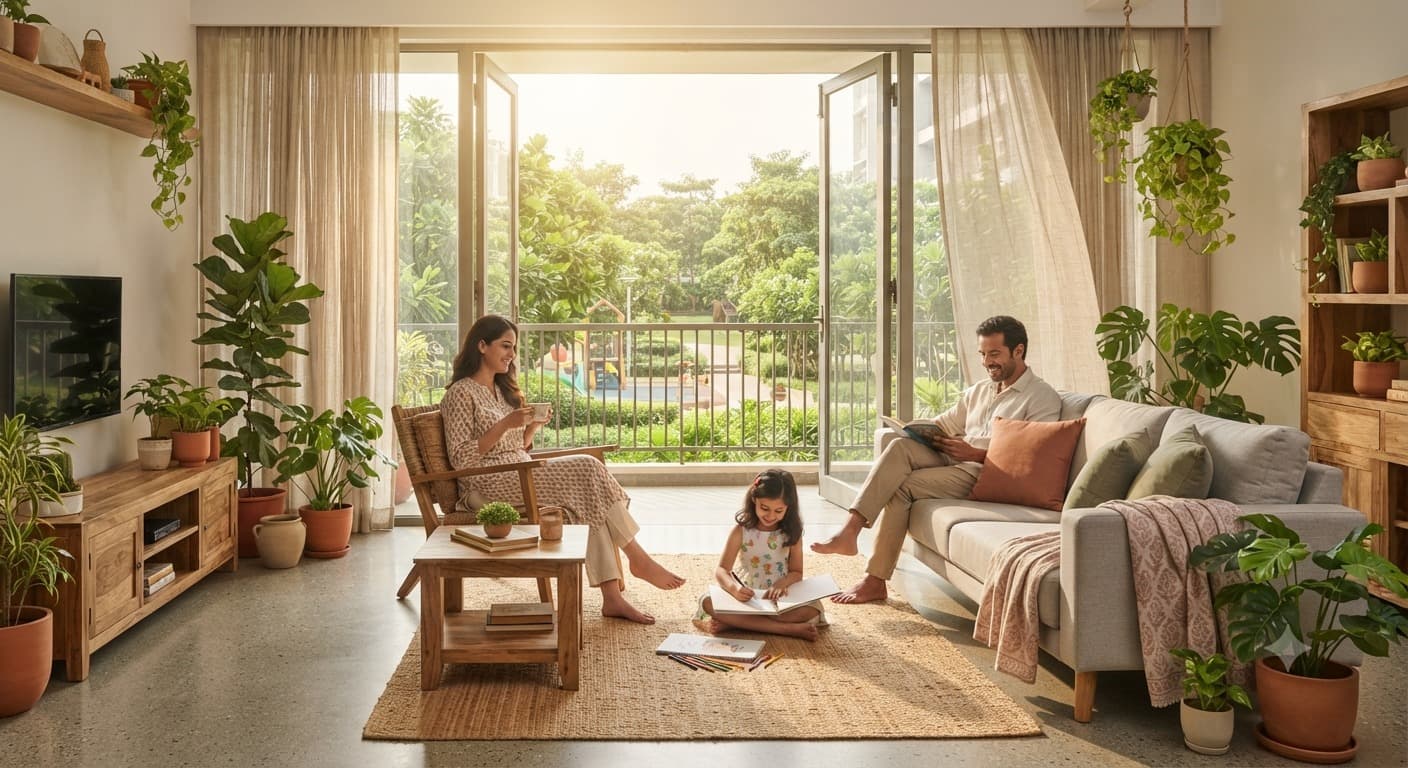
Here's the part architects care about more than most buyers realise. Homes designed from the start for cross ventilation and daylighting rely far less on artificial cooling and lighting, and that reduced dependence on sealed air conditioning keeps fresher outdoor air cycling through the unit naturally. It's a design choice, not a retrofit.
What IGBC Certification Actually Checks For
The Indian Green Building Council, running since 2001 under the Confederation of Indian Industry, now counts close to twenty thousand certified projects across the country. Its residential rating criteria cover ventilation, daylight access, water efficiency and material sourcing together, treating indoor air as one pillar among several rather than an isolated checkbox.
The Money Side Nobody Mentions First
Certified green homes typically run 15 to 30 percent lower on energy costs, largely from reduced cooling load and better daylight use. Water savings can reach as high as half of what a conventional home would consume. None of that shows up in a listing photo, but it shows up every month on the utility bill.

Cities Are Starting to Reward Green Construction
Several cities, including Pune and Hyderabad, now offer property tax rebates or additional floor space allowances for certified green developments. That's a meaningful nudge for developers who were previously treating sustainability as a cost centre rather than an incentive worth chasing.
Resale Value Is Quietly Shifting Too
Buyers increasingly favour certified homes when reselling becomes a factor, since sustainability credentials are turning into a genuine selling point rather than a niche preference. A home built around fresher indoor air and lower running costs simply holds broader appeal down the line.
Summary
Eco-friendly homes and better indoor air quality aren't separate conversations, they're the same one told from different angles. Low VOC materials, thoughtful ventilation design and recognised certifications like IGBC together shape healthier living spaces while also lowering utility costs. As more cities offer incentives and buyers grow choosier, green construction is steadily becoming less of a premium add-on and more of a baseline expectation.