
Door & Window Inspection Checklist for Home Buyers
Summary
Before buying a home, meticulously inspect doors and windows for alignment, functionality, and security. A checklist helps identify issues like water seepage and faulty locks, preventing future inconvenience and costly repairs.

Introduction
Doors and windows are used every single day, yet buyers often inspect them casually during property visits. Poorly installed doors, jammed windows, or weak frames can cause daily inconvenience, safety risks, and high repair costs after possession. Many of these issues are difficult to notice once furniture and curtains are installed. Following a door & window inspection checklist before purchase helps buyers identify functional, safety, and quality issues early and avoid long-term frustration.
Why Door and Window Inspection Is Important
Doors and windows control security, ventilation, natural light, and noise levels inside a home. Faulty fittings can compromise safety, increase energy loss, and affect indoor comfort. Replacing doors or window frames later is expensive and disruptive. A proper inspection ensures smooth usage, durability, and peace of mind from day one.
Checking Door Alignment and Movement
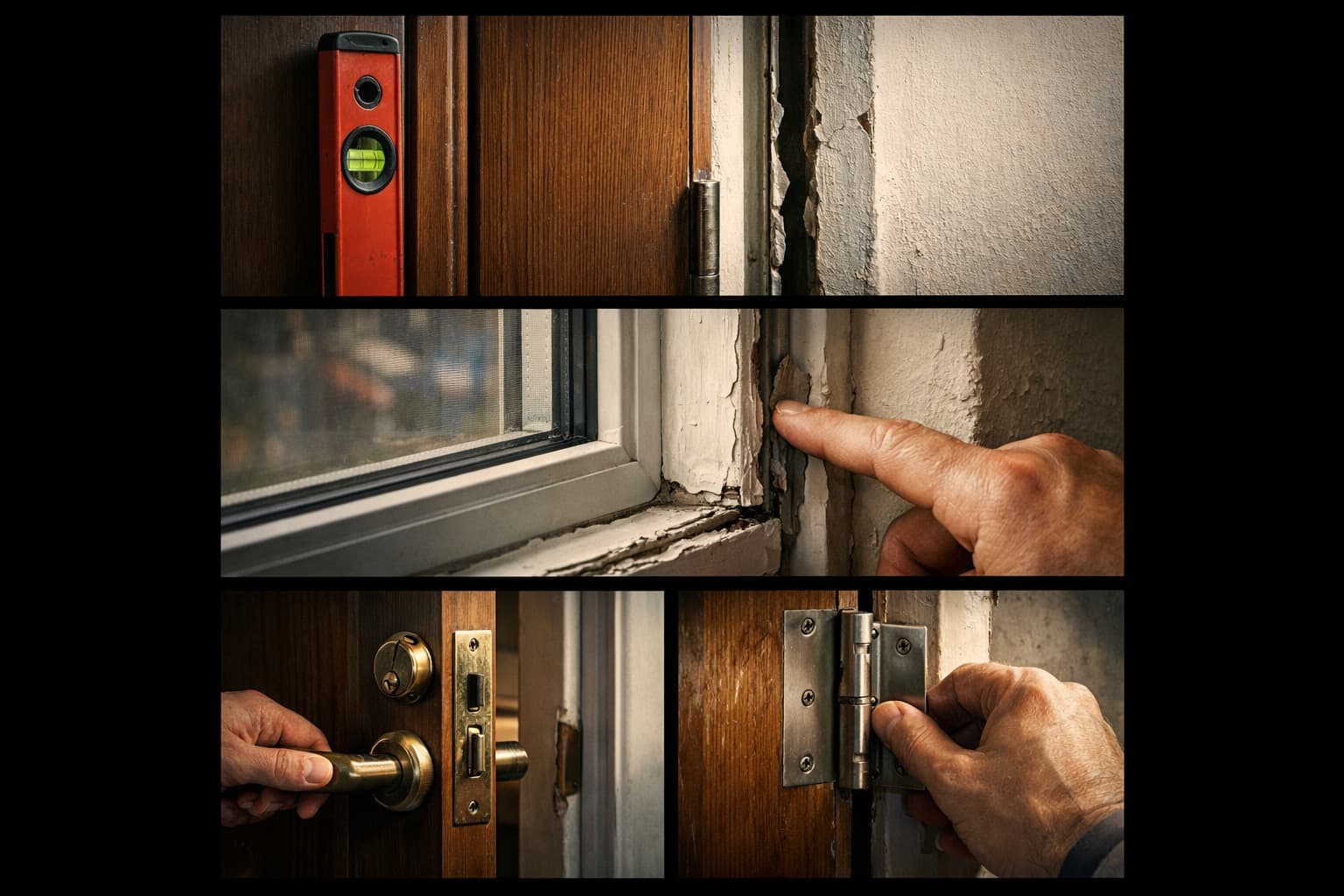
Doors should open and close smoothly without resistance. Buyers should observe whether doors scrape the floor, rub against frames, or require force to shut. Misalignment often indicates poor installation or structural settlement. Smooth movement reflects good workmanship and proper frame fixing.
Inspecting Door Frames and Fixing
Door frames must be firmly fixed to the wall without gaps or cracks. Buyers should check frame corners and joints for separation. Loose frames weaken security and cause alignment problems over time. Frame quality plays a major role in long-term door performance.
Testing Door Locks and Hardware
Locks, handles, and hinges should function smoothly. Buyers should test locks multiple times to ensure consistent operation. Loose handles or squeaking hinges indicate poor hardware quality. Door hardware replacement adds unnecessary cost after purchase.
Main Door Security Check
The main entrance door deserves special attention. Buyers should assess door thickness, material strength, and lock quality. A sturdy main door improves safety and sound insulation. Weak main doors compromise both security and privacy.
Internal Door Quality Assessment
Internal doors should be lightweight yet stable. Buyers should check for warping, surface damage, or loose hinges. Doors should remain open at chosen angles without swinging. Poor internal doors affect daily usability and aesthetics.
Checking Window Opening and Closing
Windows should slide or open smoothly without jerks. Buyers should test all window panels, including sliding and casement types. Stuck or uneven movement suggests frame distortion or poor installation. Functional windows are essential for ventilation and emergency exit.
Inspecting Window Frames and Sealing
Window frames must be firmly fixed and properly sealed. Buyers should check for visible gaps between frames and walls. Poor sealing allows dust, noise, and water seepage. Frame quality directly affects indoor comfort.

Glass Quality and Safety
Glass panels should be free from cracks, chips, or scratches. Buyers should check thickness and clarity. In higher floors or balconies, safety glass is preferable. Weak or damaged glass poses safety risks and replacement costs.
Checking for Water Seepage Signs
Windows are common entry points for rainwater. Buyers should inspect sill areas and surrounding walls for stains or peeling paint. Seepage issues worsen during monsoon and lead to long-term wall damage.
Testing Window Locks and Safety Features
Windows should have functional locks to ensure safety, especially in lower floors. Buyers should test locking mechanisms and check ease of use. Weak window locks increase security risk.
Noise Insulation Assessment
Buyers should observe noise levels with windows closed. Poorly fitted windows allow external noise to enter easily. This is especially important in properties near roads or construction sites. Proper windows improve living comfort significantly.
Checking Ventilation and Natural Light
Windows should allow adequate airflow and daylight. Buyers should assess room brightness during daytime visits. Poor window placement affects ventilation and increases dependency on artificial lighting.
Balcony Doors and Windows Inspection
Balcony doors and windows experience more exposure to weather. Buyers should inspect tracks, seals, and locks carefully. Rusted fittings or loose frames indicate low-quality materials.
Alignment with Flooring and Walls
Doors and windows should align evenly with floors and walls. Gaps at the bottom or sides indicate level issues or improper fixing. Such misalignment affects appearance and usability.
Signs of Temporary Fixes or Adjustments
Buyers should look for makeshift solutions such as wedges, excessive sealant, or added screws. These indicate unresolved installation problems. Temporary fixes often fail over time.
Door Stoppers and Accessories
Door stoppers prevent wall damage and improve usability. Buyers should check whether they are installed properly. Missing accessories reflect incomplete finishing.
Fire Safety and Emergency Exit Considerations
Doors and windows should allow easy exit during emergencies. Jammed or locked windows reduce safety. Buyers should ensure at least one window in each room opens fully.
Impact of Door and Window Issues on Daily Life
Faulty doors and windows cause noise leakage, dust entry, security concerns, and daily irritation. Repairs often involve carpentry or replacement, increasing costs post-purchase.
Common Buyer Mistakes During Inspection
Many buyers focus on design and ignore functionality. Others test only the main door. These oversights lead to avoidable repairs. A checklist approach prevents missed issues.
Professional Inspection Advantage
Professionals can identify frame alignment issues, hardware quality, and sealing problems quickly. Their assessment helps buyers negotiate fixes before finalising purchase.
Preparing for Door and Window Inspection
Inspection should be done calmly, testing each door and window individually. Buyers should open, close, lock, and observe carefully. Taking time improves inspection accuracy.
Making a Confident Purchase Decision
Doors and windows influence safety, comfort, and long-term maintenance. Buyers who follow a structured door & window inspection checklist make informed decisions and avoid future inconvenience. Proper inspection ensures smoother living, better security, and reduced post-purchase expenses.
Summary
Inspecting doors and windows before buying a property is essential for safety, comfort, and long-term durability. Buyers should check alignment, smooth movement, frame fixing, locks, glass quality, and sealing. Signs of water seepage, noise leakage, or temporary fixes indicate poor workmanship. Special attention must be given to main doors, balcony openings, and window safety. Following a detailed door and window inspection checklist helps buyers avoid daily inconvenience, security risks, and costly repairs after possession.