
Common Area Inspection Checklist: A Homebuyer's Guide Before Possession
Summary
Don't overlook common areas! This guide provides a checklist for homebuyers to inspect shared spaces like lobbies, lifts, and parking before possession. Identify issues early to ensure promised standards are met and avoid future costs.

Introduction
When buying a home, most buyers focus on the flat’s interiors—flooring, paint, fittings, and layout. However, the quality of common areas is equally important. Lobbies, lifts, corridors, parking, and shared amenities directly affect daily living, maintenance costs, and long‑term property value. A proper common area inspection before possession helps buyers identify issues early and ensures the project meets promised standards.
Why Common Area Inspection Matters
Common areas are jointly owned and maintained by residents. Any construction defects, poor finishing, or incomplete work eventually become the residents’ responsibility. Inspecting these areas before taking possession ensures the builder completes pending work and delivers what was promised in brochures and agreements.
Entrance and Main Gate
Check the main entrance gate for smooth operation and proper security provisions. The gate should open and close without difficulty. Security cabins, access control systems, and lighting near the entrance should be functional and well‑placed.
Lobby and Reception Area
The lobby creates the first impression of the building. Check flooring quality, wall finishes, ceiling condition, and lighting. Ensure there are no cracks, water seepage, or unfinished surfaces. The space should match what was shown in project plans or marketing material.
Lifts and Lift Lobbies
Lifts are critical for daily convenience. Verify the number of lifts, their capacity, and speed. Check whether lift interiors, buttons, mirrors, and lighting are properly installed. Lift lobbies on each floor should be well‑lit, clean, and free from construction debris.
Staircases and Fire Exits
Inspect staircases for proper handrails, non‑slip steps, and adequate lighting. Fire exits should be clearly marked and accessible. Emergency staircases must not be used for storage or blocked in any way.
Corridors and Passageways
Corridors should be wide, well‑ventilated, and evenly lit. Check flooring alignment, wall finishing, and ceiling condition. Ensure there are no exposed wires, sharp edges, or water leakage signs.
Parking Area
Parking is one of the most commonly disputed common areas. Check if parking slots are clearly marked and match what was allotted. Driveways should be wide enough for easy movement. Look for proper lighting, ventilation, drainage, and safety markings.
Power Backup and Electrical Rooms
Verify the availability of power backup for common areas such as lifts, corridors, and security systems. Electrical rooms should be locked, organised, and free from loose wiring. Backup systems should be functional during inspection.

Water Supply and Drainage Systems
Check overhead and underground water tanks for cleanliness and proper covering. Inspect common area drainage for leaks or blockages. There should be no water stagnation in basements or open areas.
Fire Safety Systems
Fire safety compliance is critical. Check fire extinguishers, hose reels, fire alarms, and emergency signage. These systems should be installed, accessible, and functional. Non‑functional fire safety systems are a serious red flag.
Clubhouse and Amenities
If the project includes amenities like a clubhouse, gym, pool, or play area, verify their completion status. Check flooring, equipment installation, washrooms, and safety features. Amenities should be ready for use, not just structurally complete.
Common Toilets and Utility Areas
Inspect common toilets for cleanliness, water supply, ventilation, and proper fittings. Utility rooms and maintenance areas should be organised and not exposed to residents unnecessarily.
Landscaping and Open Spaces
Check gardens, pathways, and open areas for proper finishing. Plants should be planted as promised, not replaced with temporary arrangements. Pathways should be safe, level, and well‑lit.
Security Systems
Inspect CCTV coverage, monitoring rooms, intercom systems, and access controls. Cameras should be installed in common areas like entrances, lifts, and parking zones. Security systems should be operational, not just installed.
Signage and Wayfinding
Proper signage helps navigation and safety. Check floor numbering, flat direction signs, fire exit signs, and parking markers. Missing or unclear signage creates confusion and safety risks.
Cleanliness and Construction Debris
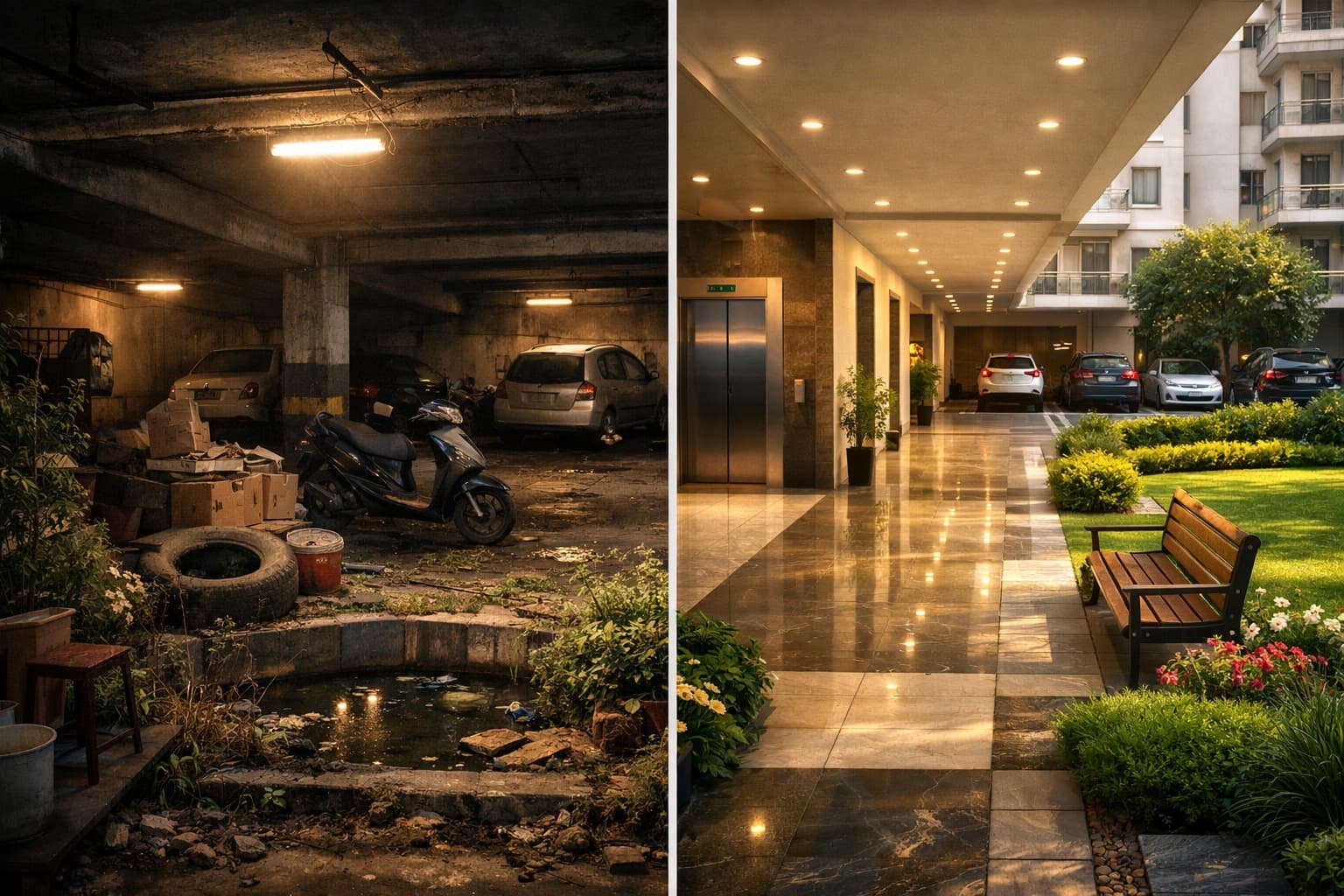
Before possession, common areas should be clean and free of debris. Leftover construction material, dust, or waste indicates incomplete handover and poor finishing discipline.
Compliance With Approved Plans
Ensure that common areas match approved plans and promised layouts. Any missing amenities, reduced space, or layout changes should be clarified in writing before possession.
Documentation and Handover Clarity
Ask for confirmation that common areas are complete and handed over to the association as per agreement terms. This ensures future maintenance responsibilities are clearly defined.
Common Mistakes Buyers Make
Many buyers ignore common areas during inspection, assuming issues will be fixed later. In reality, unresolved common area defects often become long‑term problems. Early inspection gives buyers stronger leverage.
Practical Tip for Buyers
Carry a checklist during inspection and take photographs of issues. Share observations with the builder in writing before possession. This creates a record and speeds up rectification.
Final Perspective
A home is more than just the flat—it includes every shared space you use daily. A detailed common area inspection protects buyers from future inconvenience, unexpected costs, and safety risks. Spending extra time on inspection today ensures better living quality tomorrow.
Summary
Common area inspection is a crucial step before property possession. Buyers should carefully check entrances, lobbies, lifts, corridors, parking, fire safety systems, utilities, amenities, and security features. Any defects or incomplete work should be addressed by the builder before handover. A thorough inspection ensures promised standards are met, reduces future disputes, and safeguards long‑term living comfort and property value.