
Choosing Vases and Pots for Balance in Indian Homes: A Practical Guide
Summary
Learn how to choose vases and pots that create visual balance in Indian homes. Consider scale, shape, material, and color to complement your existing decor and enhance your space's overall aesthetic.

Introduction
A vase or pot sitting on the wrong surface, in the wrong size, with the wrong shape for the room it is in is not a decorative element. It is visual noise. But the same object, chosen thoughtfully and placed with an eye for proportion, can anchor a corner, complete a shelf, or give a dining table the one thing it was missing. Choosing vases and pots for balance is less about following rigid rules and more about understanding a few reliable principles that work across every style of Indian home.
Start with Scale
The most common mistake when buying a decorative vase or pot is choosing by instinct in the store rather than by scale in context. A tall slender vase that looks elegant on a retail shelf can disappear into irrelevance when placed beside a large L-shaped sofa. A squat wide pot that seems compact in a shop may overwhelm a narrow console table at home.
Before buying, measure the surface where the vase or pot will sit. A general rule of thumb is that the height of a vase should be roughly one-third to one-half the height of the surface it sits on. For a 90-centimetre console table, a vase between 30 and 45 centimetres tall works well. For a low coffee table closer to 40 centimetres, a vase or pot between 15 and 25 centimetres hits the right proportion.
Shape Follows the Room's Mood
Different vase shapes carry different visual energy, and that energy either reinforces or fights the character of the room it is placed in. Round, soft-curved vases and pots feel relaxed and organic. They work well in living rooms with curved sofas, bedrooms with textured soft furnishings, and balconies with trailing plants. Angular vases with clean geometric lines suit contemporary interiors with straight edges, minimal clutter, and neutral colour palettes.
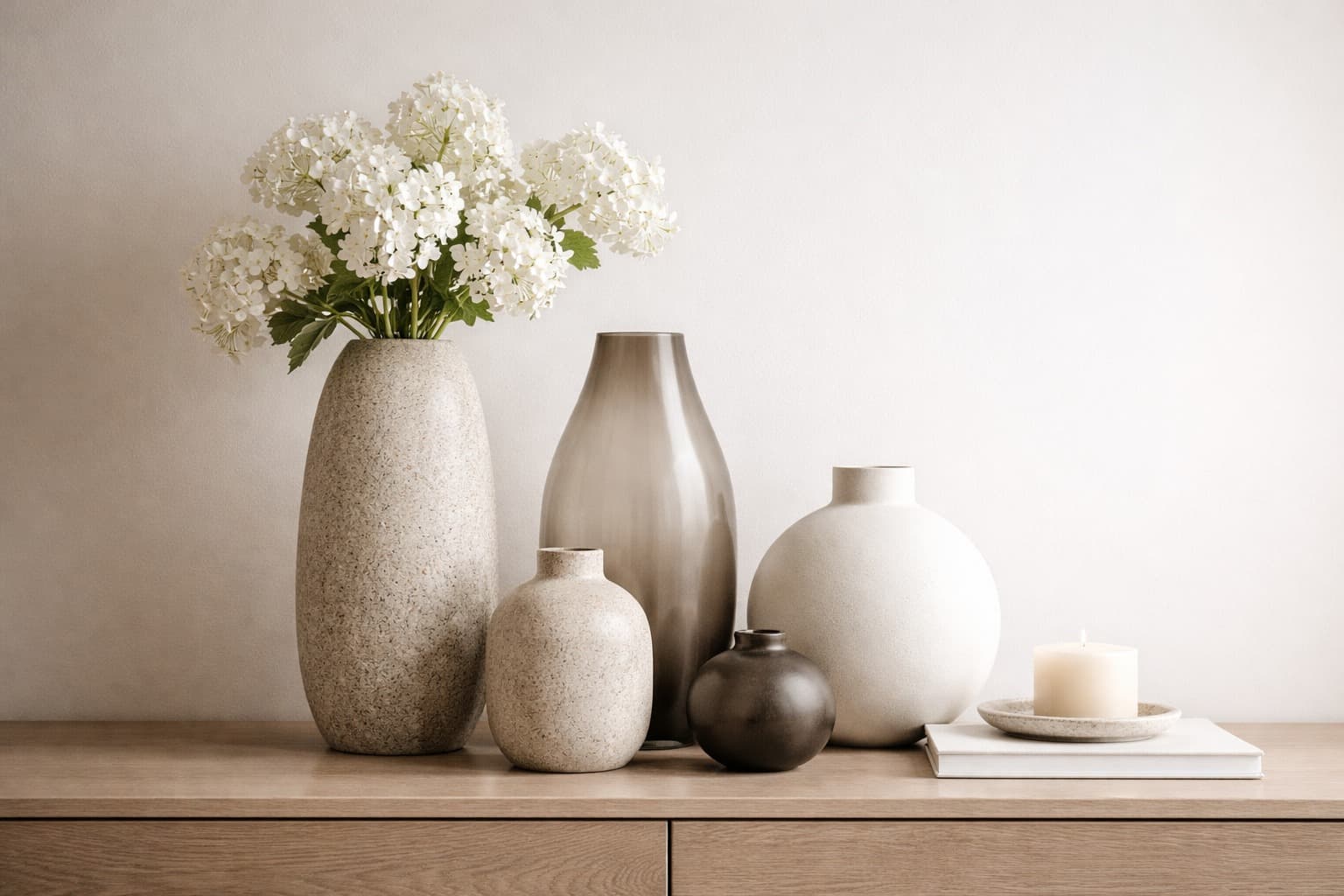
In traditional Indian homes with carved furniture or heavily patterned textiles, ornate vases with decorative detailing feel at home. In modern apartments following a Scandinavian or minimalist aesthetic, a simple matte ceramic pot is more effective than anything fussy.
Material Matters as Much as Form
The material a vase or pot is made from determines both how it looks and how it ages. Ceramic and terracotta are the most versatile materials for Indian homes. They are widely available, suit our climate, and look appropriate in everything from a traditional haveli-style home to a modern urban flat. A terracotta pot with a plain finish brings warmth to a balcony or a corner bookshelf without drawing excessive attention.
Glass vases work particularly well near windows and in rooms that receive good natural light because they interact with sunlight in ways opaque materials cannot. Metal vases, brass in particular, have seen a significant revival in Indian interiors and work as statement pieces on dining tables and sideboards. They bring a sense of occasion that ceramic cannot always match.
Grouping for Balance
Single vases placed in isolation can feel lonely on a large surface. Grouping vases and pots together creates visual weight and gives the arrangement a collective presence that reads better in a room. When grouping, vary the heights deliberately. A tall narrow vase alongside a medium rounded one and a low wide bowl creates a triangular visual structure that is naturally pleasing to the eye.
Odd numbers work better than even numbers in most grouping scenarios. Three pots are more dynamic than two. Five is better than four. Keep the colour palette within the group restrained. If all three vases have related tones, the arrangement looks intentional. If the colours clash without a connecting thread, it reads as clutter.
Colour and Contrast
In rooms with neutral walls and furniture, a boldly coloured vase or pot becomes an accent that gives the space a focal point. A deep cobalt blue ceramic on a white shelf, a burnt orange terracotta on a beige console, a forest green pot against a grey wall: these pairings create contrast without complication.
In rooms that are already visually busy with patterns or bold colours, choose vases and pots in neutral tones that calm rather than compete. Matte white, warm ivory, or natural clay finishes recede into the background and let the bolder elements of the room take precedence.
Summary
Choosing vases and pots for visual balance means matching scale to the surface, selecting shapes that reinforce the room's mood, and picking materials that interact well with the existing decor. Group in odd numbers with varying heights, use colour as either a focal point in neutral spaces or a calming element in busy ones, and always check the proportion of the vase against the furniture it sits on before buying. These principles apply equally to living rooms, dining tables, bedrooms, and balconies in Indian homes, and they cost nothing to apply.