
Choosing the Right Solar Panel for Your Home: A Complete Guide for Indian Homeowners
Summary
This guide helps Indian homeowners choose the right solar panel by explaining efficiency, types, costs, and government subsidies. Make informed decisions, reduce electricity bills, and embrace clean energy with our practical advice.

Introduction
With increasing electricity bills and rising awareness about environmental protection, many families are now investing in a solar panel for home. Solar energy is no longer limited to large industries. Today, even small households can benefit from a reliable home solar system. However, with many options available in the market, selecting the right panel can be confusing. This guide explains how to choose the right solar panel for home in a simple and practical way, helping Indian homeowners make confident and informed decisions.
Why More Indian Homes Are Choosing Solar
Solar power helps reduce monthly expenses and dependence on the electricity grid. Many households have lowered their bills by installing residential solar panels. Government subsidies and net metering have also encouraged adoption. In addition, clean energy improves property value and supports sustainability. For long-term users, a well-designed solar power system for home provides financial stability and energy security.
Understanding How Solar Panels Work
Solar panels absorb sunlight and convert it into electricity using silicon cells. These cells generate direct current, which is converted into alternating current by an inverter. This process allows appliances to function normally. A properly installed home rooftop solar system ensures smooth energy supply throughout the day. Understanding this basic working method helps in better panel selection.
Types of Solar Panels for Residential Use
There are three main categories used in Indian households. Monocrystalline panels offer high efficiency and long life, making them popular among users seeking best solar panels India offers. Polycrystalline panels are affordable and suitable for larger roofs. Thin-film panels are lightweight but less efficient and rarely used for homes. Choosing the right type is essential for solar panel selection guide for homeowners.
Evaluating Solar Panel Efficiency
Efficiency indicates how much sunlight is converted into usable electricity. Panels with higher efficiency generate more power in limited space. Most modern systems provide 17 to 22 percent efficiency. When analysing solar panel efficiency India, homeowners should consider roof size and sunlight exposure. Higher efficiency is ideal for urban homes with smaller rooftops.
Understanding Wattage and Energy Output
Solar panels are rated in watt-peak. Most residential units range between 300W and 550W. Higher wattage panels reduce the total number of panels required. Calculating output correctly ensures optimal system design. For families comparing best solar panels for houses, wattage plays a major role in meeting daily energy needs.

Durability and Warranty Matters
Good solar panels last between 25 and 30 years. Manufacturers usually provide performance and product warranties. These warranties protect your investment and ensure stable returns. Choosing reliable brands supports long-term reliability. This factor is crucial when planning cost and efficiency of residential solar panels for your home.
Importance of Manufacturer Reputation
Reputed brands follow strict quality standards and provide strong after-sales service. They also offer better technical support and faster maintenance. When choosing solar panel for home, always verify company background and customer reviews. Trusted manufacturers improve system performance and reduce operational risks.
Budget Planning and Return on Investment
Solar systems require initial investment, but savings recover costs over time. A typical system pays for itself within six to eight years. Government subsidies further reduce expenses. Understanding which solar panel is best for home use depends on budget, consumption, and subsidy eligibility. Balanced planning ensures stable long-term returns.
Calculating Required Number of Panels
Start by checking monthly electricity consumption. Divide it by daily generation capacity to estimate panel count. A home using 300 units monthly usually needs around 3 kW capacity. This calculation helps in selecting the right rooftop solar configuration and prevents under-sizing or over-sizing.
On-Grid and Off-Grid System Selection
On-grid systems connect with the electricity network and use net metering. They are suitable for cities with stable power supply. Off-grid systems use batteries and are costlier. Most homeowners prefer on-grid setups with best rooftop solar panels for Indian homes due to affordability and subsidy benefits.
Government Subsidies and Support Schemes
Under PM Surya Ghar Yojana, residential users receive financial assistance. Subsidies can reduce installation costs by up to ₹78,000. This support has increased adoption of solar panel for home across states. Applying through authorised portals ensures smooth approval and timely benefits.
Installation Guidelines for Better Performance
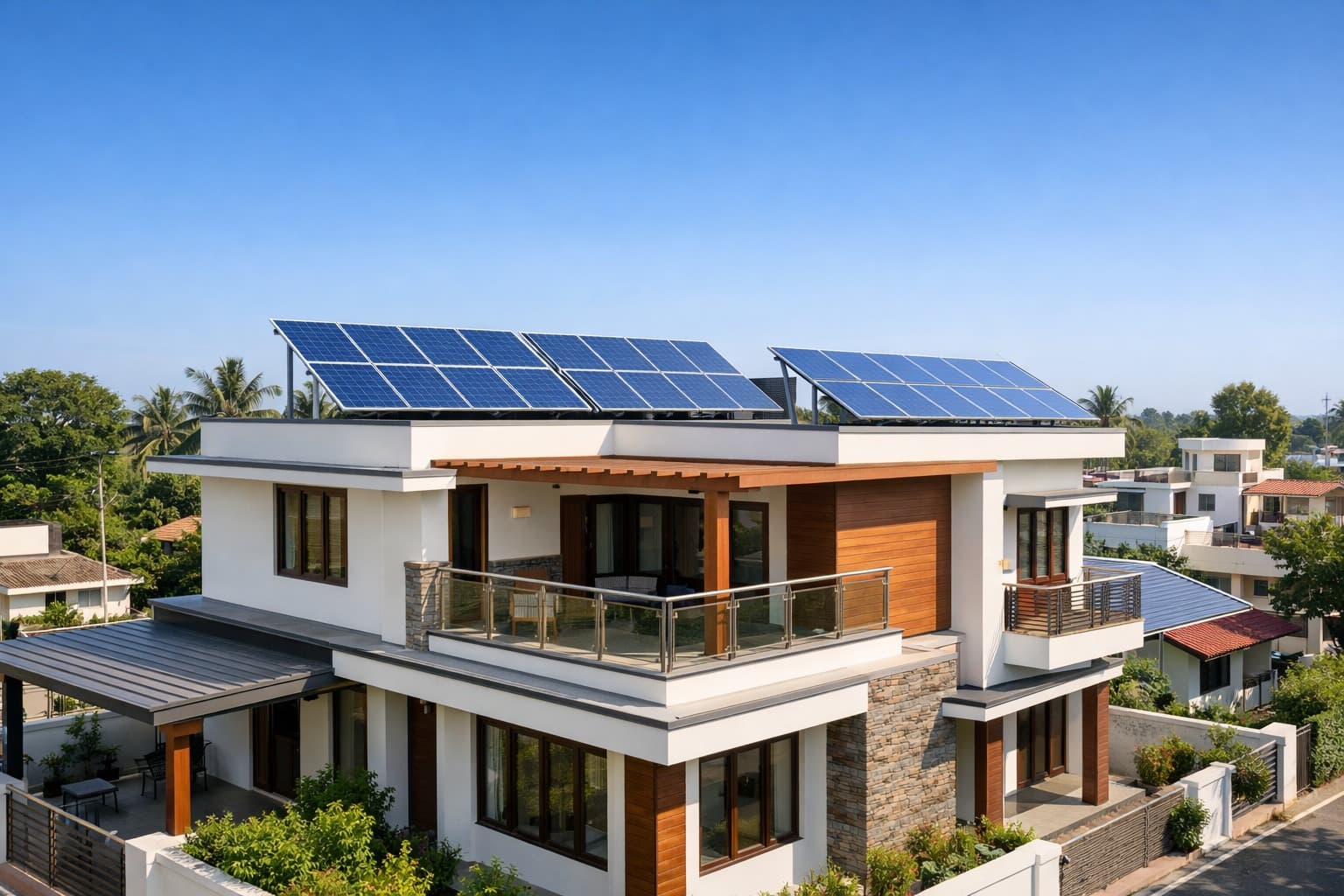
Panels should face south and receive direct sunlight. Shaded areas must be avoided. Certified installers ensure proper wiring and mounting. Regular cleaning improves output. Professional installation strengthens home solar system performance and extends equipment life.
Common Errors Homeowners Must Avoid
Many buyers choose low-cost panels without checking quality. Ignoring roof strength and inverter compatibility leads to inefficiency. Skipping maintenance reduces output. Following a structured solar panel selection guide for homeowners helps avoid these costly mistakes.
Is Solar a Practical Choice for You
Homes with high electricity bills and good sunlight benefit most from solar. Families planning long-term residence gain maximum value. Evaluating personal energy usage helps decide if a solar power system for home suits your lifestyle and budget.
Future Trends in Residential Solar Technology
Advanced panels like bifacial and half-cut PERC modules are gaining popularity. Smart monitoring and battery integration are also improving efficiency. These innovations support users searching for best solar panels India in coming years. Technology will continue to enhance residential solar reliability.
Summary
Choosing the right solar panel requires understanding efficiency, durability, budget, and energy needs. Indian homeowners can select from monocrystalline, polycrystalline, and advanced panels based on rooftop space and consumption. Government subsidies and net metering further improve affordability. Proper installation, trusted manufacturers, and regular maintenance ensure long-term benefits. By carefully evaluating available options and planning wisely, families can reduce electricity bills, increase property value, and enjoy clean, reliable energy for decades.