
Carpet Area in Villas vs Apartments: Why the Same Square Footage Feels Very Different
Summary
Villas often feel larger than apartments with the same square footage due to carpet area differences. Villa carpet area more closely reflects usable space, while apartments have higher loading factors for shared amenities. Compare price per carpet area for accurate value assessment.

Introduction
Two properties. Both listed at 2,500 square feet. One is a villa. One is an apartment. You visit both and the villa feels noticeably larger, more open, and more usable. You walk away confused because the numbers on paper were identical. The answer to that confusion lives in one of Indian real estate's most misunderstood concepts: carpet area. The gap between what is advertised and what you actually live in is different for villas and apartments, and that gap has direct consequences for how you compare options, negotiate prices, and ultimately decide where your money goes.
What Carpet Area Means and Why It Matters
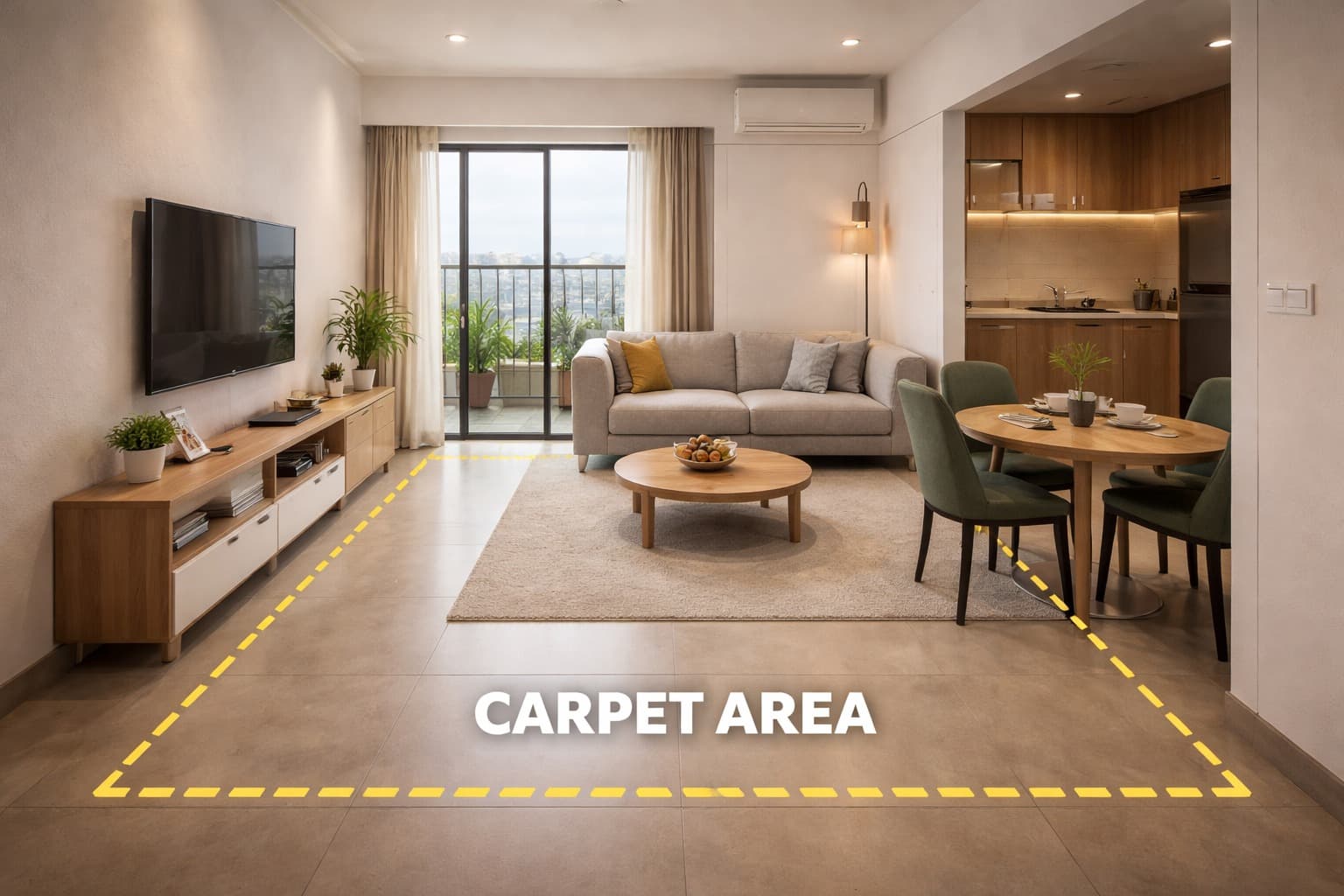
Carpet area is the net usable floor space inside a property measured from the inner face of the walls. Under RERA, this includes the area under internal partition walls but excludes external walls, common areas, lobbies, staircases, and shared infrastructure. It is the only measurement that tells you how much space your furniture, your family, and your daily life will actually occupy.
Every other measurement, built-up area, super built-up area, saleable area, is a larger number that includes spaces you share with other residents or that serve structural rather than living purposes. RERA carpet area India rules mandate disclosure for registered projects, but buyers still need to understand how these numbers behave differently across property types.
How Loading Works in Apartments
In an apartment building, the carpet area calculation India result is always significantly lower than the super built-up area quoted in the developer's brochure. The difference, called the loading factor, accounts for the proportionate share of common areas allocated to each unit. This includes lobbies, lift shafts, staircases, the building's external walls, the clubhouse, and in some cases even the security cabin.
Loading factors in Mumbai typically run between 25% and 35%. In Bengaluru and Pune they sit around 20% to 28%. A 1,500 square foot apartment in Mumbai therefore delivers somewhere between 975 and 1,125 square feet of actual carpet area. That is a meaningful difference from what the brochure headline communicates.
How Carpet Area Behaves Differently in Villas
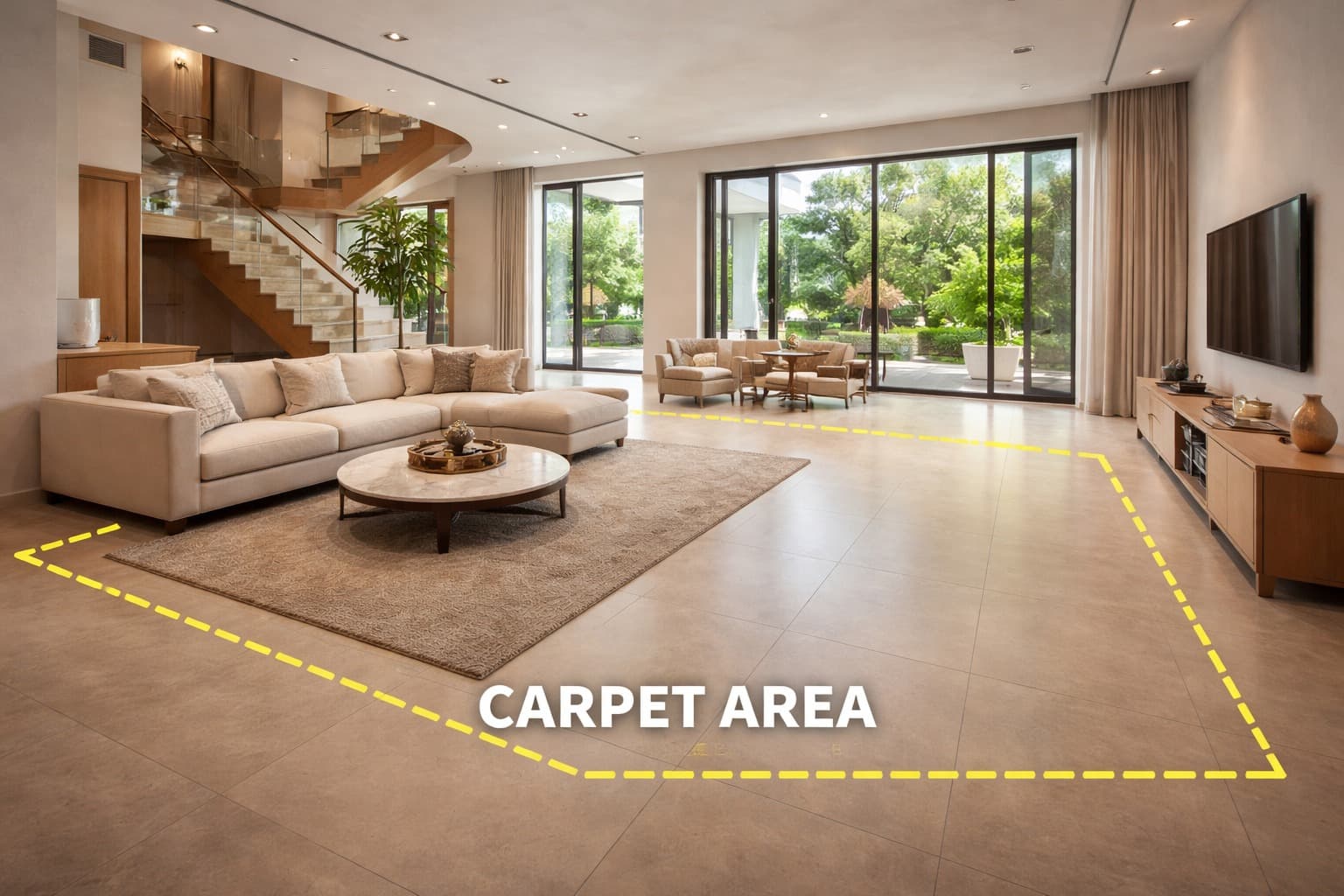
A villa carpet area calculation produces a very different result from the same exercise applied to an apartment. Independent villas do not have shared lobbies, common staircases, or proportionate allocations of building-wide infrastructure. The entire footprint of the structure, minus the external wall thickness, translates into usable living space.
A 2,500 square foot villa typically delivers a carpet area of 2,100 to 2,300 square feet depending on wall thickness and structural design. That is a loading factor of only 8% to 16%, roughly half or even a third of what apartment buyers experience. This is why the same advertised square footage feels so much more generous in a villa.
The Private Outdoor Space Variable
Villas vs apartments carpet area comparisons also need to account for private outdoor space that contributes to daily liveability without appearing in the carpet area figure. A villa's private garden, sit-out area, private terrace, and driveway are not counted in carpet area under RERA but they are exclusively yours. They extend your effective living environment in a way that an apartment's shared amenity spaces simply do not.
An apartment buyer with a 200 square foot balcony shares the building's amenities with hundreds of other residents. A villa owner with 500 square feet of private garden has exclusive use of that space every single day. The carpet area number does not capture this distinction but your lived experience absolutely will.
Price Per Carpet Area: The Only Fair Comparison
The only honest way to compare carpet area apartments India and villa pricing is to convert everything to a price per square foot of carpet area. Take the total all-in cost including stamp duty and registration, divide it by the RERA-declared carpet area, and compare that number across both property types in the same location.
This calculation frequently surprises buyers. An apartment priced attractively on a per-super-built-up-foot basis often ends up costing more per carpet area square foot than a villa that initially looked expensive. Running this comparison before shortlisting properties saves significant time and prevents the emotional momentum of a well-staged site visit from overriding financial logic.
Which Is Better Value: Villa or Apartment
The answer depends on your specific priorities rather than a universal rule. Apartment carpet area efficiency has improved in recent years as RERA disclosure requirements have pushed developers toward more honest loading factors. But villas structurally deliver more usable space per rupee spent in most Indian markets outside the most expensive urban cores.
For families who value private outdoor space, ground-level living, and the absence of shared wall neighbours, a villa's carpet area efficiency compounds into a quality of life advantage that the numbers alone do not fully communicate.
Summary
Carpet area in villas vs apartments is not just a technical distinction. It determines how much of what you pay for you actually live in every day. Apartments carry loading factors of 20% to 35% that significantly reduce usable space from the advertised figure. Villas deliver loading factors of 8% to 16%, translating far more of the quoted area into genuine living space. Always compare properties on a RERA carpet area basis, calculate price per carpet area square foot for both options, and account for private outdoor space before making a final decision.