
Buying Property Near Industrial Zones in India: When It Pays and When It Does Not
Summary
Investing near Indian industrial zones requires careful consideration. Modern, compliant parks can boost property value, while proximity to heavy industries or unregulated clusters poses risks. Distance, infrastructure, and industry type are crucial factors.

Introduction
The advice most people receive about property near industrial zones is delivered in one of two extremes. Either avoid it entirely because factories mean pollution, noise, and declining neighbourhoods. Or buy immediately because employment drives demand and prices only go up. Neither position is honest on its own. The reality is more textured. Some of the strongest residential appreciation stories in Indian real estate over the past two decades have played out in localities sitting next to industrial clusters. Some of the most persistent price stagnation has too. The difference between the two outcomes is not luck. It is the specific nature of the industrial zone, its distance from the residential plot, and the infrastructure framework connecting the two.
Why Industrial Zones Drive Residential Demand
Employment is the fundamental driver of all residential real estate demand. Every large manufacturing facility, logistics park, or industrial township that becomes operational creates a workforce that needs housing within a commutable distance. The quantum of that demand depends on the scale of the facility and the income profile of its workforce.
A large automotive plant employing 5,000 workers generates demand across multiple residential segments simultaneously. Factory floor workers need affordable housing below Rs 15 lakh. Supervisors and technicians look for mid-segment options between Rs 25 lakh and Rs 60 lakh. Plant managers and engineers want something better, typically Rs 60 lakh to Rs 1.5 crore. An industrial zone that creates multi-tier employment simultaneously creates multi-tier residential demand, which is the most durable property market condition possible.
The Distance Variable That Determines Everything
Not all proximity is equal. A residential plot two kilometres from an industrial zone boundary and a plot five hundred metres from a factory's perimeter wall are not comparable industrial area real estate India situations even if they carry the same locality name. The two-kilometre distance, particularly if a highway, green buffer, or residential development sits between the home and the zone, produces very different daily living conditions from the half-kilometre situation where the factory's visual presence, sound, and air quality directly affect residents.
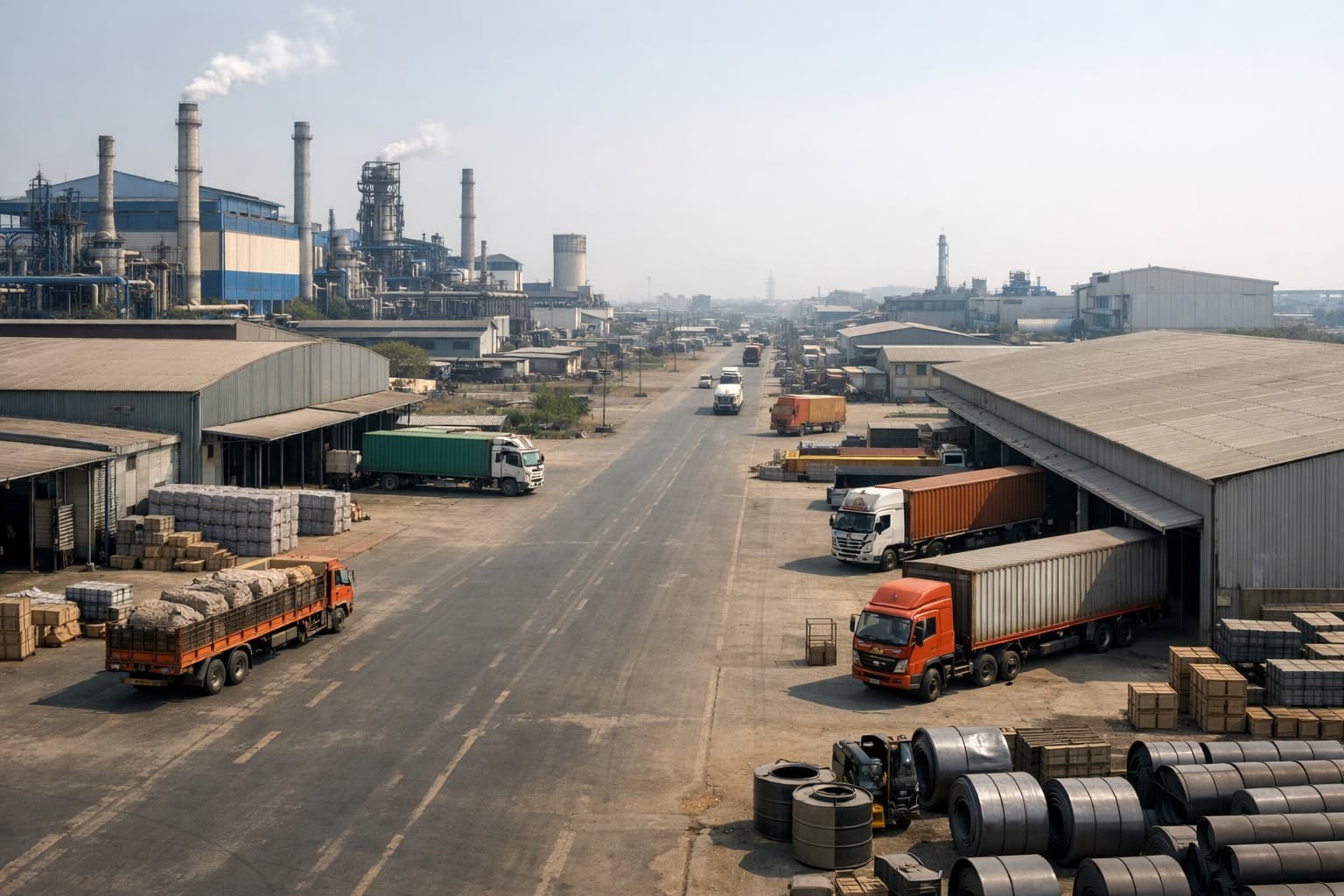
The sweet spot that industrial corridor property India buyers consistently discover is the residential pocket that sits within easy commuting reach of the industrial zone but is separated from it by enough physical distance or natural buffer to avoid its negative externalities. Three to eight kilometres from the zone boundary, with good road connectivity between them, is the geography that has historically produced the strongest combination of demand-driven appreciation and acceptable liveability.
When Industrial Zone Proximity Is a Clear Risk
Some situations are simply worth avoiding regardless of the price discount on offer. Heavy industries like chemicals, petrochemicals, tanneries, cement manufacturing, and smelting produce air quality effects that travel significantly beyond the factory fence. Residential properties directly downwind of such facilities carry long-term health risks that no appreciation thesis justifies.
Risk property near factory situations also arise when the industrial zone has no formal environmental compliance framework. Unregulated small industrial clusters in peri-urban areas often discharge effluents into nearby water bodies and emit particulates without scrubbers. Buying residential land adjacent to such clusters locks you into a liveability problem that local authorities have consistently failed to solve for decades.
Proximity to explosive storage, petroleum refineries, or bulk chemical handling facilities creates a different but equally serious category of risk. These facilities maintain mandatory safety exclusion zones, but the existence of the zone does not always prevent residential development from encroaching on its edges in Indian urban realities.
When Industrial Zone Proximity Is a Financial Opportunity
The calculus shifts decisively when the industrial zone is a formal, regulated, modern industrial park or township rather than an old-format cluster. Grade A industrial parks developed by operators like IndoSpace, ESR, or Embassy Industrial Parks come with environmental compliance as a baseline requirement. The manufacturing tenants inside these parks are typically multinational or large domestic companies with their own environmental standards that exceed statutory minimums.
Buying property industrial zone proximity becomes clearly advantageous when the zone is a logistics and warehousing cluster rather than a heavy manufacturing site. Warehouses and distribution centres generate employment without the pollution profile of manufacturing. The residential demand they create is real. The air quality and noise externalities are minimal. Bhiwandi near Mumbai is the clearest example of this pattern in India.

The Infrastructure Connection That Makes or Breaks It
Industrial zones that have been deliberately connected to residential areas through planned roads, ring roads, or metro lines produce a different residential market outcome from zones reached only by congested single-lane roads through informal settlements. Industrial zone property investment India in the Chakan belt near Pune works partly because the Pune-Nashik Highway and the developing ring road give residents acceptable commute options. The same industrial density in a location without those connections would produce a different price trajectory.
Before buying residential property near any industrial zone, physically drive the route between the residential site and the zone at different times of day. The commute experience, the road quality, and the presence or absence of bottlenecks will tell you more about the property's long-term demand profile than any developer's sales pitch.
Summary
Buying property near industrial zones in India is a risk-opportunity calculation that depends on the zone's nature, distance, and regulatory quality. Modern industrial corridor parks with formal environmental compliance and multi-tier employment generate durable residential demand that produces real appreciation. Heavy chemical, petrochemical, and unregulated industrial clusters create liveability and health risks that discount pricing rarely adequately compensates. The three to eight kilometre sweet spot with good road connectivity captures employment-driven demand while maintaining acceptable daily living conditions. Know what type of industry you are near before you buy.
Video will be embedded from: https://www.youtube.com/watch?v=o64sUVwAU6s