
Buying a Resale Flat? Here Is How to Actually Plan Your Budget
Summary
Buying a resale flat in India involves significant hidden costs beyond the agreed price. This guide outlines how to budget for essential expenses like stamp duty, legal fees, society charges, potential repairs, and home loan processing. Planning comprehensively ensures you avoid financial stress and covers the typical 15-22% extra on the headline price.

The Price Tag Is Never the Full Story
You find a resale flat in a neighbourhood you have been eyeing for two years. The seller quotes ₹85 lakh. You run the numbers, it fits. You call your broker and say you are interested.
Then the actual costs start arriving.
Buying a resale flat in India almost always costs significantly more than the agreed price, and first-time buyers routinely get caught off-guard by the gap. Planning your budget honestly, from the very beginning, is the single most useful thing you can do before signing anything.
Start With Stamp Duty and Registration
These two heads alone add a meaningful sum to your outgo and cannot be avoided. Stamp duty in most Indian states falls between 5 and 8 percent of the transaction value. Registration charges are typically around 1 percent on top of that.
On an ₹85 lakh resale flat in Maharashtra, you are looking at roughly ₹5.1 lakh in stamp duty at 6 percent and another ₹30,000 capped registration fee. In Karnataka, the combined outgo would be around ₹5.9 to ₹6.8 lakh. Tamil Nadu charges 7 percent stamp duty with a 1 percent registration fee, so the same transaction would cost you roughly ₹6.8 lakh in government charges. Budget for this before anything else.
One relief: resale flats that are ready to occupy and have a completion certificate attract no GST. That is a genuine saving compared to buying an under-construction unit.
Legal Verification Is Not Optional
A resale transaction involves a chain of ownership, and any break in that chain is your problem once registration is complete. You need a lawyer to verify the title, check the encumbrance certificate for any loans or dues against the property, confirm the original sale deed, and ensure the society has no objection to the transfer.
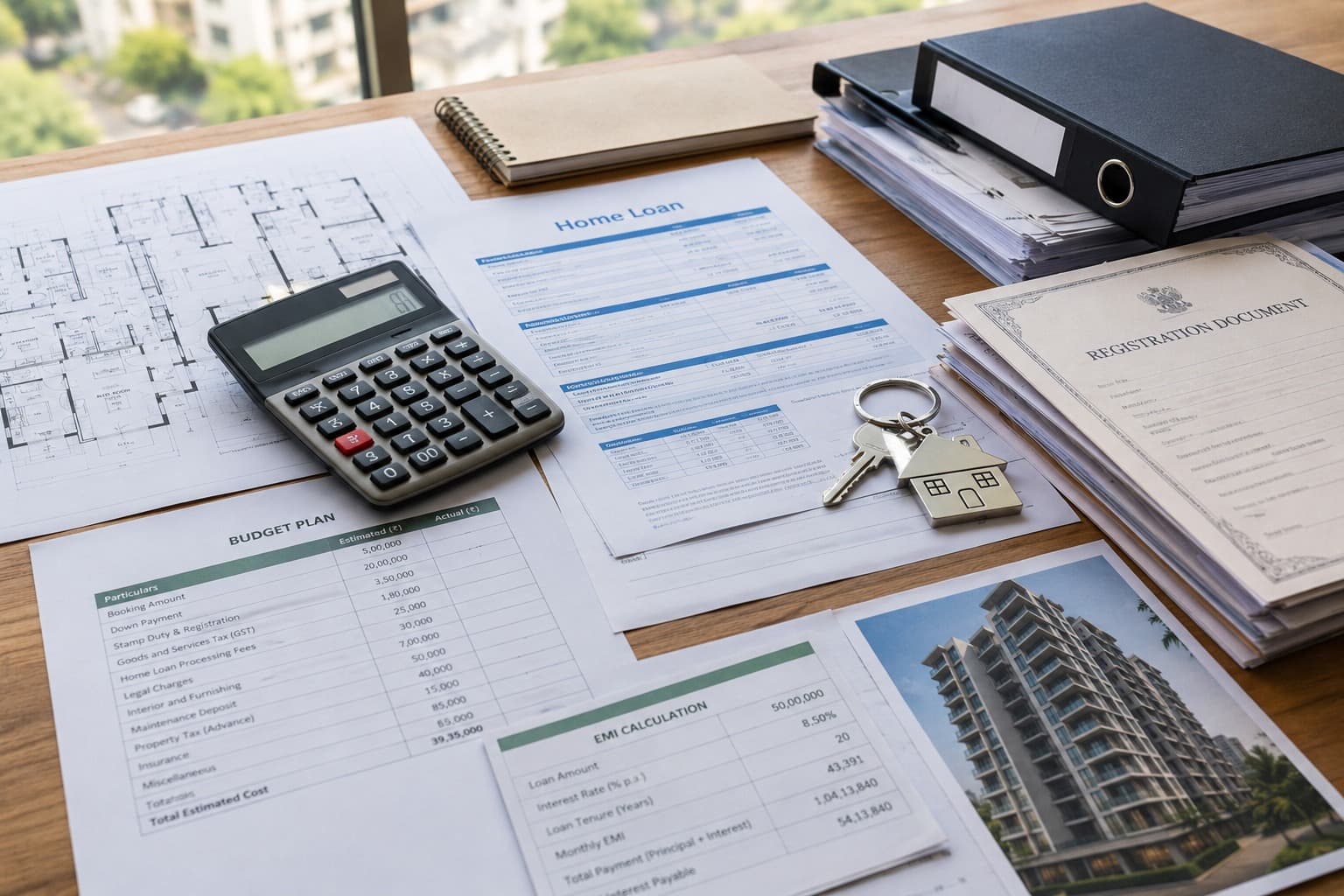
Legal fees for this work typically run between ₹15,000 and ₹50,000 depending on the complexity and the lawyer. Do not treat this as a line item to skip.
Society Transfer Charges and Pending Dues
This is the cost category that surprises most buyers. When a resale flat changes hands, the housing society levies a transfer charge. The exact amount varies by society bylaws and city, but it typically ranges from ₹25,000 to ₹1 lakh or more in Mumbai and other metros.
More critically, find out whether the current seller has any pending maintenance dues, water charges, property tax arrears, or outstanding society loans. These liabilities can transfer to you if the purchase agreement does not explicitly protect against them. Ask for a no-dues certificate from the society before you proceed.
Factor in Structural and Repair Costs
A resale apartment has a history. Pipes age. Electrical wiring gets dated. Waterproofing above terraces and bathrooms eventually fails. Before finalising your budget, do a thorough physical inspection. Look at the walls for seepage marks. Check the plumbing, the window frames, and the condition of the flooring.
Even a clean-looking flat may need ₹2 to ₹5 lakh in basic repairs and freshening up before it feels like home. Older buildings, more than 15 years, may need considerably more. Get at least two contractor estimates before closing, so you know exactly what you are walking into.
Home Loan Processing and Valuation Costs
If you are taking a home loan, add the bank's processing fee, which is usually between 0.25 and 1 percent of the loan amount. On a ₹60 lakh loan, that is ₹15,000 to ₹60,000. The bank will also send a technical valuator to assess the property, typically costing ₹3,000 to ₹10,000.
Note that banks often lend conservatively on older resale properties. A building more than 25 to 30 years old may attract lower loan-to-value ratios, meaning you need a larger down payment than you planned for.
Build In a Buffer
The most disciplined buyers set aside 8 to 12 percent of the base price as a buffer over and above all the specific costs listed above. Life in a resale flat transaction rarely goes exactly to plan. Negotiations get extended, sellers ask for delays, repairs cost more than estimated.
That buffer is not pessimism. It is experience.
Summary
Budget planning for a resale flat in India goes well beyond agreeing on a purchase price. Stamp duty and registration can add 7 to 9 percent. Legal fees, society transfer charges, pending dues verification, and structural repairs add several lakhs more. Home loan processing charges and bank valuations are additional. The real cost of buying a second-hand flat is typically 15 to 22 percent above the headline price. Plan for every head from the very beginning, and you will close the transaction without financial stress.