
Buying a Green Home in Mumbai: What to Look For, What to Skip, and What Actually Matters
Summary
Mumbai's green homes offer lower utility costs and better air. Focus on genuine IGBC/LEED certifications, features like cross-ventilation and rainwater harvesting, and always verify developer claims to ensure true sustainability.

Introduction
Mumbai's housing market has absorbed every trend that passed through Indian real estate over the last two decades. But the eco-friendly residential projects Mumbai boom feels different from the others. It is not driven by marketing language or passing fashion. It is being pushed from two directions simultaneously: buyers who want lower electricity bills and cleaner air inside their homes, and developers who have discovered that a green building Mumbai certification commands a measurable price premium in a city where differentiation is everything.
The challenge for buyers is separating genuine sustainability from branding. Walk into any new project launch across Andheri, Thane, or Navi Mumbai and you will hear the same vocabulary: solar panels, rainwater harvesting, LEED-certified design. Not all of it means the same thing. This guide exists to help you decode what matters before you sign the booking form.
What Green Certification Actually Confirms
The two ratings that carry real weight in Mumbai green real estate are IGBC, which stands for the Indian Green Building Council, and LEED, which is the international Leadership in Energy and Environmental Design standard. Both evaluate projects across the same core pillars: water consumption efficiency, energy performance, material sourcing, waste handling, and indoor air quality.
A project with genuine IGBC certified Mumbai status has gone through third-party verification of these parameters. It is not self-declared. The Maharashtra government has also sweetened the equation from the developer side with faster approval timelines and tax incentives for certified projects, which means more builders are pursuing these ratings than they were even three years ago.
But certification grade matters. A basic-level IGBC certification and a platinum-rated project represent very different performance standards. Ask specifically which rating level the project holds before treating the label as assurance.
Features That Translate to Real Savings
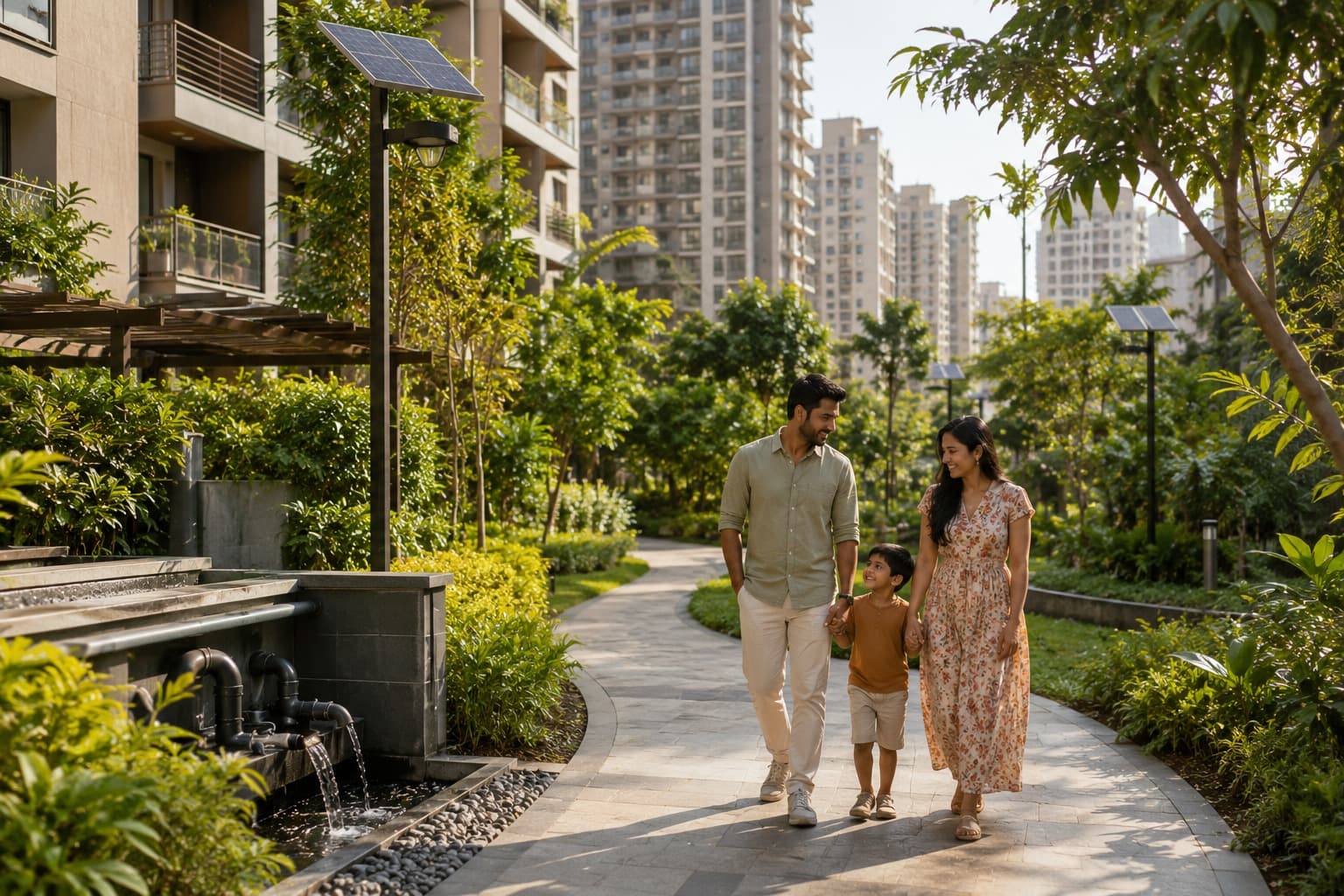
For a homebuyer evaluating sustainable apartments Mumbai, the features worth probing go beyond the brochure photographs. Rainwater harvesting systems that feed back into common area irrigation and flushing can reduce a building's municipal water dependency considerably, which matters in a city where water supply pressure remains uneven across localities.
Solar panels on common area rooftops reduce society maintenance costs over time, though the saving per flat varies based on the building's total load. Cross-ventilation design, where units are oriented and planned so that natural airflow reduces dependence on air conditioning, is harder to photograph but more valuable in a coastal city that spends seven months in humidity.
Waste management infrastructure, specifically segregation at source and composting systems within the complex, is another marker that distinguishes genuinely planned green housing Mumbai from a project that simply painted the lobby with sustainability messaging.
Projects Setting the Benchmark
Kalpataru Vivant at JVLR in Jogeshwari is among the projects in Mumbai that has built sustainability into its operational systems rather than treating it as an aesthetic addition. Water recycling, natural lighting layouts, and green waste handling are embedded in how the complex functions daily.
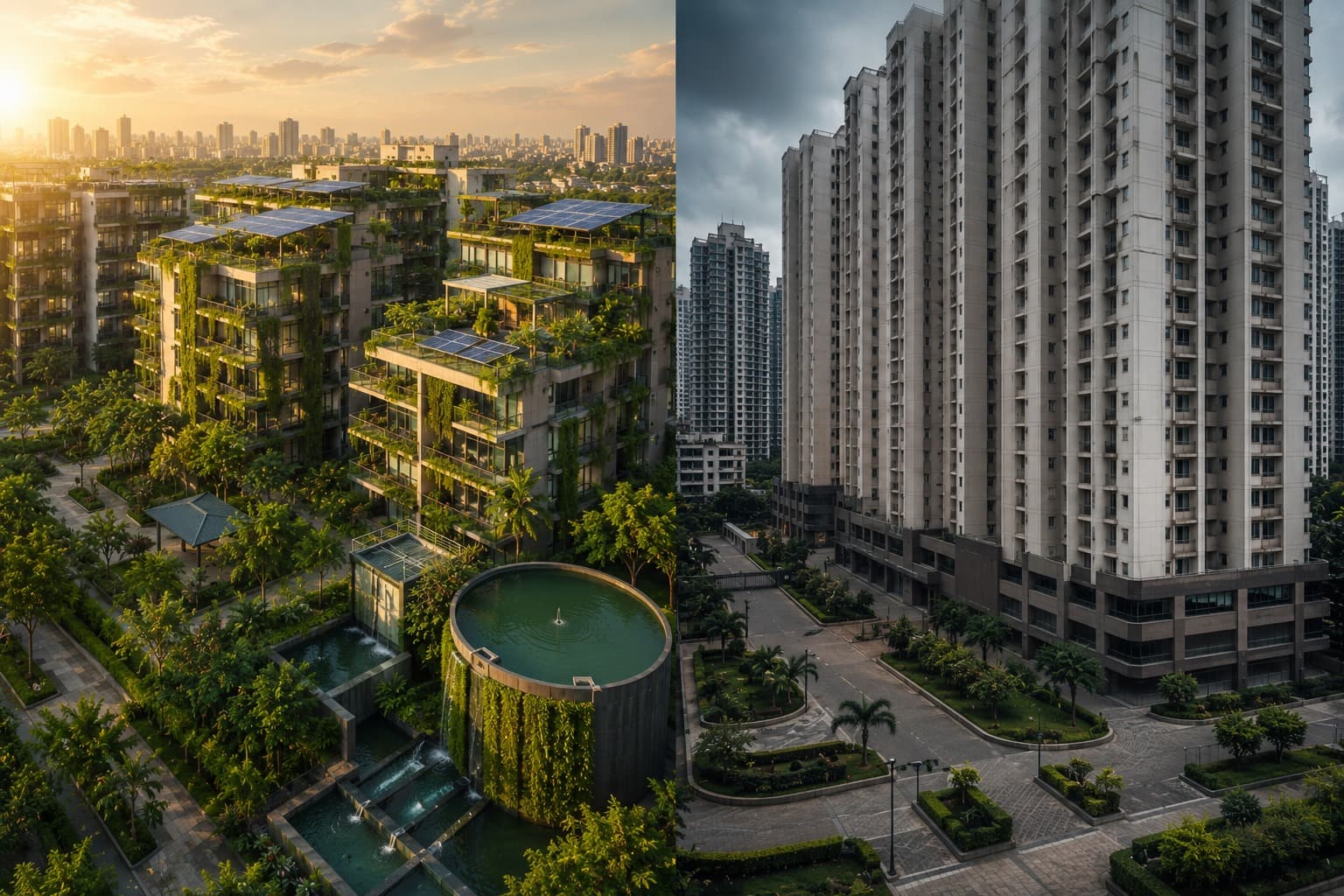
Piramal Aranya in Byculla is another name that emerges in this conversation, designed around its proximity to Rani Baug and using that context to build genuine green buffers into the project. Sunteck Realty has pursued LEED and EDGE certifications across multiple developments, with water efficiency measures including low-flow fixtures built into the specification rather than added as upgrades.
What to Actually Verify Before Buying
The single most important action any buyer of eco-friendly homes Mumbai can take is requesting the certification document, not the promise of it. Ask whether the rating has been awarded or is merely applied for. Confirm the validity period of the certification. Check whether the sustainability features are covered under the maintenance agreement or require separate resident funding after possession.
Summary
Eco-friendly residential projects in Mumbai represent a genuine evolution in how the city builds homes, not just a marketing shift. LEED and IGBC certified apartments Mumbai deliver real operational advantages including lower utility costs, better indoor air quality, and stronger long-term asset value. Before buying any green building Mumbai property, verify certification grade, check which features are built-in versus optional, and confirm that the developer's sustainability commitments are documented in the agreement. In a market this active, the difference between a genuinely sustainable home Mumbai and a well-packaged ordinary flat often lives in a single conversation you have before signing.