
Buyer's Guide to Joint Development Agreement (JDA) Projects in India: Rights, Risks, and Due Diligence
Summary
JDAs are common in Indian real estate, but understanding the risks is vital for buyers. This guide covers key documents, RERA's role, and red flags to watch out for to ensure a safe JDA property purchase.

Introduction
Walk into any new residential project in a major Indian city and there is a reasonable chance the land beneath it belongs to someone other than the developer whose name is on the hoarding. Joint development agreement projects, where a landowner provides the land and a builder finances and executes the construction, account for a significant share of new launches in metros like Bengaluru, Hyderabad, Pune and Chennai. For buyers, this arrangement is largely invisible until something goes wrong. Understanding what a JDA real estate India structure means for you before you sign is not optional. It is essential.
What a JDA Actually Is
A JDA landowner builder arrangement is a legal contract under the Indian Contract Act, 1872 where the landowner retains title to the land while giving the developer the right to construct and sell on it. The developer brings financing, construction expertise and marketing. The landowner receives either a share of the constructed area, a portion of the revenue from sales, or both, depending on the model agreed.
Three common structures exist. In the revenue sharing model, the landowner and developer split the total sales proceeds in an agreed ratio. In the built-up area model, the landowner gets a fixed number of units from the completed project. In the saleable area model, the split is based on the saleable square footage rather than total built area. Each model has different implications for how a developer prices your flat and how disputes between the two parties might affect your possession.
Why This Matters Specifically to Buyers
In a conventional outright purchase project, the developer owns the land. If there is a dispute later, the title chain is relatively clean. In a JDA real estate India project, the landowner and developer are in a contractual relationship that can break down. If either party violates the terms of the JDA, it can create title complications, delay possession or, in extreme cases, freeze the project entirely.
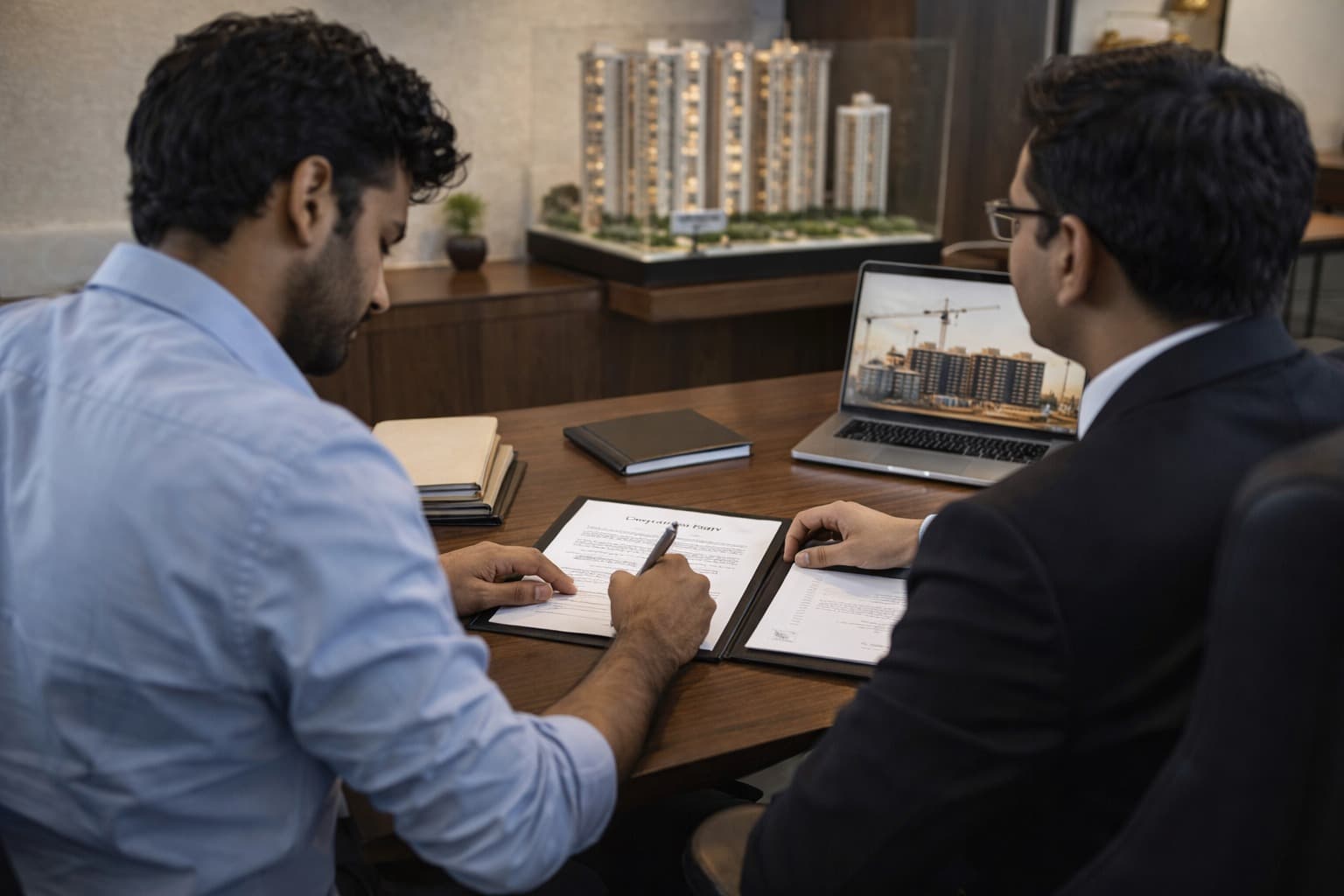
This does not mean JDA projects are inherently risky. Most complete without buyer-facing problems. But the risks are structural, not random. Knowing what to look for protects you before you commit your money.
RERA and What It Changed for JDA Buyers
RERA JDA oversight has materially improved buyer protection since 2017. Under RERA, every project built on a JDA land parcel must be registered with the state's Real Estate Regulatory Authority before any booking amount is collected. The RERA registration requires the developer to disclose the JDA, the landowner's details, the title status of the land, and all approvals obtained. This documentation is publicly available on the state RERA portal.
If a project is RERA-registered, the developer is bound by legally mandated timelines, construction quality standards and financial ring-fencing of your payments into a separate escrow account. Eighty percent of amounts collected from buyers must be deposited into this account and used only for construction of that specific project. This prevents a JDA developer from diverting your money to another project or paying off the landowner's dues from your booking.
Key Documents a Buyer Must Verify
Before signing any buyer agreement joint development project India, check four things independently, ideally with a property lawyer.
The first is the JDA itself. Ask the developer or their legal team for a copy. Check whether it is registered at the Sub-Registrar's office. An unregistered JDA is legally weaker and creates title uncertainty. Verify the duration of the JDA and whether it covers the specific survey number of the land your flat sits on.
The second is the encumbrance certificate for the land. This document, available from the Sub-Registrar's office, shows all registered transactions on the property going back years. Any existing mortgage, loan or lien on the landowner's title will appear here. If the land is pledged as collateral for a loan, your possession could be affected if the landowner defaults.
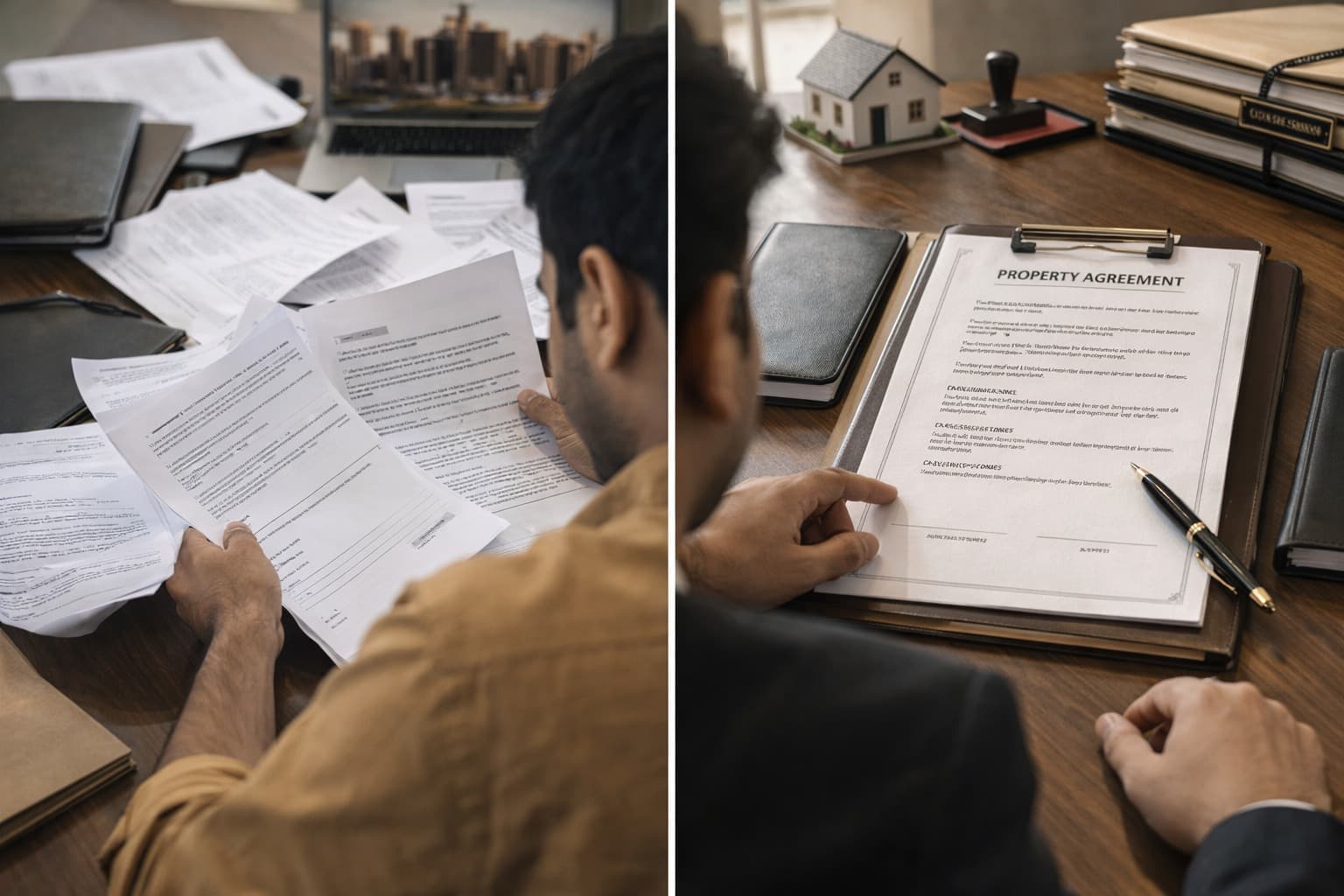
The third is the RERA registration certificate for the project. Cross-check the project details on your state RERA portal. Confirm that the land parcel's survey number in the RERA filing matches what is in the sale agreement you are being asked to sign.
The fourth is the construction lender's NOC if a bank or housing finance company has extended a construction finance loan to the developer. This No Objection Certificate ensures the lender has acknowledged buyer bookings and will not exercise its charge over the land in a way that affects your flat.
Red Flags in JDA Projects
Certain signals should prompt deeper scrutiny before you proceed. A developer who is unwilling to share the JDA document or who says it is confidential is not being straight with you. Delays in providing the RERA certificate number are another warning sign. A project where the landowner and developer have recently been in legal dispute, even if resolved, deserves extra title verification. And any project where the developer is asking for booking amounts before RERA registration is complete violates the law outright.
Summary
Joint development agreement projects form a substantial portion of India's new residential supply and are safe to buy when you approach them with the right checklist. Verify the JDA landowner builder document is registered, check the RERA project registration on your state portal, review the encumbrance certificate for existing liens, and obtain the construction lender's NOC if applicable. RERA JDA disclosure requirements mean all this information is legally mandated to be made available to you. JDA homebuyer risks are real but manageable. The buyers who face problems are almost always those who skipped verification because the project looked reputable on the surface. Do the paperwork. It takes a few days and can save years of grief.