
Built for Ideas: Rethinking Office Spaces for Media and Advertising Agencies in India
Summary
Indian media and advertising agencies require office spaces that reflect their creative identity and facilitate both collaboration and focused work. Strategic office design, incorporating flexibility, natural light, and acoustic zoning, becomes a crucial asset for attracting talent and clients.

Introduction
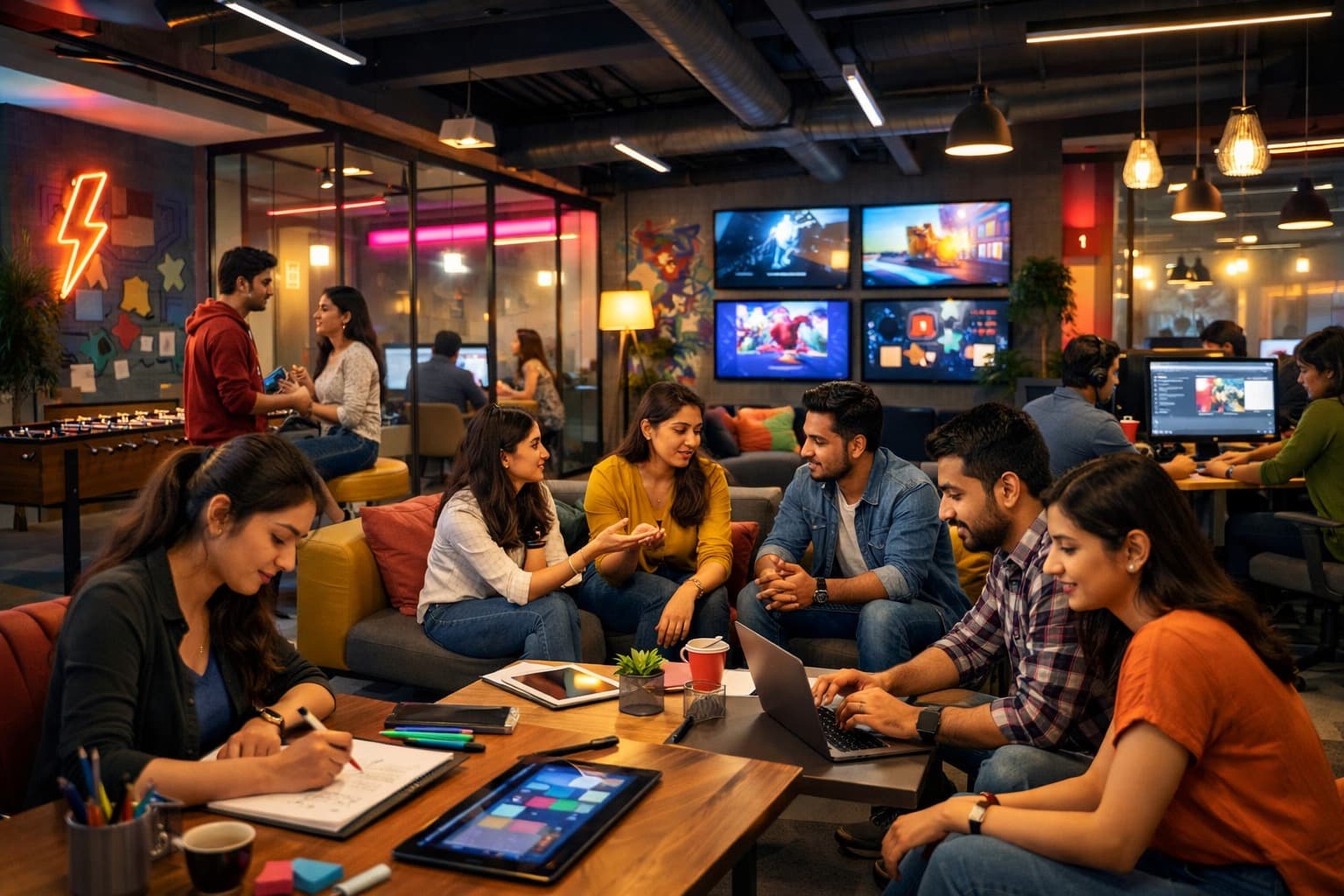
Walk into the office of a mid-size advertising agency in Mumbai or Bengaluru and you will notice almost immediately that it does not look like any other office on that floor. There is likely a wall covered in campaign printouts, a breakout room with mismatched furniture that somehow works, a corner that doubles as a podcast recording nook, and a meeting room with glass walls through which you can see the entire team. None of this is accidental. The physical workspace of a media and advertising agency is an intentional communication, a declaration of how the company thinks, works, and earns the trust of clients who are paying for ideas. In 2026, as India's advertising industry scales toward a ₹2 lakh crore market valuation and agencies compete on creativity, speed, and integrated capability, the office design conversation has never mattered more.
Why the Office Itself Is Part of the Brand
For a law firm or an accounting practice, the office is primarily functional. For a media or advertising agency, the office is also a pitch. When a client walks in for the first time, the space communicates the agency's taste, culture, and creative confidence before a single presentation slide appears. An office that feels generic, cluttered, or poorly lit sends a message no creative director would want to send. This is why the most competitive agencies in India, from the large multinational networks like Ogilvy and DDB Mudra to nimble independents like Schbang, invest disproportionately in how their physical spaces look, feel, and function.
The Tension Every Agency Office Must Resolve
The central design challenge for a media or advertising agency office is managing a genuine contradiction. Creative work requires openness, spontaneous collaboration, visual stimulation, and freedom of movement. But focused work, which is an equal part of the process whether that is writing copy, editing video, planning a media schedule, or building a data model, requires quiet, concentration, and acoustic separation from the surrounding energy.
Open-plan offices that sacrifice privacy for collaboration create spaces where nobody can think properly. Fully closed offices with rows of cabins kill the collision of ideas that advertising teams run on. The answer, increasingly, is zoned design with acoustic intelligence. The agency floor is divided into purpose-built areas: open collaboration zones for brainstorming and team huddles, semi-enclosed breakout pods for small-group work, soundproofed meeting rooms for client presentations and sensitive conversations, and focused desk zones where individuals can go deep without interruption.
Acoustic glass partitions have become particularly popular in creative office environments because they resolve this tension elegantly. They allow full visual connectivity across the space, so teams stay aware of each other and spontaneous collaboration remains possible, while providing genuine acoustic separation between zones. A copywriter in a glass-walled cabin can see the entire floor and feel part of the energy without being unable to concentrate.
Design Elements That Work for Creative Teams
Natural light is not a luxury in a media agency office. It is a productivity essential. Advertising and design professionals work with colour, typography, and visual materials where accurate light rendering matters. Beyond functional accuracy, research consistently shows that natural light reduces fatigue, lifts mood, and sustains creative output across a long working day. When evaluating commercial real estate, media agencies in Indian cities increasingly prioritise floor plates with generous window-to-wall ratios, east or north-facing orientations that avoid harsh afternoon glare, and open ceiling designs that maximise light penetration across the entire floor.
Flexibility in the physical layout is equally important. The work of an advertising agency shifts constantly between solo thinking, small-team creation, large internal reviews, and client-facing presentations. A floor plan that cannot accommodate all four modes, sometimes within the same day, forces compromises that reduce both quality and speed. Modular furniture systems, movable partitions, and multipurpose rooms that can reconfigure from a ten-person ideation session to a fifty-person town hall are the features that genuinely serve how agencies operate.
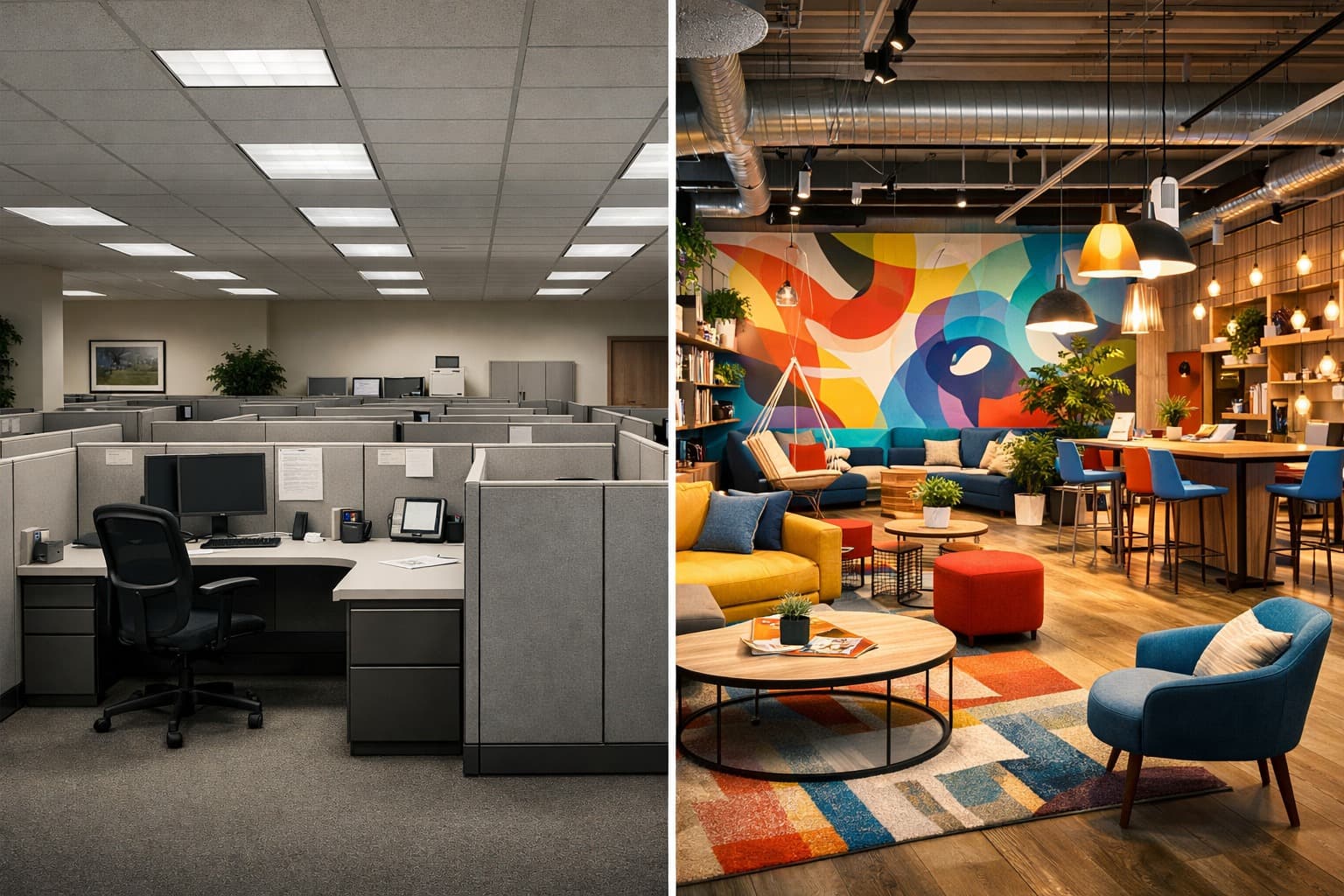
Branding the physical environment is another layer that distinguishes agency offices from generic commercial spaces. Bold colour choices that reflect the agency's personality, custom lettering on walls, campaign archives displayed as visual art, and material selections that communicate the firm's design sensibility all contribute to a workspace that feels alive and authentic. The risk is crossing from inspiring into distracting, which is why the best agency interiors balance visual energy with deliberate zones of calm.
What This Means for Commercial Real Estate Selection
The specific requirements of media and advertising agencies have real implications for how they approach commercial leasing. These firms tend to prioritise Grade-A floor plates in creative districts or central business areas, proximity to client offices in the same city, buildings that permit significant interior customisation, and floor plates large enough to house the full team on a single level, since splitting a creative agency across multiple floors kills the culture that drives the work.
In India's major markets including Mumbai's Bandra-Andheri corridor, Bengaluru's Indiranagar and Koramangala belt, and Gurugram's Cyber Hub vicinity, managed office operators have begun building specialist floors designed with media and creative agencies in mind, featuring high ceilings, exposed infrastructure aesthetics, better acoustic ratings, and flexible layout configurations that traditional office buildings do not offer.
Summary
Media and advertising agencies need office spaces that carry the same creative intelligence as the work they produce for clients. The right office design balances open collaboration with acoustic focus zones, maximises natural light, allows physical reconfiguration across different work modes, and communicates the agency's brand identity through every material and spatial choice. In India's competitive advertising landscape of 2026, the office itself has become a strategic asset, and the agencies that understand this are winning talent, clients, and creative reputation simultaneously.