
Before You Sign Anything: Every Question Worth Asking at a Builder's Site Office
Summary
Don't sign anything at a builder's site office without asking key questions. This guide ensures an informed purchase by covering crucial inquiries about legal clearances, land title, possession timelines, construction quality, and all potential hidden costs.

The Visit Most Buyers Treat Too Casually
There is a version of a site office visit that most first-time homebuyers go through. They look at the sample flat, admire the kitchen fittings, nod through the sales pitch, and walk out with a brochure and a booking form. Three years later, when possession gets delayed or the amenities are different from what they remember, they wish someone had told them what to actually ask.
A builder's site office is where sales happen. It is designed to close deals, not answer uncomfortable questions. That does not mean you cannot get honest answers there. It just means you have to ask the right things with enough confidence that vague responses become obvious.
Start With the Fundamentals: Legal Clearances
The very first thing you ask is whether the project is registered under RERA, the Real Estate Regulatory Authority of your state. This is not optional. Any residential project above a certain size must be registered, and the developer must maintain a public-facing project page on the state RERA portal. Ask for the RERA registration number on the spot and check it yourself later at home.
Beyond RERA, ask specifically about the Commencement Certificate and the Environmental Clearance. A commencement certificate means the local civic authority has confirmed that construction can legally begin on that land. Without it, any construction you see is technically illegal. Many buyers in the past have made the mistake of booking flats in projects where the paperwork was still in process. Do not be one of them.
Land Title: The Question That Separates Serious Builders From the Rest
Ask the salesperson directly: is the land freehold or leasehold? If it is leasehold, who is the original landowner and what is the lease period? Many projects in Indian cities sit on land that has been taken on a long-term lease from a private party, a trust, or even a government body. As a buyer, you inherit that lease arrangement.
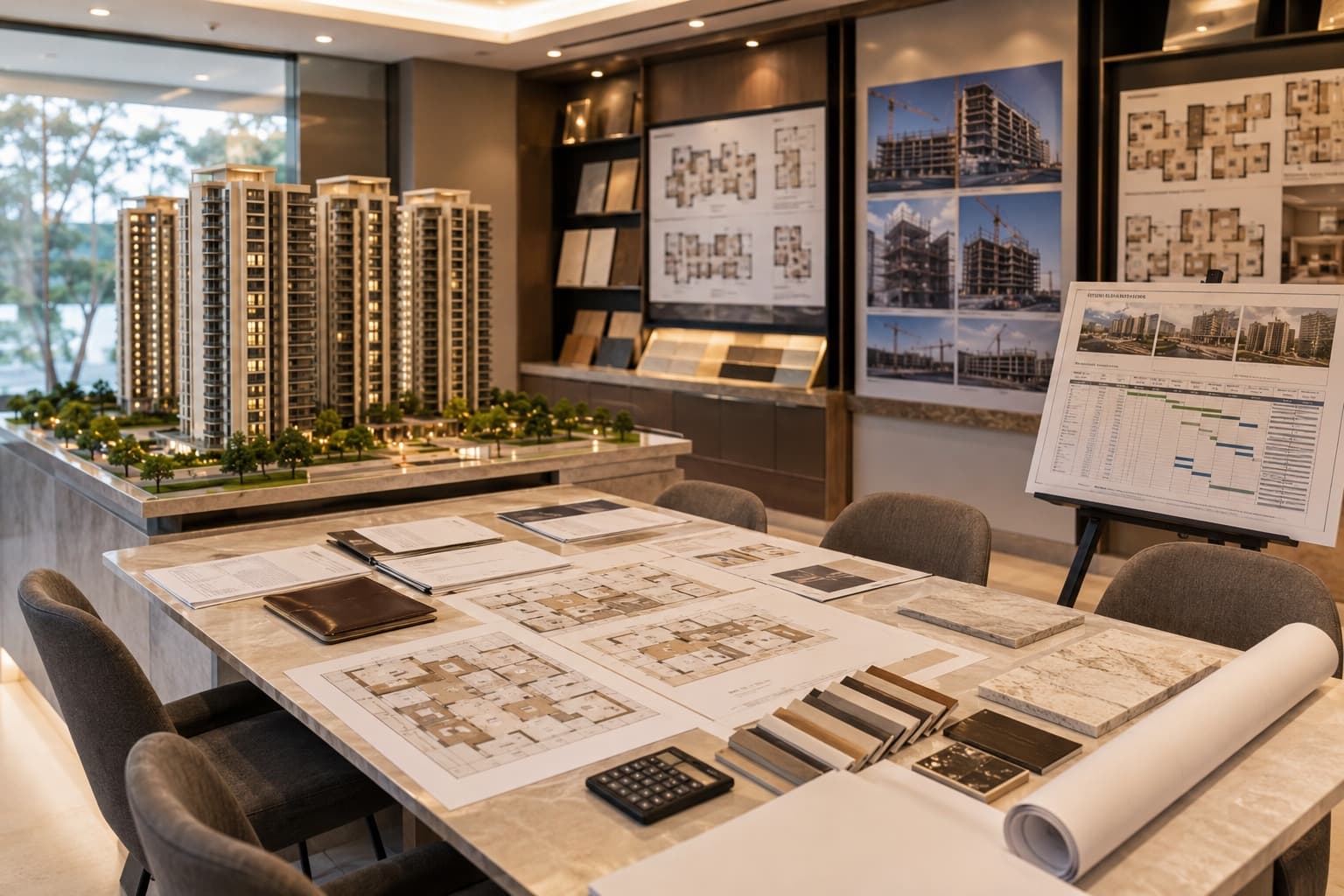
Ask whether the land title has been verified by an independent advocate. Reputable developers will have no hesitation sharing the broad strokes of this. If the answer involves excessive hedging, that is information too.
Possession Timeline: Get the Exact Date and the Penalty Clause
Every developer will give you a possession date. What you need to press for is the RERA-registered possession date, which is a legally binding commitment under the Act. If possession is delayed beyond that date, the builder is required to pay you compensation at a rate specified under RERA.
Ask clearly: what compensation will you receive per month if possession is delayed? What was the possession date committed in the RERA filing? These are not aggressive questions. They are basic consumer rights. A builder comfortable with accountability will answer them without flinching.
Construction Quality: Ask What You Cannot See
The sample flat shows you finishes. It does not tell you anything about the structural quality underneath. Ask specifically what grade of concrete has been used in the structure. Ask about the brand and specification of electrical wiring, plumbing pipes, and waterproofing material. These things cost developers real money and are often where corners get cut.
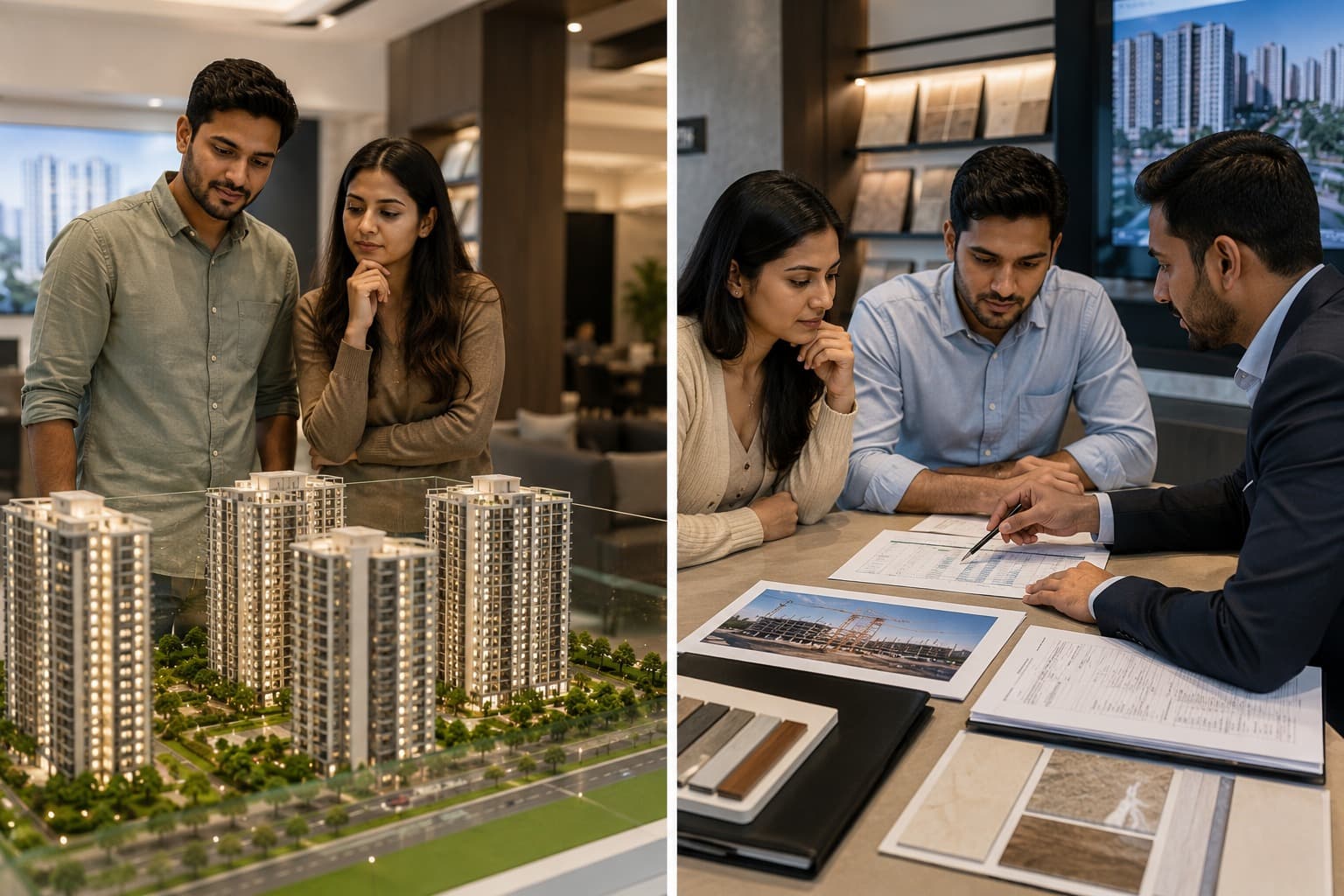
Ask whether the project has a structural engineer's certificate from a third party. Ask if there is a third-party quality audit being conducted at various stages of construction. These are not standard disclosures. But they are standard practices among the better developers, and asking the question tells you something about how seriously the builder takes quality even if the answer is incomplete.
Hidden Costs: The Number That Changes After You Commit
The price quoted in a site office is almost never the final price you pay. Ask the salesperson to give you a full cost breakup in writing that includes stamp duty, registration charges, GST on under-construction property, maintenance deposit, parking charges, clubhouse membership, and any other society formation fees. Get this in writing before you pay the booking amount.
Many buyers have been caught off guard by charges that added 15 to 20 percent to the headline price. In some cities, combined with stamp duty and registration, the total outgo can be 25 percent higher than the sticker price of the flat.
Summary
Walking into a builder's site office prepared with the right questions is the difference between an informed purchase and an expensive regret. Ask about RERA registration, land title, the commencement certificate, the RERA-committed possession date and its penalty clause, construction material specifications, and a complete written cost breakup before you pay a single rupee. The best developers will welcome every question. The ones who deflect or delay on basics are telling you something important about how the next three years of your homebuying journey will feel.