
Balcony Safety Inspection: A Homebuyer's Guide
Summary
Ensure balcony safety before buying! This guide provides practical inspection tips for homebuyers, covering structural integrity, railings, flooring, waterproofing, and electricals. Identify defects early and avoid costly repairs.

Introduction
Balconies add light, ventilation, and open space to a home, but they can also become safety risks if not properly constructed or maintained. Many homebuyers focus on the view or size of the balcony and ignore structural and safety aspects. A detailed balcony safety inspection helps buyers understand whether the balcony is secure for daily use. This guide explains simple and practical balcony safety inspection tips for Indian homebuyers so they can identify risks early and make informed decisions during a site visit.
Why Balcony Safety Matters in Residential Homes
Balconies are exposed to weather, weight load, and constant use. Over time, poor construction or weak materials can lead to cracks, loose railings, or water seepage. For families with children or elderly members, balcony safety becomes even more critical. A proper home balcony safety check reduces the risk of accidents and long term repair costs. Buyers should treat balcony inspection with the same seriousness as any other structural part of the home.
Understanding a Balcony Safety Inspection
A balcony safety inspection is a systematic review of the balcony’s structure, railings, flooring, and drainage. It ensures that the balcony is stable, safe, and compliant with basic safety expectations. Using a balcony inspection checklist helps buyers avoid missing important details. Instead of judging by appearance alone, buyers can assess real safety and durability. This approach is especially useful during a flat balcony inspection before finalizing the purchase.
Structural Strength and Load Capacity
The first step in any balcony safety inspection is checking structural strength. Look for visible cracks in the slab or supporting beams. Hairline cracks may be normal, but wide or uneven cracks can indicate deeper issues. Ask about the load capacity of the balcony, especially if you plan to place furniture or planters. Structural weakness is one of the most serious balcony defects and should never be ignored by homebuyers.
Railings, Height, and Guard Safety
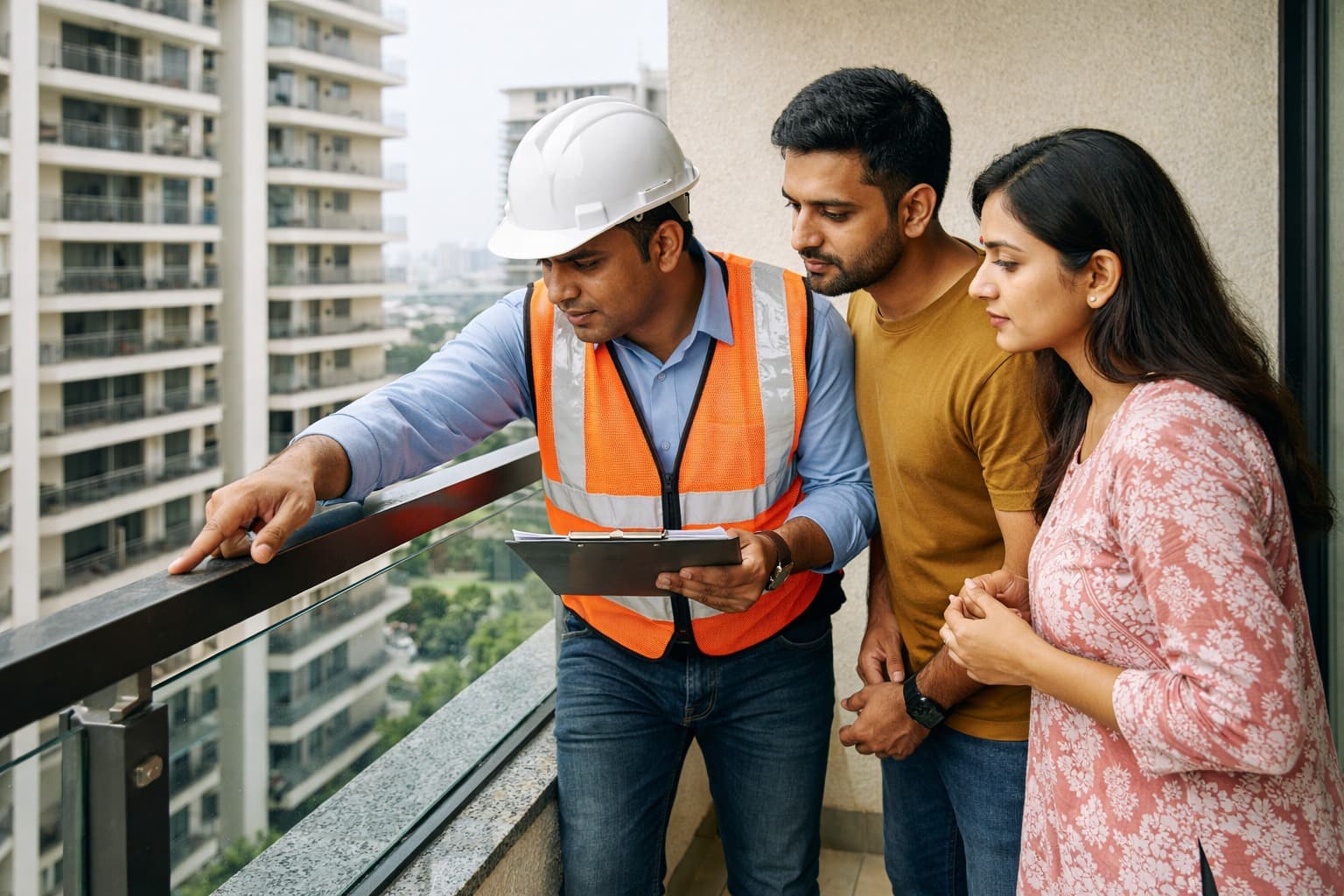
Railings are the primary safety barrier in a balcony. Check that the railing height is sufficient and feels firm when pressure is applied. Loose or shaking railings are a major risk. The gaps between railing bars should be narrow enough to prevent children from slipping through. Glass railings should be made of toughened safety glass. These checks are essential parts of what to check for balcony safety in flats.
Flooring, Surface Grip, and Drainage
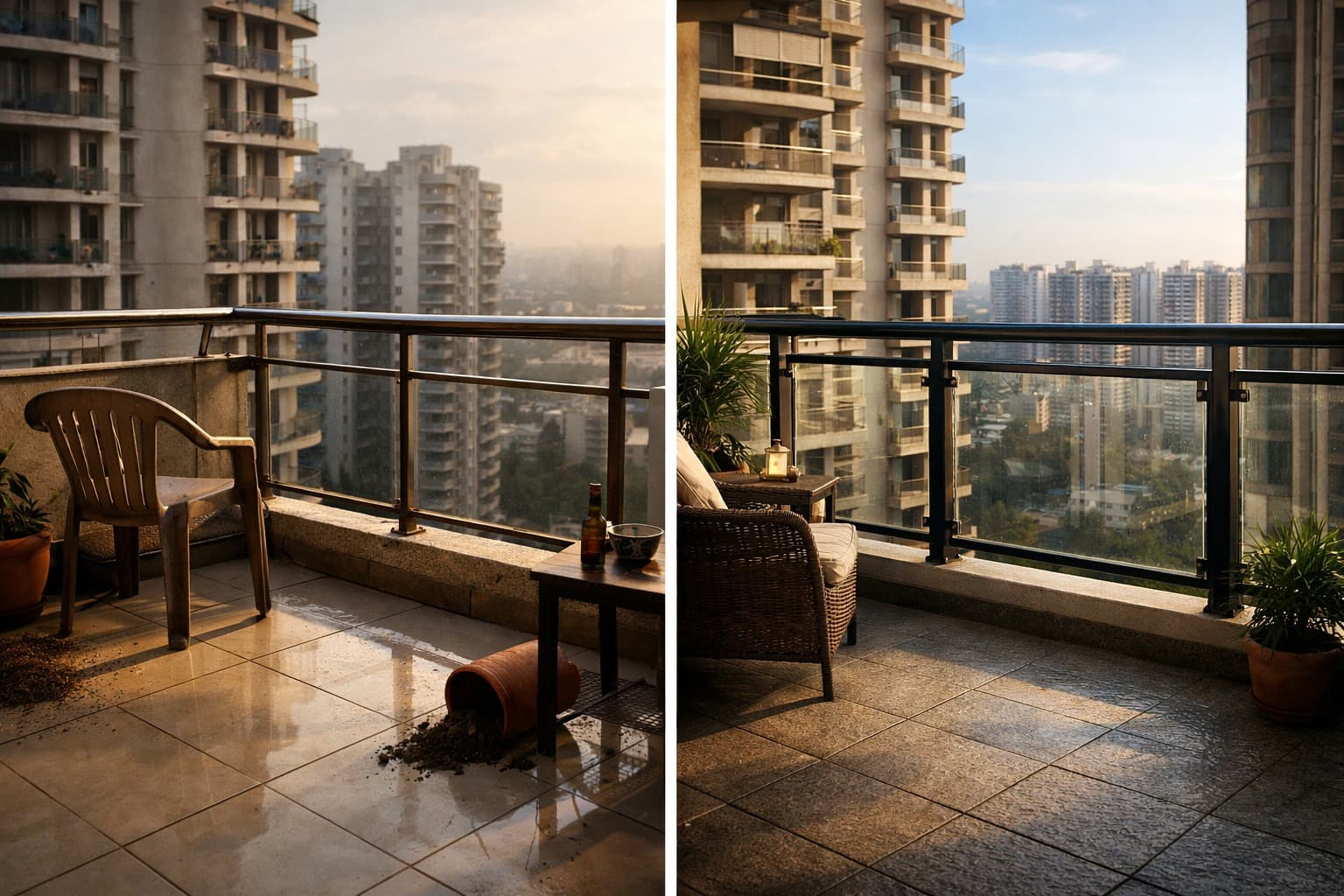
Balcony flooring must be slip resistant, especially during monsoon seasons. Smooth or polished tiles can become dangerous when wet. Check for proper slope so that rainwater flows towards the drain and does not collect in corners. Poor drainage leads to water stagnation, seepage, and structural damage. Flooring and drainage issues are common balcony defects in apartments and can cause long term safety and maintenance problems.
Waterproofing and Seepage Checks
Since balconies are exposed to rain and sunlight, waterproofing quality is critical. Look for signs of damp patches, peeling paint, or water stains on the balcony floor and nearby walls. Seepage can weaken the structure and affect rooms below. During a balcony safety inspection during home visit, ask about waterproofing treatment and warranty. Addressing waterproofing issues later can be costly and disruptive.
Electrical Fittings and External Fixtures
Many balconies now include lights, plug points, or outdoor fixtures. Check that electrical fittings are weather resistant and properly sealed. Exposed wires or loose fittings are safety hazards, especially during rains. Any external fixtures such as grills, planters, or AC units should be securely fixed. Electrical safety is an often ignored part of residential balcony safety but plays a key role in accident prevention.
Usage Planning and Safety for Families
Buyers should think about how the balcony will be used daily. If children or pets are present, additional safety measures like netting may be required. Elderly residents need railings that offer firm support. Understanding usage helps buyers judge whether the balcony design supports safe living. A balcony safety inspection checklist before buying a home should always consider the household’s specific needs.
Common Balcony Defects in New Apartments
Even in new constructions, balcony defects are not uncommon. These include uneven flooring, poor railing installation, inadequate drainage slope, and low quality waterproofing. Sometimes, safety norms are compromised to improve design aesthetics. Identifying these issues early allows buyers to request corrections. A thorough balcony inspection protects buyers from unexpected repairs after possession.
When and How Often to Inspect Balconies
Balconies should be inspected during the initial site visit and again before possession. Buyers can conduct basic checks themselves, but professional inspection is helpful for high rise apartments. Regular inspections after moving in also help maintain safety. A proactive approach to balcony safety reduces risks and extends the life of the structure.
Summary
Balconies enhance comfort but can pose safety risks if ignored during property inspection. This article explains practical balcony safety inspection tips for homebuyers, covering structure, railings, flooring, waterproofing, and electrical fittings. It highlights common balcony defects in apartments and explains what to check for balcony safety in flats. By following a simple balcony inspection checklist, buyers can identify risks early, avoid costly repairs, and ensure the balcony remains a safe, usable, and durable part of their home for years to come.