
A Real Look at Property Registration in India
Summary
Property registration in India is the vital step for legal ownership, requiring pre-payment of stamp duty, meticulous drafting of the sale deed, and a mandatory in-person visit to the sub-registrar with all parties. Post-registration, initiating mutation of property tax records is crucial.

Most Buyers Are Unprepared for This Day
You spend months searching for the right flat. You negotiate the price, sort out your home loan, and get the builder agreement signed. And then you find out there is one more day that matters more than all of those combined. Property registration India is the moment when the government formally acknowledges that you are the owner. Everything before that day is just paperwork between you and the seller.
A lot of first-time buyers walk into what happens on property registration day in India with very little idea of what to expect. This piece is for exactly those people.
What Needs to Happen Before You Even Leave the House
Registration day does not start at the sub-registrar's office. It actually starts weeks earlier, when you pay stamp duty India.
Stamp duty is a state government tax charged on the transaction value of your property, or the government's circle rate for that locality, whichever is higher. It typically runs between 4 and 7 percent depending on the state, with most states offering a one to two percent concession for women buyers. Maharashtra, Delhi, Karnataka, and Telangana all have different rates, so checking the current figure on your state's official IGRS or registration portal before signing anything is non-negotiable.
Payment is done digitally in most states through e-stamping on the SHCIL portal or through designated bank branches. You receive an e-stamp certificate with a unique number after payment. That certificate travels with you to the sub-registrar's office as proof.
The Sale Deed: Do Not Treat This Lightly
The sale deed registration process pivots entirely on one document: the sale deed itself. This is not a form you download and fill. It is a legal instrument that records the full description of your property, the agreed price, how payment was made, and what both parties have agreed to. Every single detail needs to be accurate.
Hire a property lawyer to draft or at least review this document. A wrongly spelled name or an incorrect survey number in the registered deed requires a separate correction deed to fix later, which costs time and additional expense. That small lawyer's fee upfront is insurance on your entire investment.
What Actually Happens at the Sub-Registrar's Office
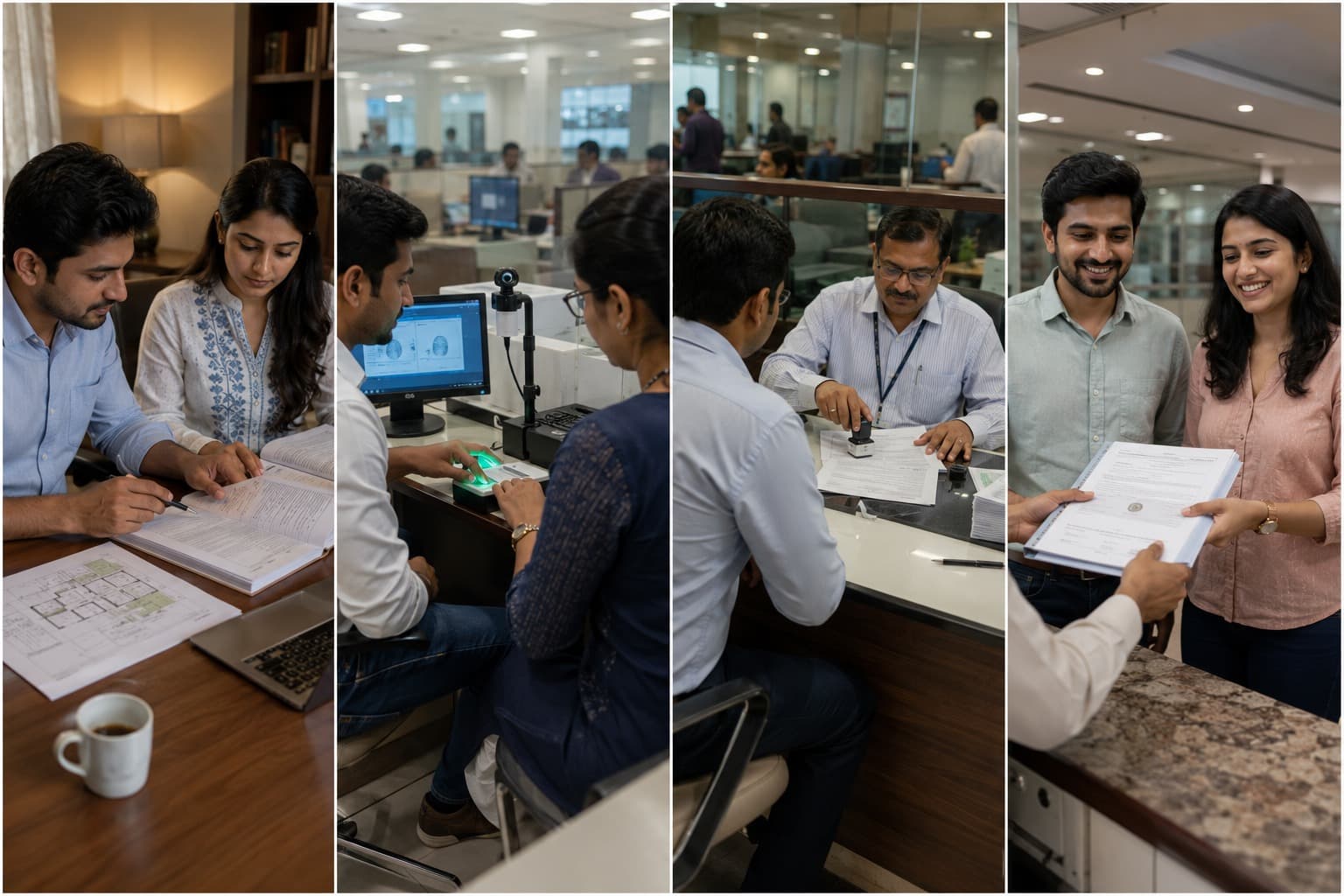
On registration day, everyone who matters must be physically present. The buyer, the seller, and two witnesses. There are no shortcuts here. How to register property in India requires this in-person element, and no state has removed this requirement regardless of how digital the rest of the process has become.
What to carry: your Aadhaar card, PAN card, passport photographs, the original e-stamp certificate, the drafted and signed sale deed, your home loan sanction letter if applicable, and any earlier title documents the seller has passed on to you. The documents needed for property registration list is longer than most people expect, so preparing a checklist the night before saves a lot of stress.

At the office, a staff member checks the documents before you are called in. The sub-registrar then verifies identities through biometric scanning in most states. Both parties sign the deed in the officer's presence. The officer records the transaction in the official register and stamps the document.
In most metro cities, you leave with either the registered deed on the same day or collect it within two to three working days.
One Step Most People Forget
Registration gives you legal ownership. But your name does not automatically update in the municipal property tax records. That requires a separate application called mutation or khata transfer, depending on the state. Until mutation is done, property tax notices continue going to the previous owner's name. File for it within thirty days of registration.
Summary
Property registration process India 2026 involves paying stamp duty India before your appointment, arriving at the sub registrar office with the buyer, seller, and two witnesses, completing biometric verification, and submitting the sale deed along with all supporting documents. Understanding what happens on property registration day in India and keeping your sale deed registration paperwork airtight ensures you walk out with legal ownership that holds in any court. Do not treat registration as a formality. It is the only moment that truly makes the property yours.