
Why Global Money Is Quietly Piling Into Chennai and Bengaluru Right Now
Summary
India's real estate attracted a significant USD 2.9 billion in institutional investment in Q2 2026, a 70% surge, with Chennai and Bengaluru quietly drawing 27% of H1 inflows. This growth is fueled by strong IT demand, consistent office leasing, and improving infrastructure, alongside a rise in domestic capital and sustained foreign investor confidence.

Introduction
Numbers rarely tell a complete story on their own, but this one comes close. India real estate pulled in USD 2.9 billion in institutional money during the second quarter of 2026, a jump of 70 percent over the same period last year. That's not a small bump. That's the kind of number that makes global fund managers sit up and start dialling their India teams.
The Headline Number
According to a report from property consultancy Colliers, this growth pushed total inflows for the first half of 2026 to USD 4.5 billion, marking a six-year high for the sector. Even with global uncertainty swirling because of tensions in West Asia, capital kept finding its way into Indian buildings. That resilience alone is worth noting.
Domestic Money Finally Shows Up
Here's the part that changes the narrative a bit. Domestic investors more than doubled their contribution, reaching USD 1.33 billion and accounting for 46 percent of the quarter's total. For years, foreign funds dominated big-ticket real estate investment in India. That balance is shifting, and it suggests Indian institutions, insurers, and alternative investment funds are finally backing their own conviction with real capital.
Why Foreign Investors Stayed the Course
Foreign capital still edged ahead at USD 1.54 billion, or 54 percent of the quarter's inflows. What's notable is that this held up despite genuine global headwinds. Sovereign wealth funds and pension funds tend to think in decades, not quarters, and India's growth story, backed by an IMF upgrade to its FY2027 GDP forecast, gives them enough reason to keep writing cheques.

The Big Tickets Behind the Numbers
A handful of large transactions did the heavy lifting. The Abu Dhabi Investment Authority put USD 675 million into a mixed-use portfolio managed by Kotak Alternate Asset Managers, the single biggest deal of the quarter. Canada Pension Plan Investment Board followed with USD 440 million into data infrastructure firm CtrlS. Deals of this size don't happen without months of due diligence, so their timing tells you these investors had been planning entry points well before the quarter even began.
Chennai and Bengaluru's Quiet Dominance
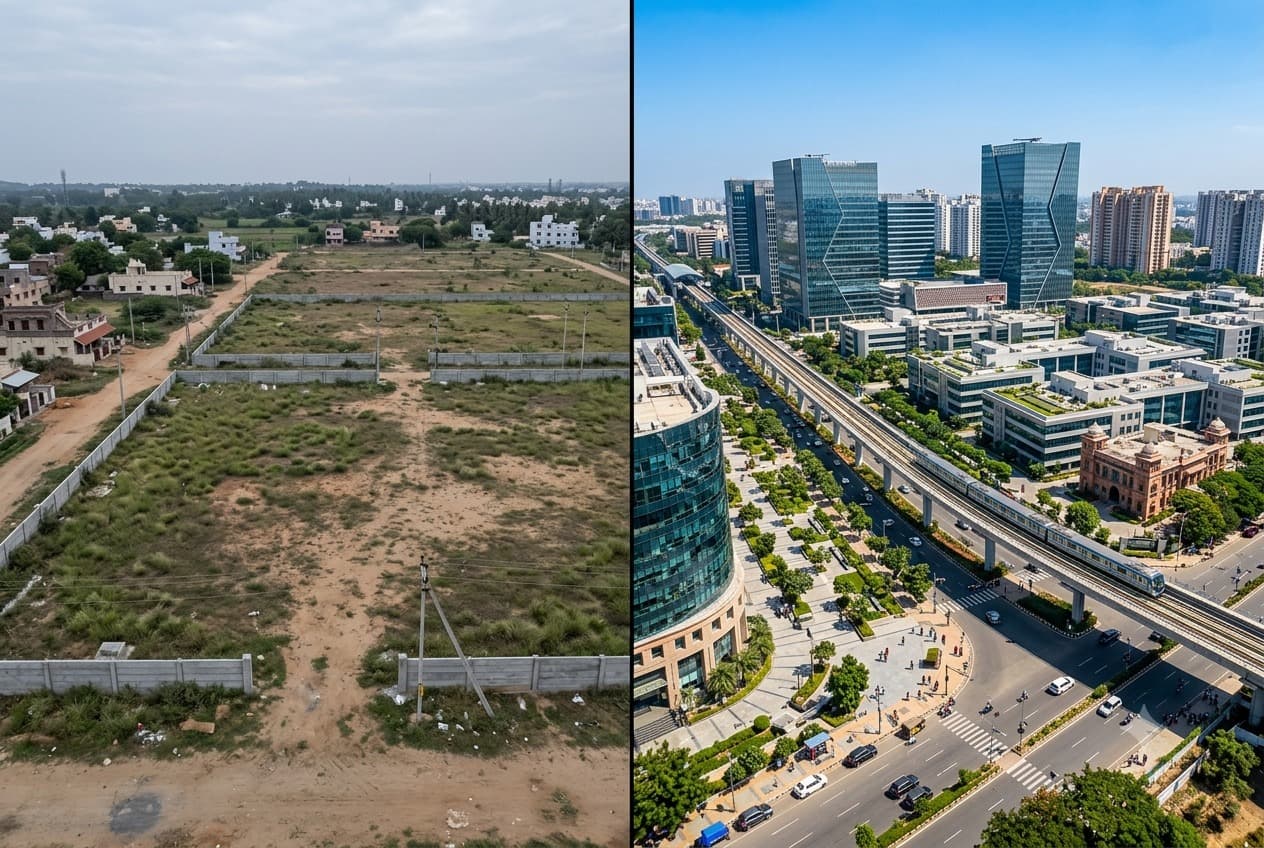
While Mumbai and Delhi NCR usually hog the spotlight, Chennai and Bengaluru together pulled in about USD 1.2 billion between January and June 2026, roughly 27 percent of all inflows. That's a significant share for two cities that don't always make the front page of national real estate coverage. Why these two? Strong IT and manufacturing bases, consistent office leasing demand, and infrastructure that has genuinely improved over the last few years.
Office Space Is Still the Favourite Child
Across both cities, office assets accounted for somewhere between 85 and 95 percent of investment activity. Nationally too, office space remained the top draw, pulling in roughly USD 1.9 billion during the first half and making up over 40 percent of all inflows. Investors clearly still see steady rental income from operational office buildings as one of the safer bets on the table.
Residential Investment Takes a Back Seat
Not every segment is having a good year. Residential investment actually fell 43 percent year-on-year to USD 0.5 billion in the first half of 2026. Rising construction costs and slower home sales in certain pockets appear to be making institutional investors more cautious about funding new housing projects, even as end-user demand continues elsewhere.
Smaller Cities Are Getting Noticed Too
Perhaps the most encouraging thread in this report is the spread of capital beyond the usual metros. Cities like Coimbatore, Kochi, Hosur, Coorg, and even Ujjain saw meaningful investment activity in hospitality, warehousing, and residential projects. Investors are clearly hunting for value beyond saturated Tier 1 markets, and smaller cities with improving connectivity are starting to benefit.
Summary
India real estate attracted USD 2.9 billion in institutional investment during Q2 2026, up 70 percent year-on-year, with Chennai and Bengaluru together driving 27 percent of inflows through strong office demand. Domestic capital more than doubled while foreign investors stayed committed despite global uncertainty. Office assets led overall investment, residential funding cooled, and smaller cities began drawing fresh institutional interest, signalling a maturing and increasingly diversified Indian property market.
Video will be embedded from: https://www.youtube.com/watch?v=iJ2_u7Gb88w