
WeWork India's Rs 475 Crore TMUS Deal: A Landmark Transaction in Hyderabad
Summary
WeWork India secured a Rs 475 crore managed office deal with TMUS India in Hyderabad, signaling a shift towards managed workspaces for large corporations. This landmark transaction highlights the operational simplicity and talent access driving enterprise demand for flexible office solutions.

Introduction
A single managed office contract worth Rs 475.49 crore. One client. Five floors. 1,507 workstations. That is the headline version of what WeWork India announced on March 19, 2026. But the more interesting story lives inside what this deal represents for the broader trajectory of how large global corporations are choosing to set up and run their India operations. TMUS India, the Indian subsidiary of T-Mobile US, did not call up a broker and start negotiating a direct ten-year lease on a blank floor plate. It handed the entire problem, design, build, operations, and management, to a specialist operator and committed Rs 475 crore over five years for the privilege. That choice is the real story here.
What the Deal Actually Involves
The contract covers 250,348 square feet across five floors at Phoenix H10, one of Hyderabad's premium Grade A office destinations in the city's IT corridor. WeWork India will design, develop, and manage the workspace entirely on TMUS India's behalf. The 60-month total tenure includes a committed lock-in of 42 months from the client side, which means TMUS has given WeWork meaningful revenue visibility while retaining some flexibility in the outer years of the arrangement.
Fit-out and operationalisation are scheduled for completion by May 21, 2026. The pace is tight but WeWork has been running similar large-format enterprise installations long enough to have the execution muscle for it. The facility will house 1,507 workstations, implying a per-workstation contract value of approximately Rs 31.5 lakh over the tenure.
Why TMUS Chose Managed Over Direct
This is the question worth sitting with. A company the size of T-Mobile US has the balance sheet to negotiate a direct long-term lease on 250,000 square feet anywhere in Hyderabad. It could hire a fit-out contractor, appoint a facilities management team, and build a corporate campus under its own control. Companies have done exactly that in India for decades.

The choice to go managed instead reflects a shift in corporate real estate philosophy that has been building for several years. Flexible workspace Hyderabad demand from enterprise clients is no longer about cost-cutting or uncertainty hedging. It is about operational simplicity. A company that wants its Hyderabad team focused on delivering telecom technology products and services does not want to spend management bandwidth on air conditioning contracts, housekeeping rosters, and fire safety compliance. A managed office operator takes all of that off the table.
WeWork India's Financial Turnaround as Context
This deal lands at a particularly meaningful moment for WeWork India as a publicly listed entity. In Q3 FY26 the company reported a net profit of Rs 16.7 crore against a loss of Rs 83.25 crore in the same quarter a year earlier. Revenue in the same quarter reached Rs 634 crore, up 28.97% year on year. The business that spent years burning cash to build its centre footprint has now crossed into consistent profitability, and the enterprise managed office segment is the engine driving that shift.
The TMUS deal adds meaningful annuity income to an order book that has been building through similar enterprise wins. WeWork India currently operates 73 centres across eight cities with 8.2 million square feet of total managed space and over 1,21,000 desks. Utilisation sits at 83.9% which is a healthy level that leaves room for further monetisation without creating the demand shortage that would require aggressive discounting.
Phoenix H10 and Hyderabad's Office Market
Phoenix H10 is part of the Phoenix Group's commercial portfolio in Hyderabad and sits in the HITEC City and Madhapur belt that has been the city's technology employment spine for over two decades. Location choice for a 1,500-plus seat enterprise operation is not accidental. TMUS India needs proximity to a talent pool of software engineers, data analysts, and technology professionals. Hyderabad's HITEC City corridor has the highest concentration of exactly that workforce profile anywhere in the city.
Hyderabad's office market absorbed over 8 million square feet in 2025, making it one of India's top three commercial absorption markets. The Hyderabad managed office market has been outperforming several other cities in terms of enterprise deal flow, driven by global capability centres and technology firms that find the city's talent depth and operating cost profile more attractive than Bengaluru's increasingly expensive alternatives.
The Broader Managed Office Story This Deal Confirms
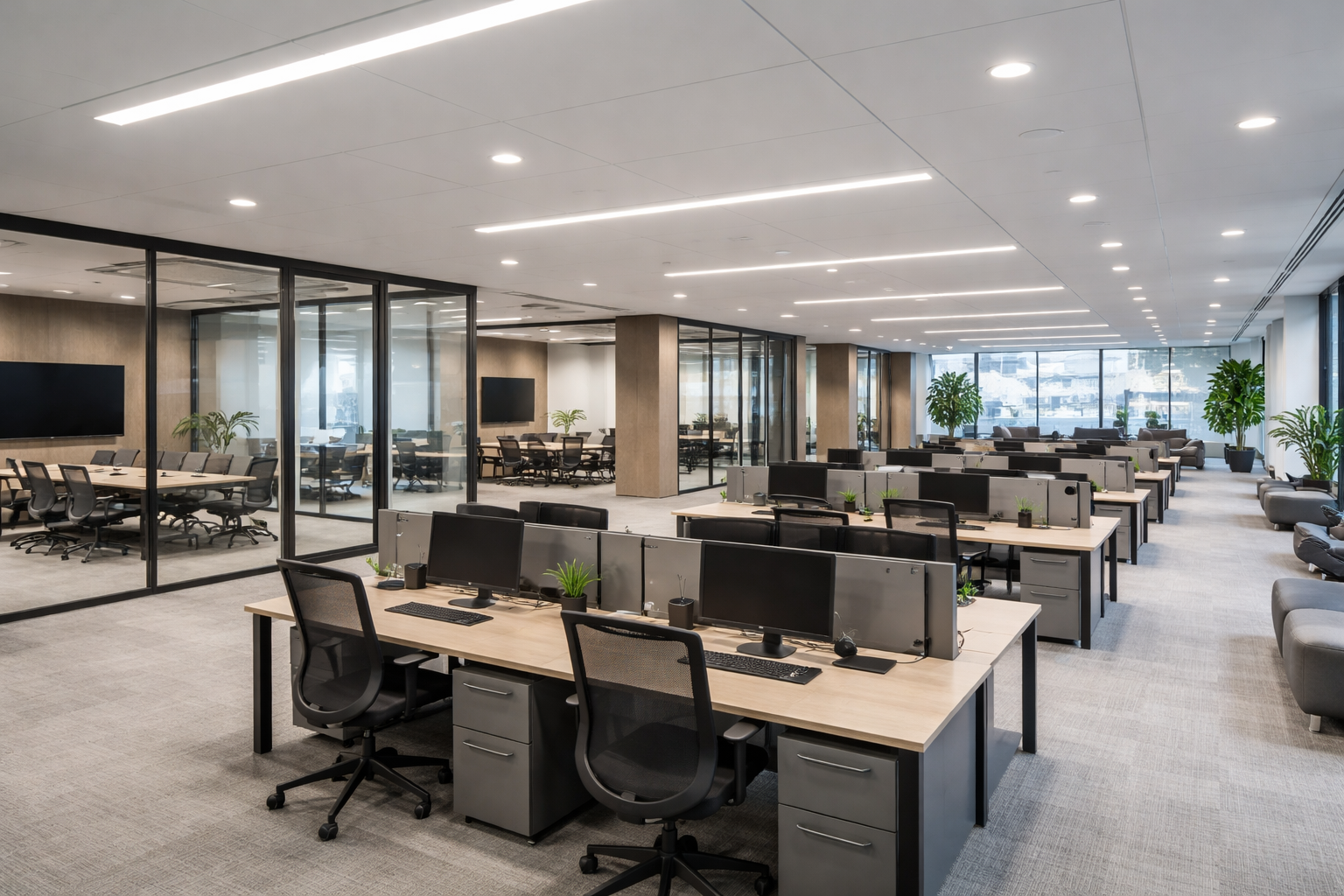
WeWork India is not the only operator seeing this dynamic. Smartworks, Awfis, and Enzyme are all posting improved enterprise deal flow. But WeWork's TMUS contract at Rs 475 crore is the largest single managed office announcement in India in recent months and it carries a credibility weight that smaller deals cannot match.
When a Fortune 500 subsidiary commits to a five-year managed office relationship at this scale, it validates the entire model for every other global company evaluating India expansion. The question shifts from whether managed office is a serious option to which operator and which location makes the most sense.
Summary
WeWork India's Rs 475.49 crore managed office deal with TMUS India at Phoenix H10 Hyderabad is a landmark enterprise contract that confirms the structural shift from direct leasing to professionally managed workspace solutions among large global companies in India. The 250,348 square foot, 1,507-workstation facility reflects TMUS's confidence in both WeWork India's execution capability and Hyderabad's talent and infrastructure depth. For India's flexible workspace sector, this transaction marks another step toward enterprise managed offices becoming the default choice for large-scale corporate real estate decisions.
Video will be embedded from: https://www.youtube.com/watch?v=HnKEKsTzc18
Video will be embedded from: https://www.youtube.com/watch?v=HnKEKsTzc18&t=22s