
Understanding Stamp Duty: A Comprehensive Guide for Property Buyers
Summary
Stamp duty is a mandatory tax for property purchases, legally validating ownership transfer. Understanding its calculation, exemptions, and legal importance ensures a smooth, secure home-buying experience and protects buyers from disputes.

Introduction
Buying a home involves more than just paying the property price. Several legal and financial components must be completed for the purchase to be valid. One of the most essential components is stamp duty, a government-imposed tax that officially records the transfer of ownership. Understanding what is stamp duty and why it matters for property buyers helps homebuyers make informed financial decisions and avoid any legal issues during registration.
Meaning of Stamp Duty
Stamp duty is a tax paid to the government when a property is bought or transferred. It is charged on the transaction value of the property and acts as legal proof of the buyer’s ownership. The stamp duty meaning can be explained simply as the fee that makes a property purchase legally recognised. Without paying stamp duty, the sale agreement is not considered valid, and the buyer does not receive full legal rights over the property.
Why Stamp Duty Exists
Stamp duty helps maintain transparency in property transactions and supports government revenue for infrastructure development. The importance of stamp duty in real estate lies in ensuring that all transfers are documented and legally enforceable. It also helps prevent disputes, fraudulent transfers, and unrecorded ownership claims. This tax plays a major role in regulating and securing the property market.
How Stamp Duty Is Calculated
Stamp duty is calculated as a percentage of the property's value. Different states in India follow different rates, and even within a state, the rate may vary based on location, property type, and buyer category. Understanding how stamp duty works in property purchase requires knowing the following factors that influence the amount:• Ready reckoner (circle) rate or agreement value• Type of property—residential or commercial• Property usage• Gender of the buyer (some states give women lower rates)• Age and eligibility for concessions
The higher of the agreement value or government-assessed value is used to calculate the tax.
Stamp Duty vs Registration Charges
Many buyers get confused between stamp duty and registration fees. Stamp duty is the tax paid for legal validity, whereas registration charges are fees paid to record the property at the sub-registrar’s office. Together, they complete the stamp duty and property registration process, making the buyer the legally recognised owner.

Legal Importance of Stamp Duty
If a buyer does not pay stamp duty, the sale agreement is considered incomplete. It cannot be used as evidence in court, and the buyer cannot claim ownership. This is why stamp duty charges are critical in real estate transactions. Properly stamped documents protect buyers from disputes, challenges, or claims by third parties. It also proves the value and nature of the transaction.
When Stamp Duty Must Be Paid
Stamp duty must be paid before signing the sale deed or at the time of registration. Delay in payment may lead to penalties. The stamp duty rules for homebuyers require complete payment for registration to occur. Once duty is paid and the document is registered, the buyer receives a legally enforceable title.
Ways to Pay Stamp Duty
Modern systems allow buyers to pay stamp duty through various convenient methods:• E-stamping via authorised banks• Physical stamp papers• Franking at authorised centres• Online payment portals on state government websites
This flexibility simplifies the process and ensures that the payment is recorded safely and accurately.
Exemptions and Concessions
Some states offer stamp duty concessions to specific groups such as women, senior citizens, first-time buyers, or affordable housing beneficiaries. Understanding how homebuyers can save on stamp duty through exemptions and government policies helps reduce the overall purchase cost. Occasional government schemes or festive discounts may also provide temporary reductions in stamp duty rates.
Impact of Stamp Duty on Property Budget
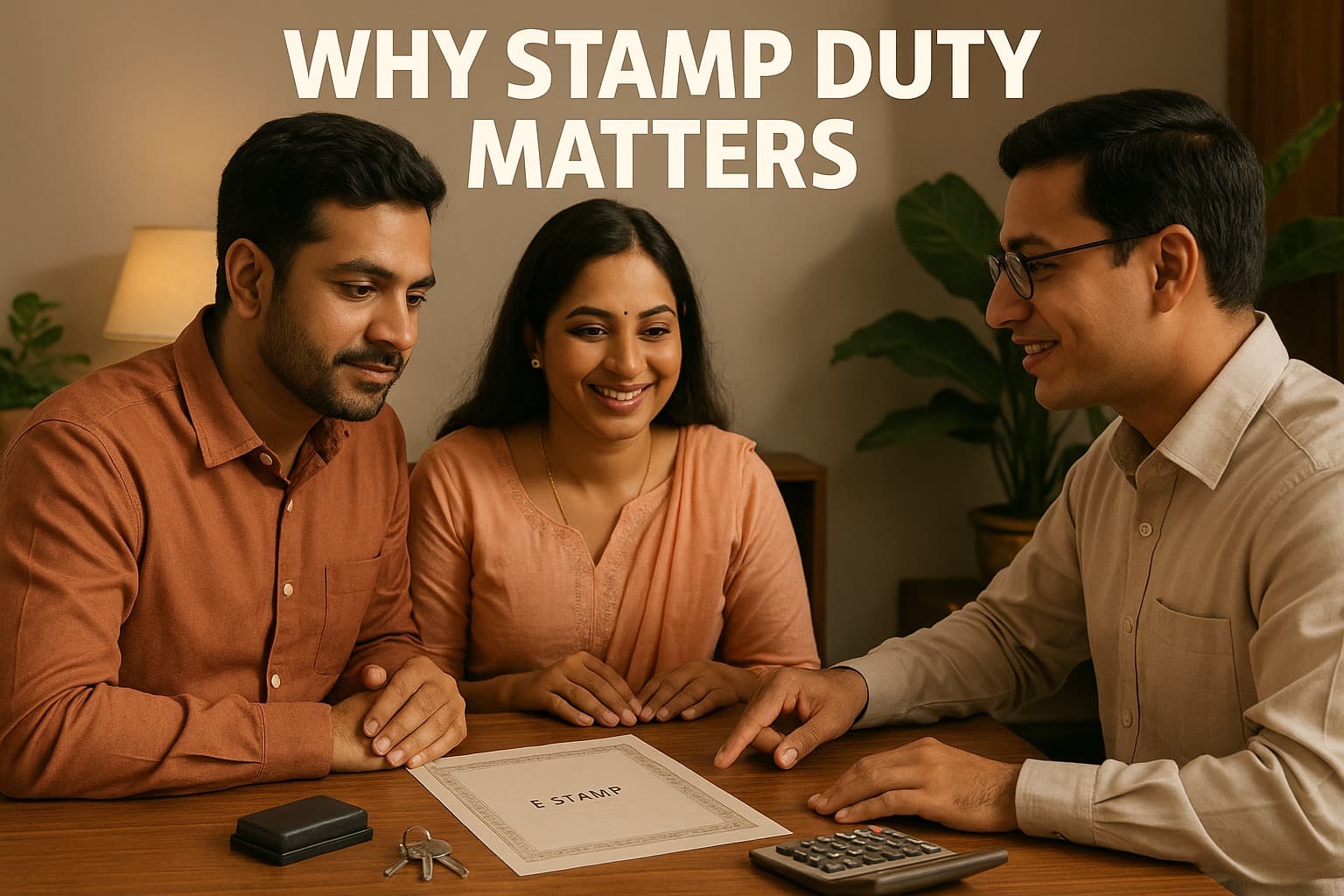
Stamp duty significantly affects the final amount a buyer pays. The how stamp duty impacts the total cost of buying a property analysis shows that it usually adds 5–7% to the total price. Buyers must account for this while planning finances, arranging loans, or choosing the property budget. Lenders do not usually finance stamp duty; therefore, buyers must pay it from personal funds.
Role of Stamp Duty in Dispute Resolution
Registered property documents with proper stamp duty serve as strong legal evidence. If ownership disputes arise, courts rely on the registered deed to determine rightful ownership. The why stamp duty is legally required during property registration explanation highlights its role in settling conflicts and preventing fraudulent activities.
Why Stamp Duty Matters for Homebuyers
Stamp duty ensures the property transfer is transparent, documented, and enforceable. It protects the buyer’s rights and helps establish ownership clearly. For homebuyers, understanding what is stamp duty and why it matters for property buyers is essential for budgeting, planning, and completing a smooth home-buying experience. Without proper stamping, ownership cannot be proven.
Summary
Stamp duty is a mandatory government tax charged when a property is purchased. It legally validates the transfer of ownership and protects the buyer from disputes. Understanding what is stamp duty and why it matters for property buyers helps ensure proper budgeting and smooth registration. It influences the total property cost, prevents fraudulent transfers, and ensures legal recognition of the sale agreement. With clear rules, proper documentation, and available concessions, stamp duty plays a key role in making every property transaction transparent and secure.