
Top 10 Questions to Ask Developers About Occupancy Certificate (OC) & Completion Certificate (CC)
Summary
Before buying property, ask developers key questions about Occupancy (OC) and Completion Certificates (CC). Understand their validity, conditions, and impact on loans/resale. Verify independently to ensure legal compliance and protect your investment.

Introduction
When buying a home, it is important to know about the Occupancy Certificate and Completion Certificate. These documents are essential for legal possession and safe living. As a Buyer, you should not simply trust what the developer says. Instead, you should prepare a list of Questions to ask developer about OC and CC before you sign any agreement or give money. Asking the right questions helps protect your Home Loan, legal rights, and future plans such as sale or Resale Value of the property.
What Are CC and OC and Why They Matter
Before talking to the developer, you need to understand what Completion Certificate and Occupancy Certificate actually mean. A Completion Certificate is issued by the local authority after all construction work follows approved plans. A OC is issued only after the building is safe for people to live in, with utilities and Safety Compliance verified by the local government. Without these documents, occupying the property can be considered illegal and may lead to penalties or loss of amenities like water and electricity.
1. Has the Project Received Both CC and OC?
This should be the first and most clear Questions to ask developer about OC and CC. You should know whether the project has both a valid Completion Certificate and Occupancy Certificate. Projects without these certificates are not legally ready for people to move in and can cause legal and financial issues later. You should request physical copies of both certificates and verify them with the local municipal authority or RERA portal.
2. When Were the Certificates Issued and Are They Current?
A OC may not be valid forever in some areas, and the local government may have specific rules about renewal or inspection frequency. Ask the developer the exact dates when the Completion Certificate and Occupancy Certificate were issued, and whether they are current. A document that has expired may not be accepted by banks or utility providers. This question helps you avoid future problems with home loans or property registration.
3. What Is Included in the Certificates?
Always ask the developer about the details included in the Occupancy Certificate and Completion Certificate. These documents sometimes contain important information about fire safety compliance, utility approvals, building restrictions, or special conditions. Knowing what these certificates certify can help you make better decisions and plan for future needs such as extensions, renovations, or resale.
4. Can I See the Inspection Reports?
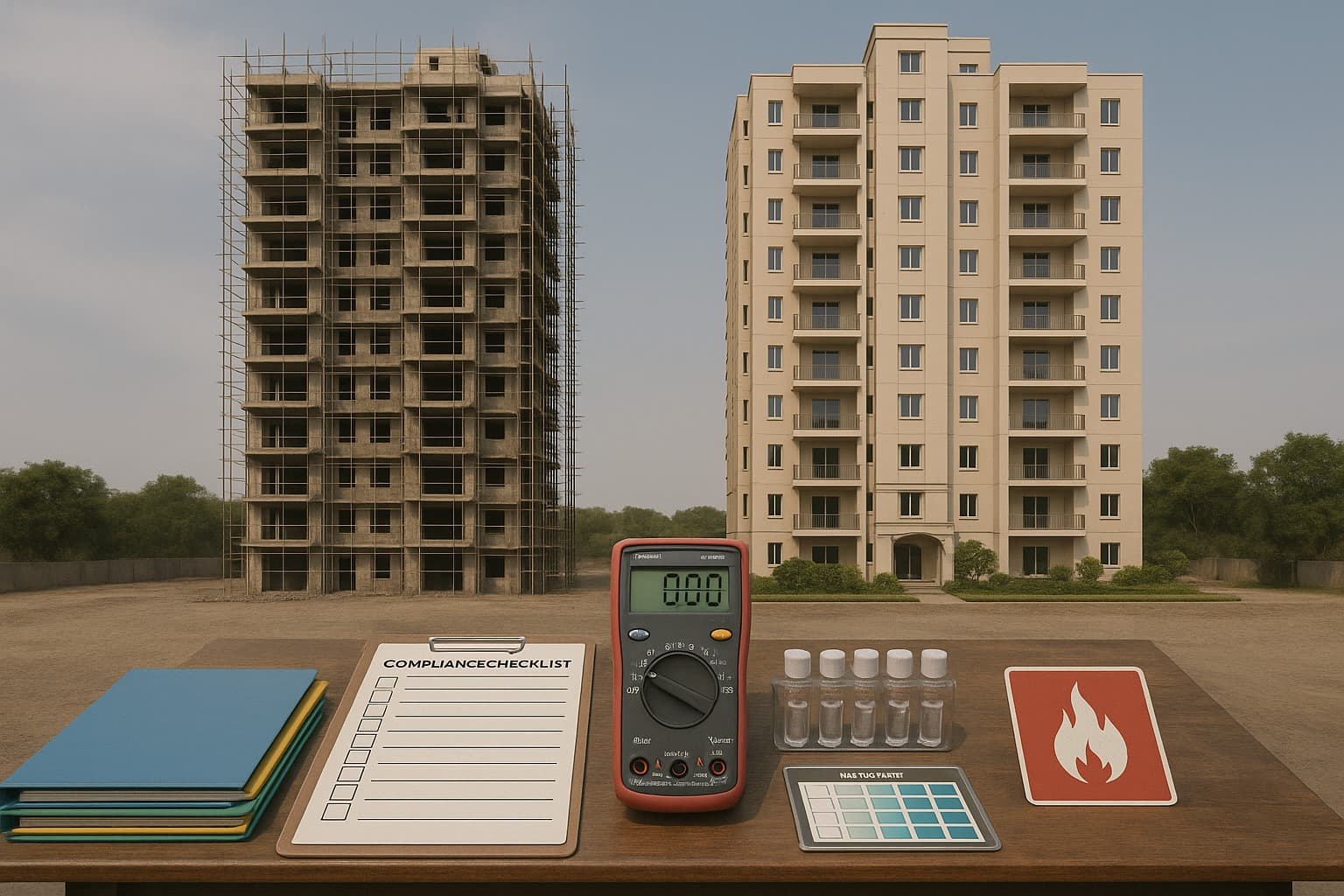
An important part of understanding the status of CC and OC is asking for copies of the inspection reports used to grant those certificates. Inspectors review building safety, structural integrity, fire systems, utility connections, drainage, and other features before approving the certificates. If the developer can share inspection reports, you will know whether the building truly meets Safety Compliance standards.
5. Are There Any Conditions or Reservations in the Certificates?
Sometimes, a OC or Completion Certificate may have certain conditions attached. For example, the local authority may have allowed temporary utility connections for a short period. Make sure you ask the developer if there are any such reservations or conditions written in the certificates. Ignoring these details may lead to unexpected issues such as service disconnections or legal notices later.
6. How Are Utilities Handled With OC and CC?
Basic Utility Services such as electricity, water, and sewage are usually activated only after the local authority issues a valid Occupancy Certificate. Ask the developer what steps have been taken to ensure permanent utility connections. Without this information, you may end up in a situation where temporary connections are provided, which can be revoked or interrupted without notice.
7. How Does CC vs OC Affect Home Loan Approval?
Most banks and housing finance companies require a valid CC and OC before approving a Home Loan or disbursing the final amount. Ask the developer if these certificates are accepted by major banks and financial institutions, and whether they have helped other buyers secure loans in this project. This question helps you understand your own loan eligibility and avoid surprises during loan processing.

8. What Happens if the Developer Misses the Certificate Deadlines?
Sometimes developers delay certificates, causing buyers to wait longer than expected for legal possession. Ask the developer about penalties, compensation, or specific timelines for issuing the Completion Certificate and Occupancy Certificate. Some state laws or RERA rules allow buyers to claim refunds, interest, or compensation if the developer fails to obtain necessary approvals on time.
9. Can You Help Me Verify These Documents Independently?
A good developer should not be afraid of independent verification. Ask if you can check the CC and OC status on the municipal authority’s website or RERA portal using a project registration number. Always cross-check with official sources. This step will give you confidence that nothing has been altered, forged, or misrepresented by the builder.
10. What Is the Process for Future Resale or Transfer of the Property?
Lastly, ask about how the certificates affect future resale of your home. A property without valid OC or Completion Certificate can be difficult to sell and may fetch a lower Resale Value. Make sure the developer explains how these certificates will be legally transferred to you, and what documentation will be provided to help future buyers verify the same.
Documentation Checklist to Request From Developer
Before making any payment or signing an agreement, always ask the developer for these key documents: approved building plans, Completion Certificate, Occupancy Certificate, fire safety clearances, utility NOCs, and structural inspection reports. Keeping a complete set of certificates and approvals will protect your ownership rights, help with bank loans, and ensure that the property is legally compliant and safe.
Protecting Your Investment Through Due Diligence
Asking the right questions about Occupancy Certificate and Completion Certificate is a key part of your home-buying due diligence. These certificates are not just formal papers — they protect you against legal issues, utility denials, and financial losses. A proactive approach ensures that you make a safe and confident decision when investing in your home.
Summary
When buying a property, asking clear Questions to ask developer about OC and CC is essential for legal security and peace of mind. Make sure the developer provides both Occupancy Certificate and Completion Certificate, details of inspections, utility approvals, and conditions attached. Check how these certificates influence Home Loan approval, Safety Compliance, and Resale Value. Review all paperwork independently with municipal portals or RERA. Timely verification and thorough documentation help protect buyers from legal risks, financial challenges, and future ownership problems.