
Razing a Sassoon Legacy: Luxury Tower Rises on Mumbai's Coveted Malabar Hill
Summary
Mumbai's Malabar Hill sees a historic David Sassoon property razed for a luxury tower, highlighting the city's real estate ambitions over heritage. The prime location justifies demolition for premium reconstruction, erasing a tangible link to a significant historical figure.

Introduction
Mumbai has never been sentimental about its own history when real estate money is on the table. The city that bulldozed mill land worth crores of cultural memory to build Lower Parel's glass towers is perfectly capable of dismantling a property with 19th century Baghdadi Jewish merchant roots to make way for a 22-storey luxury address. The David Sassoon Malabar Hill property story is the latest chapter in that long running tension between what a city was and what its most expensive square feet must become. And this particular chapter is set on a hill that arguably defines Mumbai's residential aspirational ceiling more than any other address.
Who David Sassoon Was and Why the Property Matters
David Sassoon arrived in Bombay in 1832 after fleeing Baghdad, built a trading empire that stretched from Calcutta to Shanghai, and left behind institutional marks on this city that still function today. The David Sassoon Library in Kala Ghoda, the Sir David Sassoon Hospital within the JJ compound, the Magen David Synagogue in Byculla, these were not vanity projects. They were a merchant's attempt to pay back a city that had made him one of its wealthiest residents.
His final home was Il Palazzo on Malabar Hill, a wooden ground-plus-one structure with extensive grounds facing Chowpatty Beach. That original structure is long gone, replaced decades ago by the current building that carries the Il Palazzo name. But the address retains its Sassoon connection in local memory and in the historical record, which is why the current demolition announcement carries more weight than a routine redevelopment story.
The Property and What the Numbers Say
The Malabar Hill luxury tower planned to replace the existing structure will rise 22 storeys on a site whose value in today's market is almost incomprehensible on a per-square-foot basis. Malabar Hill currently trades between Rs 55,000 and Rs 1 lakh per square foot for premium units depending on floor, sea view, and building quality. The IL Palazzo building itself has seen registered transactions north of Rs 1.29 lakh per square foot on carpet area for sea-facing duplex units.
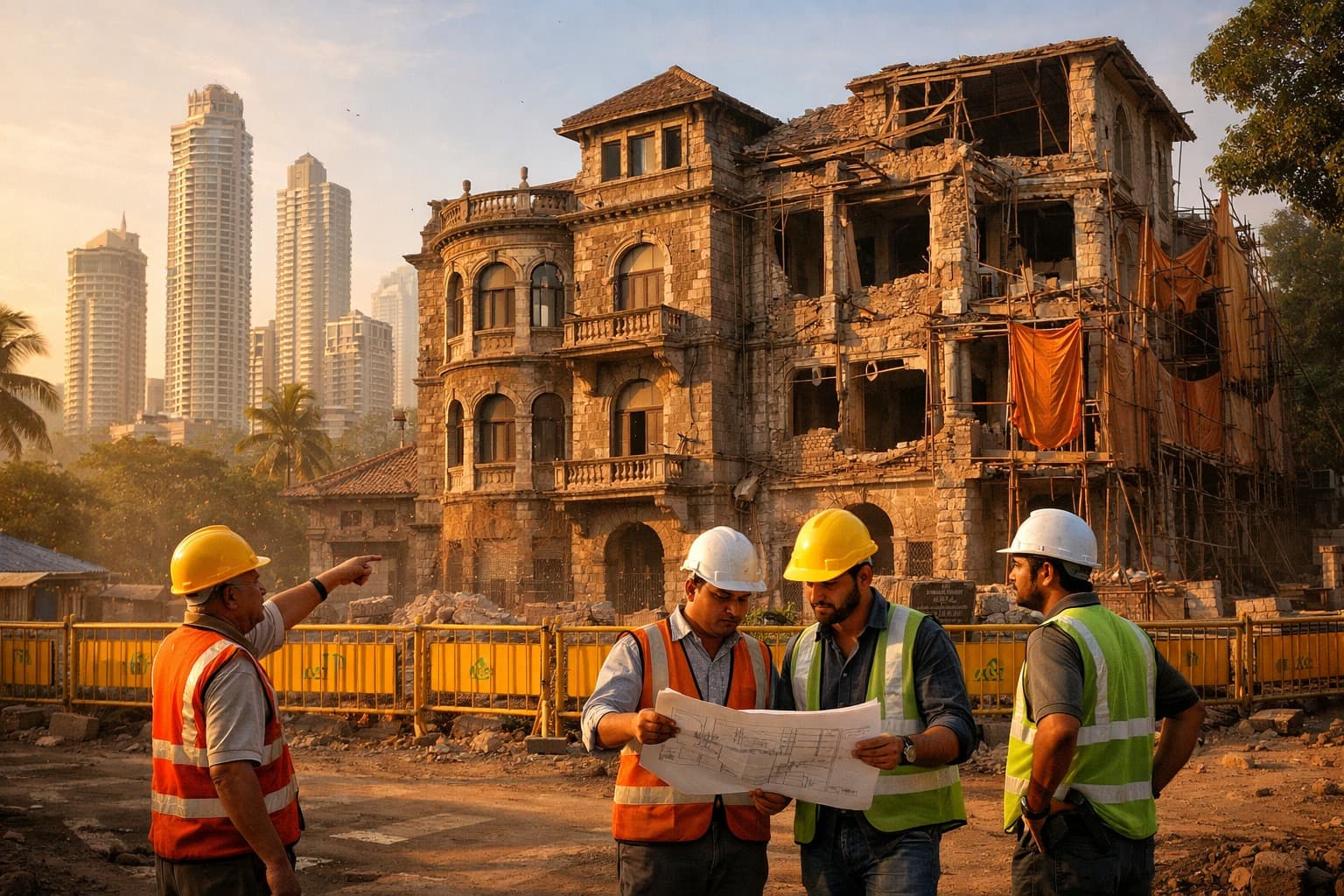
A new 22-storey tower on a Malabar Hill plot with this provenance, sea views, and the kind of boutique unit count that the site's area would permit could comfortably price at Rs 1.5 lakh to Rs 2 lakh per square foot at current market benchmarks. That is the financial logic behind every demolition-and-rebuild decision on this hill and it is entirely rational from a developer's perspective.
Why Malabar Hill Keeps Attracting This Scale of Redevelopment
South Mumbai luxury property has a specific quality that newer premium addresses in Worli, BKC, and the suburbs cannot replicate: scarcity. The hill's geography is fixed. No new land is being created. Every plot that comes up for redevelopment is a finite and irreplaceable opportunity. Developers understand that a Malabar Hill address carries a permanence of prestige that no amount of amenity specification in a Thane or Navi Mumbai project can manufacture.
The hill is home to some of India's most significant business families. Adi Godrej, the Birlas, the Jindals, and a roster of industrial dynasty names have addresses here. That concentration of wealth creates a self-reinforcing premium that makes the economics of demolishing an ageing building and constructing a boutique luxury tower almost always work in the developer's favour.
Heritage Conservation: The Question Nobody Wants to Answer
Mumbai's heritage framework under the Development Control Regulations provides graded protection to listed buildings and precincts. But not every historically significant address carries a formal heritage listing, and the Sassoon-linked property appears to fall in that gap. The structure itself is not a 19th century original. What is being lost is an address with historical meaning and the last physical connection to a family that shaped colonial Bombay's commercial, charitable, and cultural landscape.
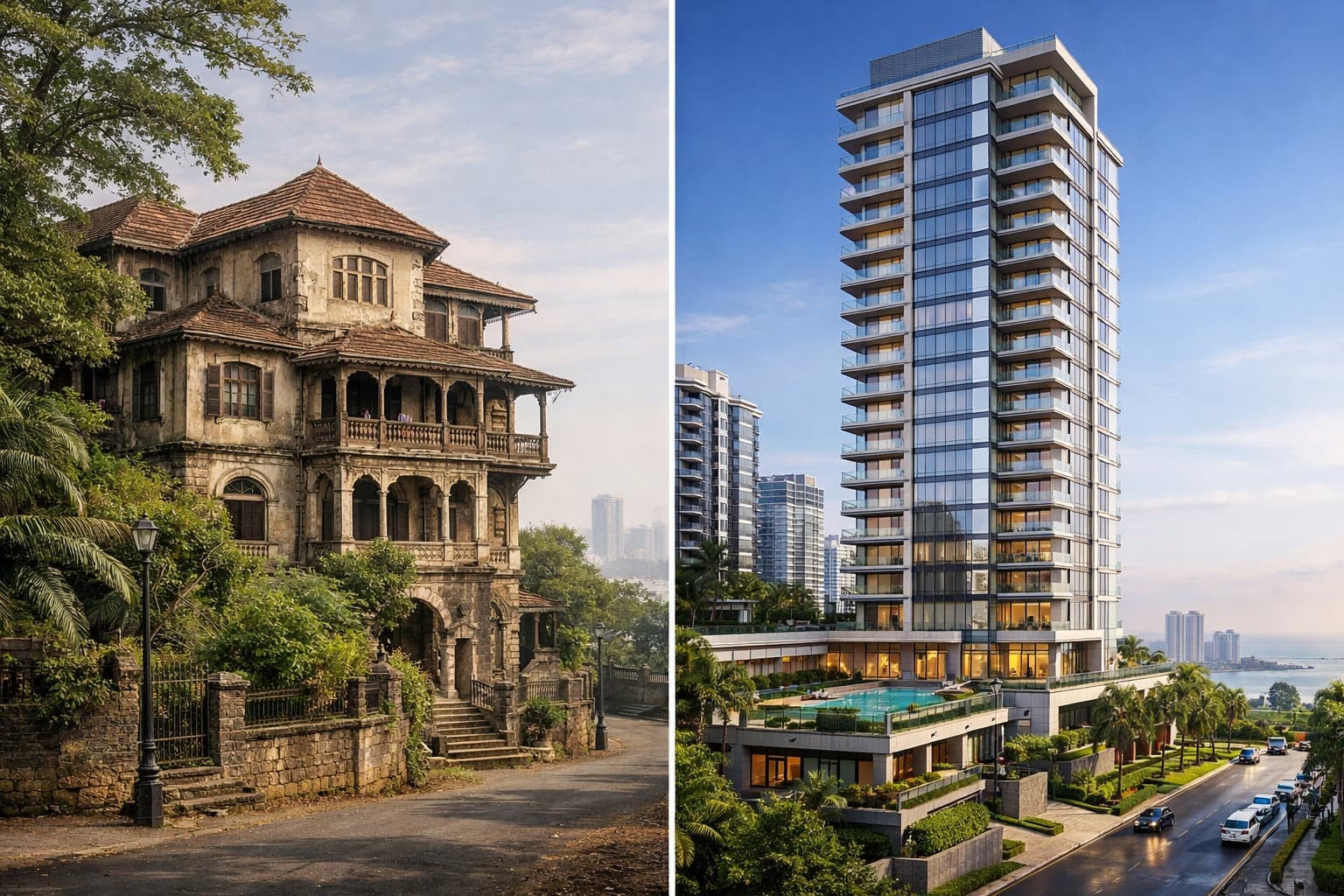
The Mumbai heritage demolition debate surfaces with each high-profile razing and quietly subsides once the building permit is issued. Heritage advocates, urban historians, and the Baghdadi Jewish community's descendants have flagged properties with Sassoon connections before. But flagging and legal protection are two different things.
What Buyers of the New Tower Will Be Purchasing
The irony is not lost on anyone who looks at this closely. Buyers paying Rs 40 crore to Rs 80 crore for apartments in the new 22-storey tower will be purchasing an address whose most compelling layer of meaning, its connection to one of Bombay's founding merchant families, will have been literally demolished to build the floor they stand on.
That said, Malabar Hill real estate 2026 buyers at this price point are not primarily purchasing history. They are purchasing a view, a postcode, a community of neighbours, and a quality of construction that justifies the premium. The Sassoon connection is a story for the press. The sea view is the reason the cheque gets signed.
Summary
The David Sassoon linked Malabar Hill property being razed for a 22-storey luxury tower is a story that sits at the intersection of Mumbai's heritage indifference and its South Mumbai luxury real estate machine. At Rs 55,000 to Rs 1 lakh per square foot and climbing, the financial case for demolition and premium reconstruction on Malabar Hill is irresistible. What gets demolished in the process is not just a building but the last address-level connection to a merchant whose institutional gifts still serve the city he helped build.
Video will be embedded from: https://www.youtube.com/watch?v=RkcS5Vrp1ec